
Big pharma is facing a reckoning. Between 2025 and 2030, blockbuster biologic drugs worth over $200 billion in annual global sales will lose their patent protection. This isn't just a shift for companies like Merck or Bristol Myers Squibb; it’s a massive change for patients, payers, and the entire healthcare system. As these patents expire, biosimilars-highly similar versions of these complex medicines-are stepping into the spotlight.
If you’ve heard of generic pills, you know how they work. You swap the brand name for a cheaper copy, and everything stays the same. Biologics are different. They’re giant, complex molecules made from living cells, not simple chemical compounds. Because of this complexity, you can’t just make an exact copy. Instead, developers create a "biosimilar" that is highly similar to the original reference product with no clinically meaningful differences in safety, purity, or potency.
The window is open now. With the FDA approving its first biosimilar, Zarxio, back in 2015, the pathway is established. But the next wave is far bigger. We are looking at unprecedented growth as major cancer and autoimmune treatments face competition. Let’s look at what’s coming, who is making them, and why your wallet-and your treatment plan-might be affected.
The Patent Cliff: What’s Expiring and When?
The term "patent cliff" refers to the sudden drop in revenue for pharmaceutical companies when their exclusive rights run out. For biologics, this cliff is steep and crowded. According to Clival's 2024 analysis, we are entering a strategic inflection point where billions in sales are up for grabs.
Here is a breakdown of some of the most significant upcoming entries:
- Eylea (aflibercept): Used for eye conditions like wet age-related macular degeneration. The U.S. patent expiration hit in 2025. Biosimilars like Biocon Biologics' Yesafili and Samsung Bioepis/Biogen's Opuviz received FDA approval in mid-to-late 2024. Market penetration was already at 12% by Q1 2025.
- Keytruda (pembrolizumab): This is the big one. Merck’s Keytruda generated $25.5 billion in sales in 2024 alone. Its primary patent expires in 2028. However, Merck holds a portfolio of 237 patents with staggered expirations through 2035, meaning full generic-style competition might take longer to materialize fully.
- Cosentyx (secukinumab): A top seller for psoriasis and arthritis. Novartis faces imminent competition. Samsung Bioepis received a positive opinion from the European Medicines Agency’s Committee for Medicinal Products for Human Use (CHMP) in October 2025, targeting a 2026 EU launch, well ahead of the 2029 U.S. patent expiration.
- Humira (adalimumab): While its main patents expired in 2023, this drug set the stage. Twelve FDA-approved biosimilars captured 80% of new prescriptions within 18 months. It proves that once the legal barriers fall, adoption can be rapid.
These aren't just minor drugs. These are treatments for life-altering conditions. When competition enters, prices usually drop. Biosimilars typically launch at discounts ranging from 15% to 35% off the reference product. The RAND Corporation projects these savings could total $250 billion for the U.S. healthcare system over the next decade.
Biosimilars vs. Generics: Why It’s Not a Simple Swap
You might wonder, "Why don’t we just call them generics?" The answer lies in biology versus chemistry.
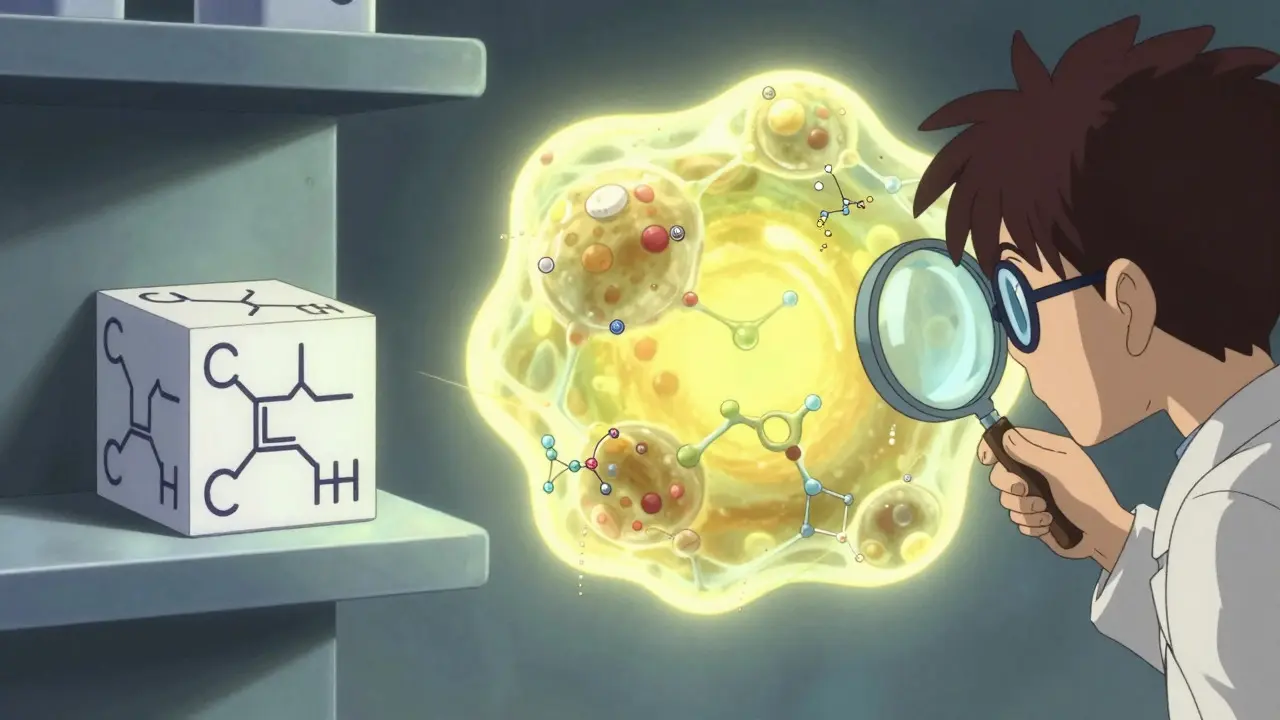
A generic drug, like ibuprofen, is a small molecule. You can synthesize it exactly the same way every time. A biologic, however, is a large protein produced inside living cells (like yeast or hamster ovaries). Think of it like baking bread. Even if two bakers use the exact same recipe and ingredients, the loaves won’t be identical down to the molecular level because the living organisms involved introduce natural variations.
This is why regulators like the FDA require extensive data to prove a biosimilar is "similar." Developers must show:
- Analytical Characterization: Detailed testing to match the structure, including complex features like glycosylation patterns (sugar attachments on the protein).
- Nonclinical Studies: Lab tests to ensure the drug behaves similarly in biological systems.
- Clinical Pharmacology Data: Human studies to confirm the drug works in the body the same way as the reference product.
For example, pembrolizumab (Keytruda) biosimilars must match Merck’s original monoclonal antibody’s exact glycosylation patterns to maintain efficacy in cancer immunotherapy. If those sugar chains differ even slightly, the immune response could change.
This complexity means development costs are higher. The Biotechnology Innovation Organization (BIO) reports that successful biosimilar developers typically invest $150-$250 million per product, taking 7-10 years from candidate selection to commercial launch. That’s why you see specialized players like Sandoz, Samsung Bioepis, and Celltrion dominating this space rather than traditional generic pill makers.
Who Is Making These Drugs?
The biosimilar market is consolidating. Big players are buying smaller ones to build portfolios. In August 2024, Sandoz (a spinoff of Novartis) acquired Biocon’s biosimilars business for $3.9 billion, creating a market leader with a 28% share.
Here are the key entities driving this wave:
| Company | Parent/Partner | Notable Projects/Assets |
|---|---|---|
| Sandoz | Novartis | Enbrel biosimilar (launched 2023); Acquired Biocon biosimilars unit |
| Samsung Bioepis | Samsung Group | Opuviz (Eylea biosimilar); Cosentyx biosimilar (EU launch 2026) |
| Coherus BioSciences | Independent | Phase 3 trials for Keytruda biosimilar |
| Alvotech | Partnerships (e.g., Regeneron) | $1.2 billion deal for authorized Eylea biosimilars |
| Viatris | Pfizer + Mylan merger | Focused on biosimilar commercialization and access |
Meanwhile, originator companies aren’t sitting still. Pfizer partnered with Mylan to create Viatris specifically to handle biosimilar commercialization. Regeneron signed a $1.2 billion deal with Alvotech in January 2025 to develop "authorized biosimilars" for Eylea. These strategies aim to keep some revenue streams alive while acknowledging the inevitable loss of exclusivity.
Barriers to Entry: Patents, Litigation, and "Product Hopping"
Just because a patent expires doesn’t mean a biosimilar hits shelves the next day. Originator companies use sophisticated lifecycle management strategies to delay competition.
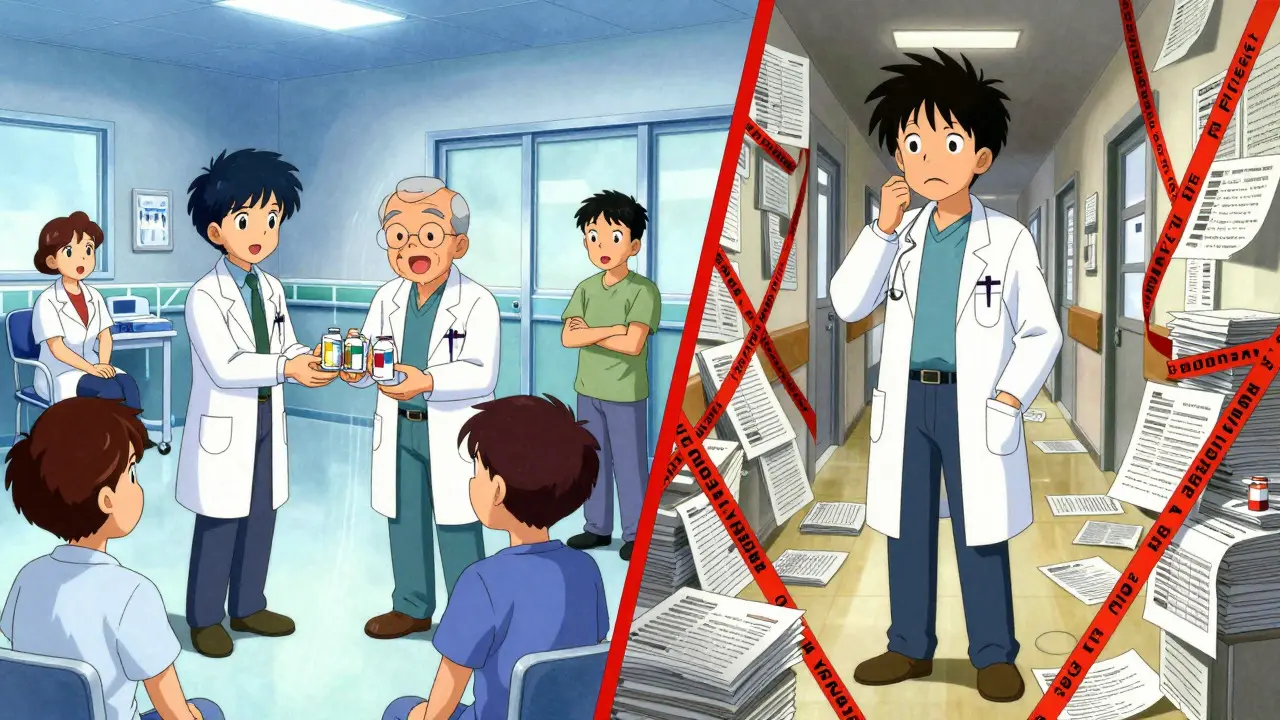
One common tactic is the "patent thicket." Merck’s Keytruda, for instance, has 237 patents. Even if the main composition patent expires in 2028, secondary patents covering manufacturing methods, dosage forms, or specific uses might last until 2035. This forces biosimilar developers into lengthy litigation, known as the "patent dance," defined by the Biologics Price Competition and Innovation Act (BPCIA) of 2009.
Another tactic is "product hopping." This happens when a company reformulates their drug or changes the delivery method right before a patent expires, forcing doctors and patients to switch to the new version. The old version’s biosimilar then becomes less relevant. Dr. Mark McClellan, Director of the Duke-Margolis Center for Health Policy, warned about these risks during a March 2025 FDA workshop, noting that therapeutic substitution risks are higher with complex oncology biologics.
However, regulations are tightening. The FDA’s January 2025 final rule on "Purple Book Modernization" requires real-time patent listing updates. This aims to reduce the opacity that previously allowed companies to hide pending litigations. The Congressional Budget Office estimates that resolving these delays could save Medicare $51 billion from 2026 to 2035.
Market Impact: Oncology vs. Autoimmune Diseases
Not all biosimilars enter the market equally. The therapeutic area matters immensely.
Autoimmune diseases have seen smoother transitions. Humira (adalimumab), used for rheumatoid arthritis and Crohn’s disease, saw rapid adoption. IQVIA data shows that after its 2023 patent expiration, biosimilars captured 80% of new prescriptions within 18 months. Why? Because these drugs are often used long-term for chronic conditions, and switching protocols are well-established.
Oncology, however, is trickier. Cancer treatments like Opdivo (nivolumab) or Keytruda are often part of combination therapies. A biosimilar must demonstrate compatibility with multiple chemotherapy regimens. There’s also a fear among clinicians and patients that minor structural differences could impact efficacy in life-or-death scenarios. Dr. Richard Pazdur of the FDA Oncology Center of Excellence documented cases where patients experienced unexpected immune reactions when switching between rituximab biosimilars and the reference product.
Despite these fears, real-world data is reassuring. At the American Society of Clinical Oncology 2024 meeting, Dr. Laura Chow reported excellent equivalence between Humira and its biosimilars in inflammatory bowel disease patients. Still, trust takes time. SVB Leerink projects biosimilar market share for patent-expiring drugs will reach 65% within 24 months of entry, but Evercore ISI suggests only 45% due to originator resistance.
Pricing, Reimbursement, and Patient Access
Even if a biosimilar is approved and available, getting it into patients’ hands involves navigating a broken reimbursement system.
In the U.S., Medicare Part B reimburses providers based on the Average Sales Price (ASP) plus a percentage. This creates a perverse incentive: providers actually profit more from prescribing the expensive reference product than the cheaper biosimilar. The Medicare Payment Advisory Commission documented an 18-month lag between biosimilar approval and meaningful market penetration partly due to this issue.
Private insurers are trying to fix this. Centene Corporation’s 2025 formulary mandates biosimilar use for all new patients on tumor necrosis factor inhibitors. Cigna’s 2025 Medicare Advantage plans include $0 copays for biosimilars versus $50 for reference products. These moves force utilization.
Hospitals are also adapting. Mass General Brigham’s 2024 formulary update showed biosimilar utilization increased from 12% to 68% after implementing mandatory substitution protocols for G-CSF products. Kaiser Permanente implemented mandatory biosimilar substitution for all new filgrastim prescriptions in 2024.
For patients, the experience is mixed. A November 2024 survey by the Cancer Support Community found that 78% of respondents were satisfied with cost savings. However, 34% reported confusion about substitution policies. Specialty pharmacists at CVS Caremark noted a 22% reduction in prior authorization denials for biosimilars in Q2 2025, suggesting administrative hurdles are slowly easing.
What Does the Future Look Like?
The global biosimilars market reached $12.7 billion in 2024, up 28% from 2023. Evaluate Pharma projects it will hit $80 billion by 2030. The U.S. accounts for 45% of this market, despite having lower adoption rates than Europe, where penetration exceeds 70% for some products due to favorable reimbursement policies.
Regulatory evolution continues. The FDA’s 2025 draft guidance on "Analytical Similarity for Highly Complex Biologics" aims to streamline approvals for next-generation biosimilars, such as those targeting antibody-drug conjugates. The FDA’s approval rate has surged from 5 per year in 2020 to 17 in 2024.
Long-term viability assessments vary. Goldman Sachs projects biosimilars will capture 75% of expiring blockbuster revenue by 2035. BMO Capital Markets warns that next-generation biologics with novel mechanisms may limit biosimilar impact to 55% market share, as new drugs render older ones obsolete before biosimilars can fully penetrate.
As we move through 2026, the message is clear: biosimilars are no longer a niche alternative. They are becoming the standard of care for many chronic and acute conditions. For patients, this means lower costs and broader access. For the industry, it means a fundamental shift from innovation-only models to value-driven competition.
What is the difference between a biosimilar and a generic drug?
A generic drug is an exact chemical copy of a small-molecule brand-name drug. A biosimilar is a highly similar version of a complex biologic drug made from living cells. Because biologics are large and variable, biosimilars cannot be identical copies but must demonstrate no clinically meaningful differences in safety, purity, or potency compared to the reference product.
When will Keytruda biosimilars be available?
The primary patent for Keytruda (pembrolizumab) expires in 2028. Several companies, including Coherus BioSciences, are conducting Phase 3 trials. However, Merck holds a portfolio of 237 patents with staggered expirations through 2035, which may delay widespread market entry and full price competition beyond 2028.
Are biosimilars safe to switch to?
Yes, biosimilars undergo rigorous FDA review to ensure they are highly similar to the reference product with no clinically meaningful differences. Real-world data, such as studies on Humira biosimilars, show excellent equivalence. However, for complex oncology biologics, some clinicians monitor patients closely during switches to manage rare immune reactions.
How much cheaper are biosimilars?
Biosimilars typically launch at discounts ranging from 15% to 35% off the reference product’s price. Over time, as more competitors enter the market, prices can drop further. The RAND Corporation projects these savings could total $250 billion for the U.S. healthcare system over the next decade.
Why is biosimilar adoption slower in the U.S. than in Europe?
Europe has more favorable reimbursement policies and automatic substitution laws, leading to penetration rates exceeding 70% for some products. In the U.S., complex rebate structures, patent thickets, and Medicare Part B reimbursement rules that incentivize higher-priced drugs have slowed adoption, though recent payer mandates are improving this trend.