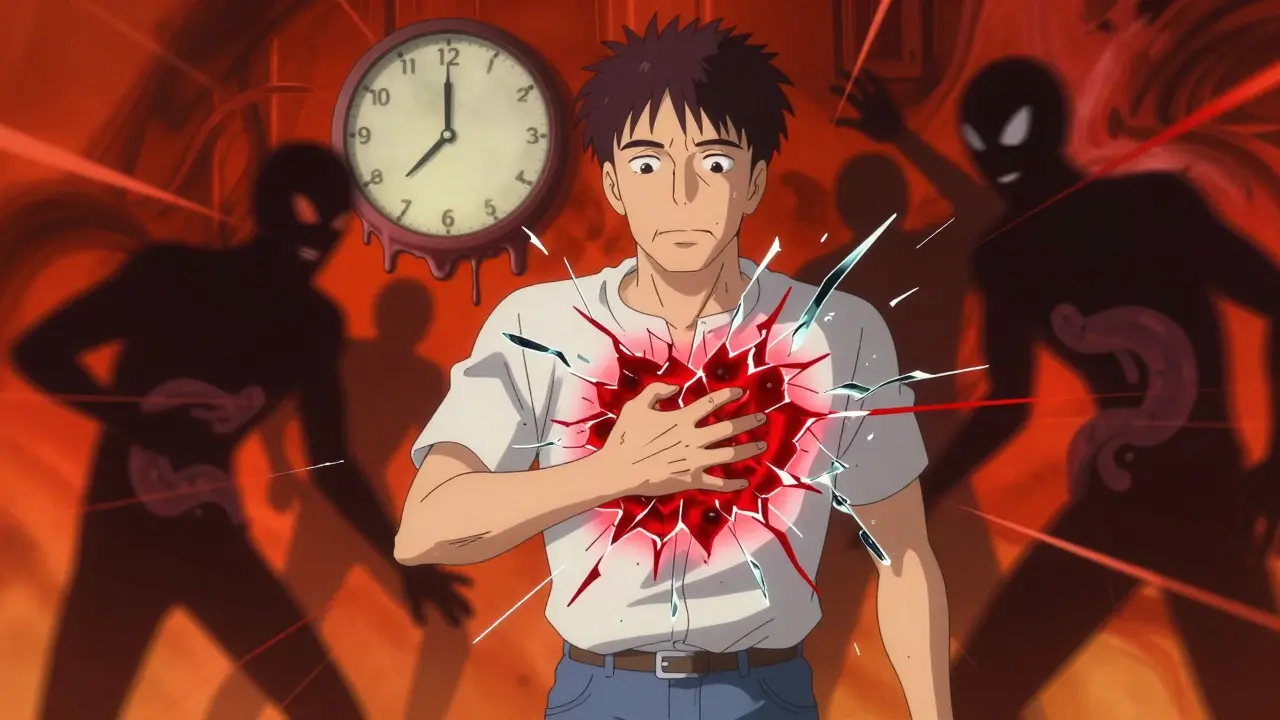
When your heart stops getting the blood it needs, time becomes your biggest enemy. Every minute counts. Each passing minute after a heart attack begins means 1.5 million heart muscle cells die. That’s not a guess - it’s what research from Circulation has shown. And the difference between life and death often comes down to one thing: whether you recognize the warning signs and act fast.
Most people think of a heart attack as a crushing chest pain, like in the movies. But that’s only part of the story. In reality, symptoms can be quiet, confusing, and easily mistaken for something else - indigestion, stress, a bad flu, or just getting older. The truth is, heart attacks don’t always announce themselves with dramatic pain. And when they’re missed, the consequences are deadly.
What Really Happens During a Heart Attack
A heart attack - or myocardial infarction - happens when a blockage in one of the heart’s arteries cuts off blood flow. Without oxygen, the heart muscle starts to die. The longer the blockage stays, the more damage is done. That’s why the goal isn’t just to get to the hospital - it’s to get help within 90 minutes of the first symptom. Studies show that people who call 911 within that window have a 50% better chance of survival.
But here’s the catch: most people wait. On average, they wait three hours before calling for help. Why? Because they don’t realize what’s happening. Or worse - they think they’re overreacting.
The Classic Signs - And the Ones You Might Miss
The American Heart Association says the most common sign is discomfort in the center of the chest. It’s not always sharp pain. It can feel like:
- Pressure - like something heavy is sitting on your chest
- Squeezing - as if someone is tightening a band around you
- Fullness - a deep, uncomfortable ache that won’t go away
This discomfort usually lasts more than a few minutes, or it comes and goes. If it’s new, unusual, or just doesn’t feel right, don’t ignore it.
But here’s what many don’t know: up to 65% of people have symptoms elsewhere in their body. You might feel pain in:
- One or both arms - especially the left, but not always
- Your back - between the shoulder blades
- Your neck or jaw - often mistaken for a toothache or sinus issue
- Your stomach - feels like heartburn or indigestion
And you might not have chest pain at all.
Gender Differences - Why Women’s Symptoms Are Often Overlooked
Men and women don’t have the same heart attack experience. That’s not a myth - it’s backed by data.
While 90% of men feel chest pain during a heart attack, only 64% of women do. For women, other symptoms are more common:
- Shortness of breath - 58% more likely than in men
- Nausea or vomiting - 47% more likely
- Back or jaw pain without chest pain - 37% more likely
- Unusual, overwhelming fatigue - reported by 48% of women, compared to 29% of men
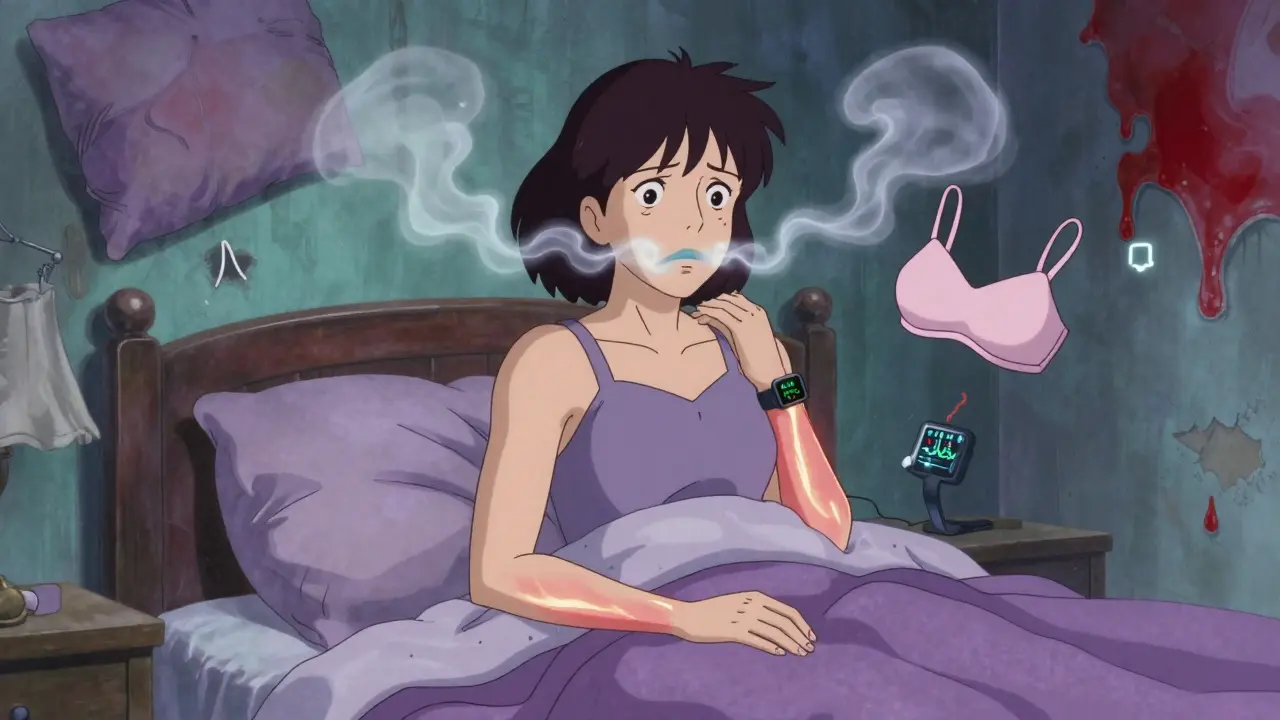
Many women describe their symptoms as “pressure” or “tightness,” not sharp pain. One woman told her doctor she felt like her bra was too tight. Another thought she had the flu. Both had heart attacks.
And here’s the scary part: women are 50% more likely to be misdiagnosed in the emergency room. Their symptoms are written off as anxiety, acid reflux, or menopause. That delay costs lives. A 2021 study found women have a 50% higher one-year death rate after a heart attack - not because their hearts are weaker, but because they’re often not treated fast enough.
Age Changes the Picture Too
Heart attacks aren’t just for older people. In fact, the number of heart attacks in adults aged 25 to 44 has been rising by 2% every year since 2000.
But if you’re over 75, your symptoms might be even harder to spot. About 30% of heart attacks in this age group are “silent” - no chest pain at all. Instead, people feel:
- Sudden, extreme tiredness
- Confusion or dizziness
- Difficulty breathing
Some just feel “off.” They don’t call for help because they think it’s just aging. But that’s exactly when you should call.
The Subtle Signs That Come Before the Crisis
Heart attacks don’t always come out of nowhere. Some people have warning signs for weeks - even months - before the big event.
Geisinger Health’s 2025 research found that 22% of people had unexplained weakness before their heart attack. Others had:
- Palpitations - heart racing or skipping beats
- Unusual fatigue - even after rest
- Swelling in the legs or ankles
- Difficulty sleeping - not from stress, but from shortness of breath
If you’ve been feeling “not quite right” for days or weeks, don’t brush it off. It might be your body trying to tell you something.
What to Do - Right Now - If You Think It’s a Heart Attack
Don’t wait. Don’t drive yourself. Don’t call a friend first. Don’t hope it goes away.
If you or someone else has symptoms that last more than a few minutes:
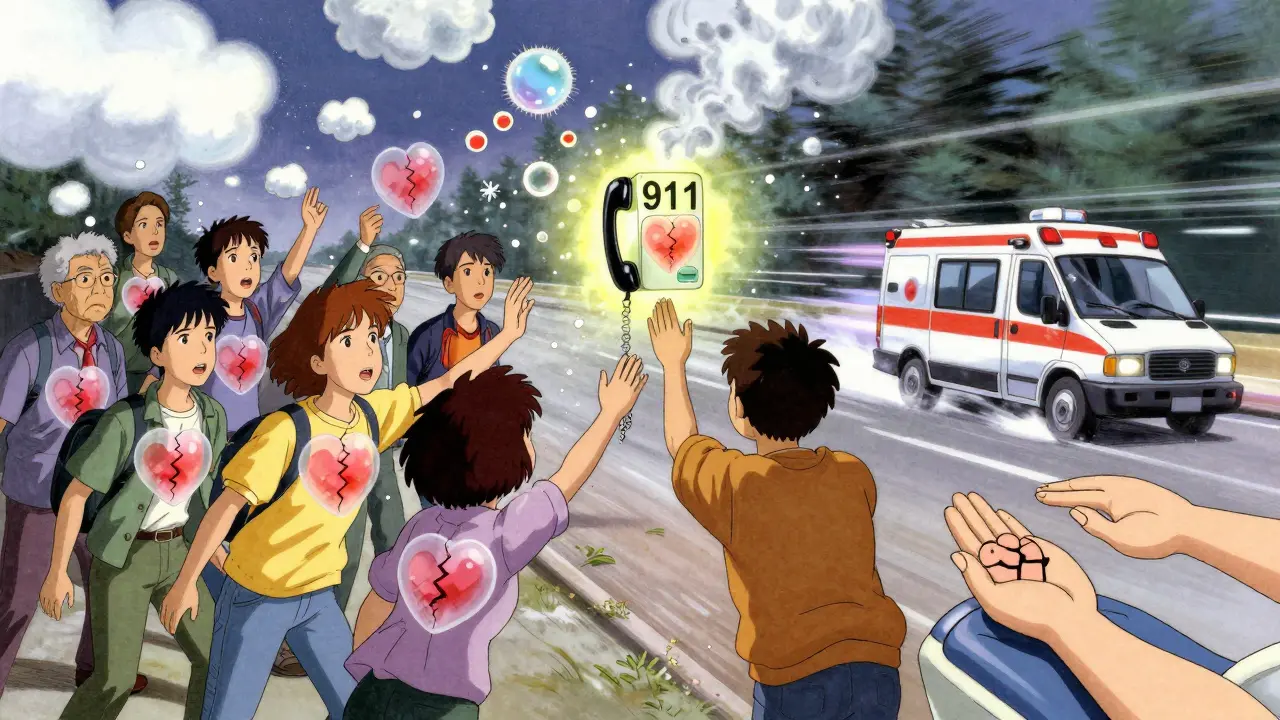
- Call 999 (or 911 in the US) immediately. Say, “I think I’m having a heart attack.” Emergency responders can start treatment on the way - and they get you to the hospital 25% faster than driving yourself.
- If you’re not allergic to aspirin and your doctor hasn’t told you to avoid it, chew one 300mg tablet. It helps thin the blood and can reduce damage. Don’t wait for paramedics to give it to you - do it now.
- Stay calm and sit down. Don’t lie flat. Try to breathe slowly. Don’t panic - but don’t delay.
And if you’re with someone who collapses, starts gasping, or loses consciousness - start CPR. You don’t need to be a doctor. Hands-only CPR - pushing hard and fast on the center of the chest - can keep blood flowing until help arrives. Communities with CPR training have 28% higher survival rates.
Why People Wait - And Why That’s Dangerous
Why do so many people wait? Fear. Embarrassment. Denial.
A 2022 American Heart Association survey found that 33% of people waited more than two hours because they were afraid they’d be wrong. They didn’t want to bother anyone. One man said he thought, “It’s probably just gas.” He waited five hours. He didn’t survive.
Another common reason: “It felt like anxiety.” Women especially - and younger people - often think their symptoms are stress-related. A Reddit thread from March 2023 had 287 comments from women who thought they were having panic attacks. Half of them were having heart attacks.
There’s no shame in calling for help. Even if it turns out to be nothing, you saved yourself a lifetime of regret.
What’s New - And What’s Changing
Technology is helping. In March 2023, the FDA approved the first AI tool - CardioLogics AI - that can predict a heart attack 30 minutes before symptoms appear, by analyzing EKG patterns with 92.7% accuracy. It’s not in every clinic yet, but it’s coming.
More people are using smartwatches with EKG features. Over 38% of U.S. adults now own a device that can detect irregular heart rhythms - a major warning sign. If your watch says your heart is acting weird, don’t ignore it.
And awareness is growing. The British Heart Foundation and NHS England have updated their guidelines to emphasize that heart attacks can look different in women, older adults, and younger people. The message is clear: if it’s unusual, if it’s persistent, if it’s not like anything you’ve felt before - act.
Final Thought: Don’t Wait for a Perfect Symptom
You don’t need to have every sign. You don’t need to be sure. You just need to be suspicious.
Heart attacks don’t care if you’re young. They don’t care if you’re fit. They don’t care if you’ve never had high cholesterol. They happen to people who think they’re too healthy to have one.
So if something feels off - your chest, your jaw, your arms, your breath - don’t wait. Don’t second-guess. Call 999.
Because in this case, being wrong is better than being right - too late.
Can a heart attack happen without chest pain?
Yes. About 30% of heart attacks in people over 75 and nearly 40% in women occur without classic chest pain. Symptoms might include sudden fatigue, shortness of breath, nausea, jaw or back pain, or feeling faint. If you’re unsure, treat it as a heart attack until proven otherwise.
Is it safe to take aspirin during a suspected heart attack?
Yes - if you’re not allergic and your doctor hasn’t told you to avoid it. Chew one 300mg tablet as soon as possible. Aspirin helps thin the blood and can reduce heart damage. Don’t wait for paramedics - take it while you wait for help. If you’re unsure, call emergency services first - they’ll guide you.
Why are women more likely to be misdiagnosed during a heart attack?
Because their symptoms often differ from the classic “male” model - less chest pain, more shortness of breath, nausea, or fatigue. Emergency staff may mistake these for anxiety, indigestion, or menopause. Studies show women are 50% more likely to be sent home with the wrong diagnosis. Always insist on an ECG and cardiac enzyme test if you suspect a heart attack.
What should I do if I think someone else is having a heart attack?
Call 999 immediately. Ask if they’re allergic to aspirin - if not, help them chew one tablet. Keep them calm and seated. If they collapse and stop breathing, start hands-only CPR: push hard and fast on the center of the chest. Don’t wait for training - your actions could save their life.
Can stress or anxiety cause a heart attack?
Stress and anxiety don’t directly cause heart attacks, but they can trigger them in people with existing heart disease. Severe emotional stress can also cause a condition called broken heart syndrome (takotsubo cardiomyopathy), which mimics a heart attack. Either way, if you’re having chest discomfort with anxiety-like symptoms, get checked - it’s not worth the risk.
How fast should I get to the hospital after symptoms start?
The ideal window is 90 minutes from symptom onset. After that, heart muscle damage increases rapidly. Calling 999 gets you to the hospital 25% faster than driving yourself because paramedics can begin treatment en route and alert the hospital ahead of time. Every minute counts.
Are heart attacks more common now than in the past?
Heart attacks are still the leading cause of death globally. While death rates have dropped due to better treatments, the number of heart attacks in younger adults (ages 25-44) has been rising by 2% each year since 2000. Lifestyle factors like poor diet, lack of exercise, and chronic stress are major contributors.