
You take a pill. You feel sick. It happens to thousands of people every day. But here is the twist: if that pill was a big-name brand drug, your doctor probably reported it to the authorities within hours. If it was a generic copy-despite being chemically identical-the report might never reach the FDA. This isn't because generics are inherently more dangerous. It’s because the system for tracking their safety has a massive blind spot.
We need to talk about serious adverse events (SAEs) in generic drugs. Not just what they are, but why the data on them is skewed, how you or your doctor should actually report them, and what new tools are fixing these gaps in 2026. If you work in healthcare, pharmacy, or just care deeply about medication safety, this guide breaks down the messy reality behind the paperwork.
The Rules Are the Same, The Reality Is Not
Let’s clear up a common misconception first. Under U.S. law, specifically 21 CFR 312.64(b), there is no difference in the legal obligation to report side effects between brand-name drugs and generic ones. Investigators must tell sponsors about any adverse effect that could reasonably be linked to the drug. Sponsors, in turn, must notify the FDA of serious and unexpected reactions within strict timeframes.
So, what counts as "serious"? The definition is rigid. An event is serious if it results in:
- Death
- A life-threatening situation
- Permanent or significant disability
- Hospitalization or prolongation of existing hospitalization
- A congenital anomaly or birth defect
- Medical intervention required to prevent permanent impairment
However, while the rulebook says everyone plays by the same rules, the scoreboard tells a different story. A landmark study published in the NIH PMC database (analyzing data from 2004-2015) revealed a staggering disparity. Brand manufacturers submitted approximately 68% of all serious adverse event reports, even though generics make up about 90% of all prescriptions dispensed in the United States. That means for every 100 pills taken, 90 were generics, yet the vast majority of safety complaints came from the 10 brand-name pills. This suggests systemic underreporting for generic drugs, creating incomplete safety profiles that could put patients at risk.
How to Report an SAE for a Generic Drug
If you are a healthcare provider or a patient witnessing a reaction, the process starts with the MedWatch Form 3500. This is the FDA's primary tool for collecting post-market safety information. Here is the step-by-step workflow, tailored for the specific headaches of generic reporting.
- Identify the Event: Confirm the reaction meets the "serious" criteria listed above. Document the start date, time of onset, and body site involved. Be specific. "Stomach pain" is vague; "Severe epigastric pain requiring IV antiemetics" is actionable.
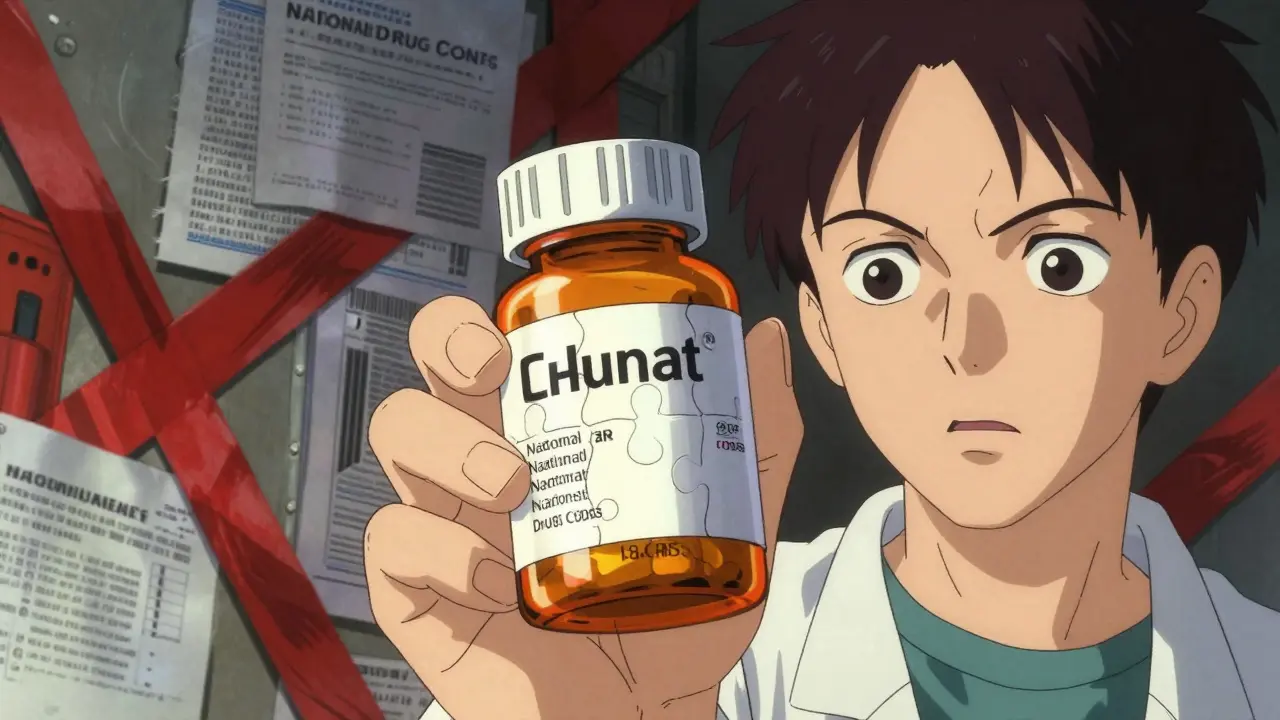
- Pinpoint the Manufacturer: This is the hardest part for generics. Unlike brand drugs, where the name identifies the maker, a generic like "Metoprolol" could come from Teva, Viatris, Amneal, or dozens of others. You must find the National Drug Code (NDC) number on the bottle. Use the DailyMed database to cross-reference that NDC with the specific manufacturer.
- Fill Out the Form: In the MedWatch portal, select "Generic Name" instead of "Brand Name." Enter the active ingredient (e.g., Losartan Potassium) and the manufacturer identified in step two. Do not leave this blank. Reporting it as "Unknown Manufacturer" dilutes the data signal.
- Submit Within Timeframes: For healthcare professionals, there is no strict federal deadline to submit voluntarily, but speed matters for signal detection. Manufacturers, however, have a hard limit: they must submit serious and unexpected ADRs to the FDA within 15 calendar days of receiving the info. In Europe, the European Medicines Agency (EMA) requires fatal or life-threatening cases to be notified within 7 days.
Why does the manufacturer matter so much? Because bioequivalence doesn't always mean identical clinical performance in every single patient. Differences in inactive ingredients (excipients), coating technologies, or release mechanisms can trigger unique reactions. If you don't identify the maker, the FDA can't trace the problem back to a specific production batch or formulation flaw.
Why the Data Gap Exists
It’s not just laziness. There are structural reasons why generic adverse events fly under the radar.
1. The Identification Problem
Pharmacies switch generic suppliers frequently based on cost. A patient might get their blood pressure med from Manufacturer A in January and Manufacturer B in March. When a side effect hits in April, the patient rarely knows which one caused it. A 2020 survey by the Institute for Safe Medication Practices (ISMP) found that 68% of healthcare providers struggled to identify the specific generic manufacturer when filing reports, compared to only 12% for brands. Dr. Robert Kim, a family physician, noted on Doximity that he often defaults to reporting against the brand manufacturer simply because the forms require a maker name that patients don’t know.
2. Resource Disparities
Big pharma companies have dedicated armies of pharmacovigilance specialists. According to a 2022 survey by the Generic Pharmaceutical Association, only 42% of generic manufacturers have dedicated internal departments. Many smaller firms rely on third-party contractors. This leads to inconsistent monitoring. Smaller generic makers (those with fewer than 20 products) accounted for 32% of generic prescriptions but submitted only 4.7% of related adverse event reports.
3. The "Good Enough" Bias
Clinicians often view generics as interchangeable commodities. If a patient has a mild rash, a doctor might assume it’s the drug class itself, not the specific generic formulation, and skip the report. But for serious events, this assumption is dangerous. As Dr. Jerry Avorn of Harvard Medical School pointed out in JAMA Internal Medicine, failing to capture the complete safety profile of generics risks patient safety when subtle formulation differences exist.
| Feature | Brand-Name Drugs | Generic Drugs |
|---|---|---|
| Prescription Volume (US) | ~10% | ~90% |
| Share of SAE Reports Submitted | ~68% | Significantly less than 90% |
| Dedicated Pharmacovigilance Dept. | 98% of manufacturers | 42% of manufacturers |
| Manufacturer Identification Difficulty | Low (Name = Maker) | High (Multiple makers per drug) |
| Regulatory Reporting Deadline | 15 Calendar Days (Serious/Unexpected) | 15 Calendar Days (Serious/Unexpected) |
New Tools and Fixes for 2026
The good news? The industry is waking up to this issue. The FDA and global regulators are rolling out changes designed to plug these leaks.
FAERS 2.0 and NDC Tracking
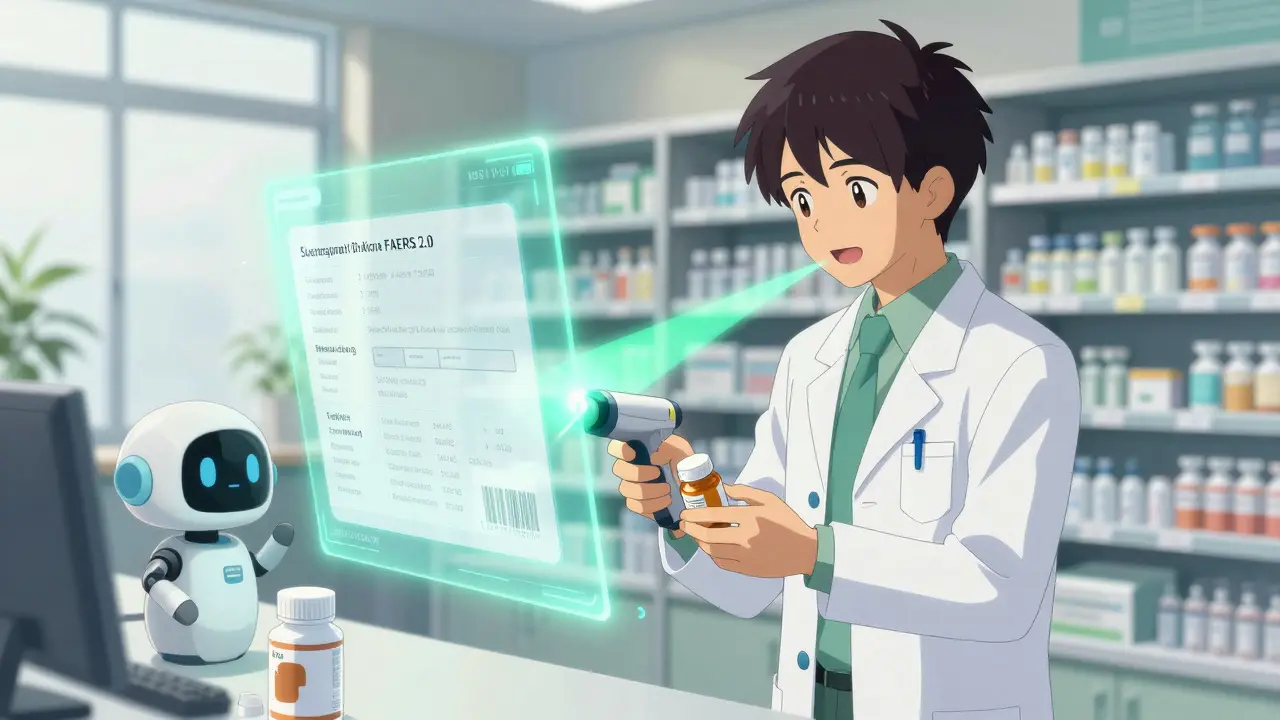
Implemented in 2023, the updated FAERS (FDA Adverse Event Reporting System) now has enhanced capabilities to link adverse events directly to specific generic manufacturers using National Drug Code (NDC) tracking. This reduces the manual error rate in identifying who made the pill.
Barcode Scanning Integration
The American Society of Health-System Pharmacists (ASHP) recommends hospitals implement barcode scanning at the point of administration. Pilot studies across 12 hospital systems showed this simple tech upgrade increased generic AE reporting accuracy by 63%. By scanning the bottle before giving the drug, the system logs the exact manufacturer, removing the guesswork later if a reaction occurs.
GDUFA III Funding
The Generic Drug User Fee Amendments (GDUFA) program, reauthorized through 2027, is allocating $15 million specifically for enhancing post-market safety monitoring of generic drugs. This funding supports better signal detection algorithms that can spot trends even when individual reports are sparse.
Pharmacy Label Requirements
In June 2023, the FDA issued draft guidance proposing that pharmacies include manufacturer information prominently on all prescription labels. While still in the implementation phase, this change aims to solve the patient-side identification problem. If the label says "Made by Company X," patients can tell their doctors exactly what they took.
Practical Tips for Healthcare Providers
If you are on the front lines, here is how to ensure your reports count:
- Don't Guess the Maker: Never default to the brand name unless you are sure the patient took the brand. If the manufacturer is unknown, state "Generic - Manufacturer Unknown" rather than misattributing it. Misattribution skews data just as badly as non-reporting.
- Use DailyMed: Keep the DailyMed website bookmarked. It takes about 10 minutes to look up an NDC, but it ensures the report goes to the right entity. University of Michigan research (2021) confirms this small investment yields higher quality data.
- Capture the Excipient Info: If the patient mentions allergies to dyes, gluten, or lactose, note if the generic product contains those. Generic formulations often swap excipients, which is a common cause of idiosyncratic reactions.
- Encourage Patient Vigilance: Tell patients to keep their empty bottles or photos of the labels. In a 2019 usability study, 42% of providers abandoned generic reports due to uncertainty about the maker. Having the physical evidence closes that loop.
The Bottom Line
Generic drugs are the backbone of modern healthcare, offering massive savings and accessibility. But their safety net relies on accurate, timely reporting. The current system works well for brands but leaves generics in the dark. By understanding the specific hurdles-manufacturer identification, resource gaps, and reporting fatigue-we can push for better practices. Whether you are a doctor, pharmacist, or patient, demanding precise manufacturer details in adverse event reports is not just bureaucracy; it’s a critical step toward ensuring that "generic" never means "less monitored."
What is the timeframe for reporting a serious adverse event for a generic drug?
Manufacturers must report serious and unexpected adverse drug reactions to the FDA within 15 calendar days of receiving the information. In the European Union, fatal or life-threatening unexpected events must be notified within 7 days, followed by a full report within 8 additional days. Healthcare providers are encouraged to report as soon as possible via MedWatch to aid rapid signal detection.
Do I need to know the specific manufacturer to report a generic drug side effect?
Ideally, yes. Identifying the specific manufacturer allows the FDA to track safety signals to particular formulations and batches. If the manufacturer is unknown, you should still file the report but clearly mark the manufacturer field as "Unknown" or "Generic - Maker Unidentified." Avoid attributing the event to the brand-name version unless the patient confirmed they took the brand.
Why are there fewer adverse event reports for generic drugs compared to brands?
Despite generics accounting for ~90% of prescriptions, they receive disproportionately fewer reports. Key reasons include difficulty identifying the specific manufacturer (since pharmacies switch suppliers), fewer dedicated pharmacovigilance staff at generic companies, and clinician bias assuming generics are perfectly interchangeable with brands without unique risks.
How can I find the manufacturer of a generic drug?
Look for the National Drug Code (NDC) on the medication bottle or box. You can then use the National Library of Medicine's DailyMed database to look up the NDC, which will list the specific manufacturer and product details. Some hospital systems also use barcode scanners at the point of care to capture this data automatically.
Is the FDA doing anything to fix the generic reporting gap?
Yes. The FDA implemented FAERS 2.0 to improve NDC tracking, allocated $15 million in GDUFA III funding for generic safety monitoring, and issued draft guidance requiring clearer manufacturer labeling on prescriptions. Additionally, pilot programs with major pharmacy chains aim to automatically capture manufacturer data at dispensing to boost reporting completeness by 55% over three years.