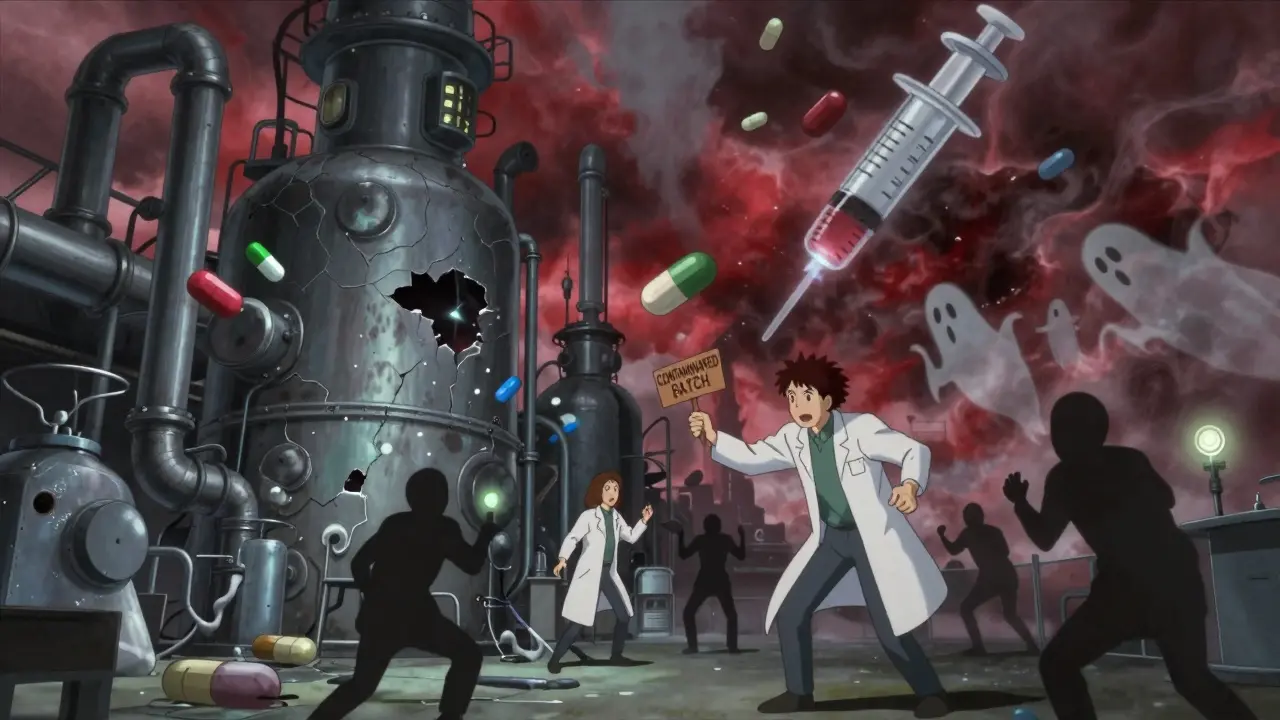
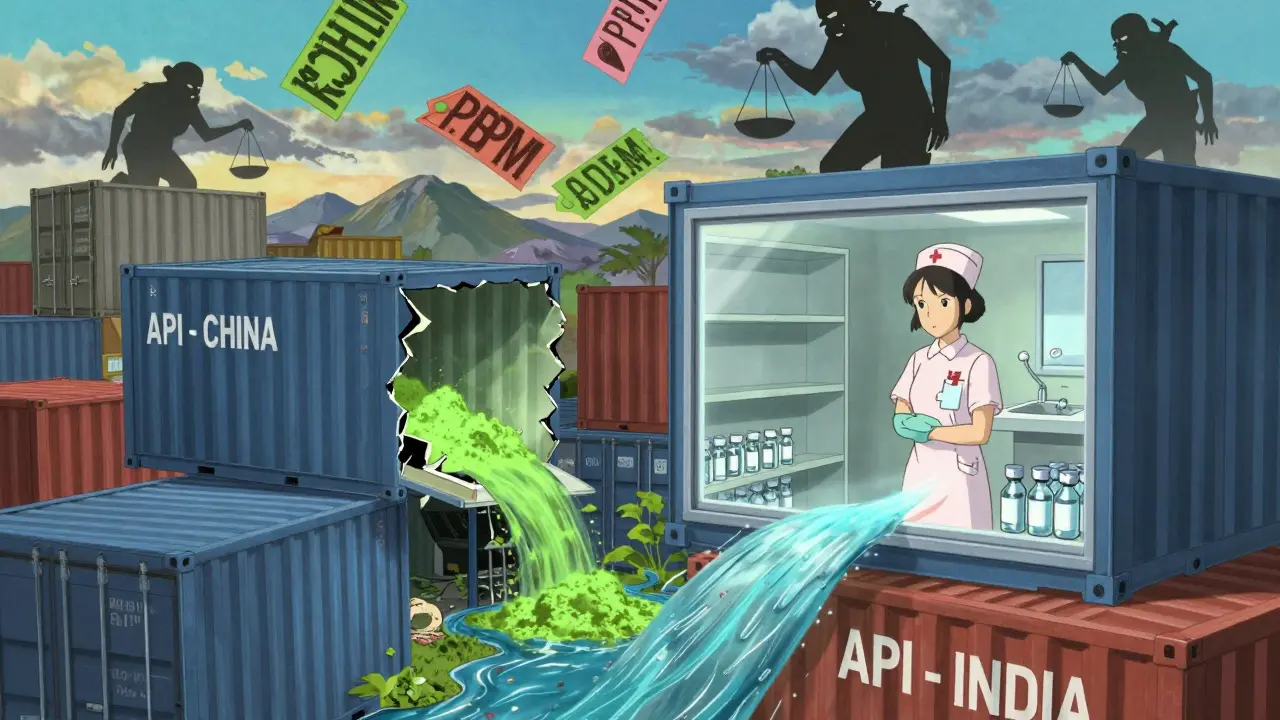
Every year, hundreds of essential medicines vanish from hospital shelves and pharmacy counters - not because they’re no longer needed, but because no one can make them. Generic drugs, which make up over 90% of all prescriptions filled in the U.S., are the most common victims. These aren’t rare or experimental drugs. They’re the antibiotics, anesthetics, insulin, and chemotherapy agents that people rely on every day. When they disappear, patients wait. Doctors scramble. Nurses ration. And behind every shortage is a broken system built on thin margins, global dependencies, and fragile manufacturing. Manufacturing failures are the biggest reason generic drugs vanish. According to the U.S. Food and Drug Administration (FDA), over 60% of all drug shortages between 2010 and 2023 were caused by problems at manufacturing sites. These aren’t minor hiccups. They’re shutdowns triggered by contamination, equipment breakdowns, or violations of quality standards. A single batch of contaminated injectable saline can shut down an entire facility for months. When that facility is the only one making a specific drug - and there are thousands of cases like this - the ripple effect is immediate and dangerous. Many of these manufacturing sites are old. Some were built in the 1970s and never upgraded. Others were designed for high-volume, low-margin production - perfect when demand was steady. But when a machine breaks down or a filter clogs, there’s no backup. Unlike branded drugs, which have multiple manufacturers and higher profit margins to absorb downtime, generic drugs are made by one or two companies. If one of them shuts down, there’s no one else to step in. This fragility is made worse by the fact that most active pharmaceutical ingredients (APIs) - the actual chemical building blocks of drugs - come from just two countries: China and India. About 80% of global API production happens there. Why? Because labor and regulatory costs are lower. But that creates a massive vulnerability. A flood in India, a factory fire in China, or even a trade restriction can cut off the supply of a drug that millions depend on. And because these ingredients are shipped across oceans, delays pile up. A container stuck at port for three weeks means a hospital runs out of a life-saving drug. The lack of spare capacity is another silent killer. Most generic drug manufacturers run their factories at 95% capacity. That sounds efficient - until something goes wrong. In industries like automotive or electronics, companies keep extra machines, extra shifts, extra stock. In generic pharma, they don’t. Why? Because profit margins are razor-thin. While branded drugs can earn 30-40% profit, generics often make less than 15%. That’s not enough to invest in backup equipment, redundant production lines, or safety stock. So when one factory fails, there’s no Plan B. And then there’s the consolidation problem. Over the past 20 years, the number of companies making generic drugs has shrunk dramatically. A decade ago, 15 different manufacturers might have made a common antibiotic. Now, it’s one or two. That consolidation happened because smaller companies couldn’t compete with the pricing pressure from giant pharmacy benefit managers (PBMs). PBMs control about 85% of prescription drug spending in the U.S. They negotiate bulk discounts - and they demand the lowest price possible. Manufacturers respond by cutting costs: fewer inspections, slower maintenance, less investment in quality control. Eventually, some just quit the market. Why make a drug that earns $0.03 per pill when you could be making something more profitable - or nothing at all? This creates a vicious cycle. Fewer manufacturers mean fewer competitors. Fewer competitors mean less pressure to innovate or improve. And when a shortage hits, there’s no new player ready to jump in. Starting a new drug manufacturing facility costs over $100 million and takes five years. No one will risk that unless they’re sure they’ll get paid - and with generic drug prices falling every year, that certainty doesn’t exist. The situation is even worse for sterile injectables - drugs given through IV or injection. These require the cleanest possible environments. Even a tiny speck of dust can ruin a batch. One contamination event can shut down a facility for over a year. And because there are so few facilities capable of making these drugs - and most are overseas - the system has almost no buffer. Meanwhile, the U.S. has no national stockpile for routine drug shortages. The Strategic National Stockpile exists for bioterrorism or pandemics, not for a shortage of penicillin or fentanyl. Canada, by contrast, has a national drug reserve that helps smooth out supply gaps. They also have better communication between regulators, hospitals, and manufacturers. In the U.S., hospitals often don’t know why a drug is out of stock - and the FDA doesn’t always require manufacturers to explain. One in four shortage reports in the U.S. have no reason listed at all. The result? Patients get substituted with less effective drugs. Cancer treatments are delayed. Surgeries are postponed because the anesthetic isn’t available. Nurses spend half their day calling other hospitals, checking inventory, or scrambling for alternatives. Pharmacists work overtime just to keep up. And all of it stems from a system that prioritizes price over preparedness. It’s not that we don’t know how to fix this. Experts have been warning about it for over a decade. We need incentives to keep manufacturers in the game - even for low-margin drugs. We need domestic production capacity for critical drugs. We need a national reserve system. We need transparency so hospitals know what’s coming. And we need to stop letting a handful of middlemen dictate prices so low that no one can afford to make the drugs anymore. The problem isn’t that we can’t make these drugs. It’s that we’ve built an economy where making them doesn’t make financial sense. And until that changes, shortages won’t just keep happening - they’ll get worse.
Why do some generic drugs have only one manufacturer?
Many generic drugs have only one manufacturer because the profit margin is too low to support competition. Once a drug loses its patent, dozens of companies may enter the market. But over time, price wars drive costs down. Companies with lower operating costs - often overseas - undercut others. Eventually, only one or two remain. If one of those shuts down, there’s no backup. This is especially true for older drugs with small markets, like certain antibiotics or injectables used in hospitals.
How do pharmacy benefit managers (PBMs) contribute to shortages?
PBMs negotiate drug prices for insurance companies and employers. To get the lowest price, they push manufacturers to cut costs. This leads to reduced investment in quality control, maintenance, and redundancy. PBMs also favor drugs with the highest rebates, not necessarily the most reliable ones. If a drug is cheaper but harder to produce, manufacturers may cut corners - increasing the risk of shutdowns. With PBMs controlling 85% of U.S. drug spending, their pricing demands shape the entire market.
Why can’t the U.S. just make more generic drugs domestically?
Building a drug manufacturing plant in the U.S. costs $100 million or more and takes 5-7 years. Without guaranteed demand or stable pricing, no company will make that investment. Generic drug prices keep falling, and there’s no financial incentive to build new facilities here. Meanwhile, overseas plants are cheaper to build and operate. Even with recent legislation like the RAPID Reserve Act, incentives for domestic production remain weak compared to the cost advantage of manufacturing abroad.
Are drug shortages getting worse?
Yes. The number of drug shortages peaked in 2018 and 2020, with over 300 new shortages each year. While the total number has dipped slightly since then, the severity has increased. More critical drugs - like chemotherapy agents and anesthetics - are affected. The number of manufacturers has dropped by 40% since 2010, and many remaining sites produce multiple drugs, creating single points of failure. Without structural changes, shortages will continue to grow in frequency and impact.
What happens to patients when a generic drug is in short supply?
Patients face delays, substitutions, or even treatment interruptions. A cancer patient might get a less effective alternative. A diabetic might receive a different insulin formulation with unpredictable effects. Emergency room doctors may have to delay procedures because the anesthetic isn’t available. Hospitals may ration doses. Pharmacists spend hours tracking down alternatives. In some cases, patients pay more out of pocket for a brand-name version. These disruptions aren’t theoretical - they’re daily realities in clinics and hospitals across the country.