Fluoroquinolone Side Effect Risk Calculator
This tool estimates your relative risk of developing fluoroquinolone antibiotic side effects including tendinopathy and nerve damage based on factors discussed in the article. It is not a medical diagnosis tool and should not replace professional medical advice.
Your Risk Assessment
Important: This assessment is based on published research and clinical data. Your actual risk may vary based on individual factors not captured here. Always discuss potential side effects with your healthcare provider before starting any medication.
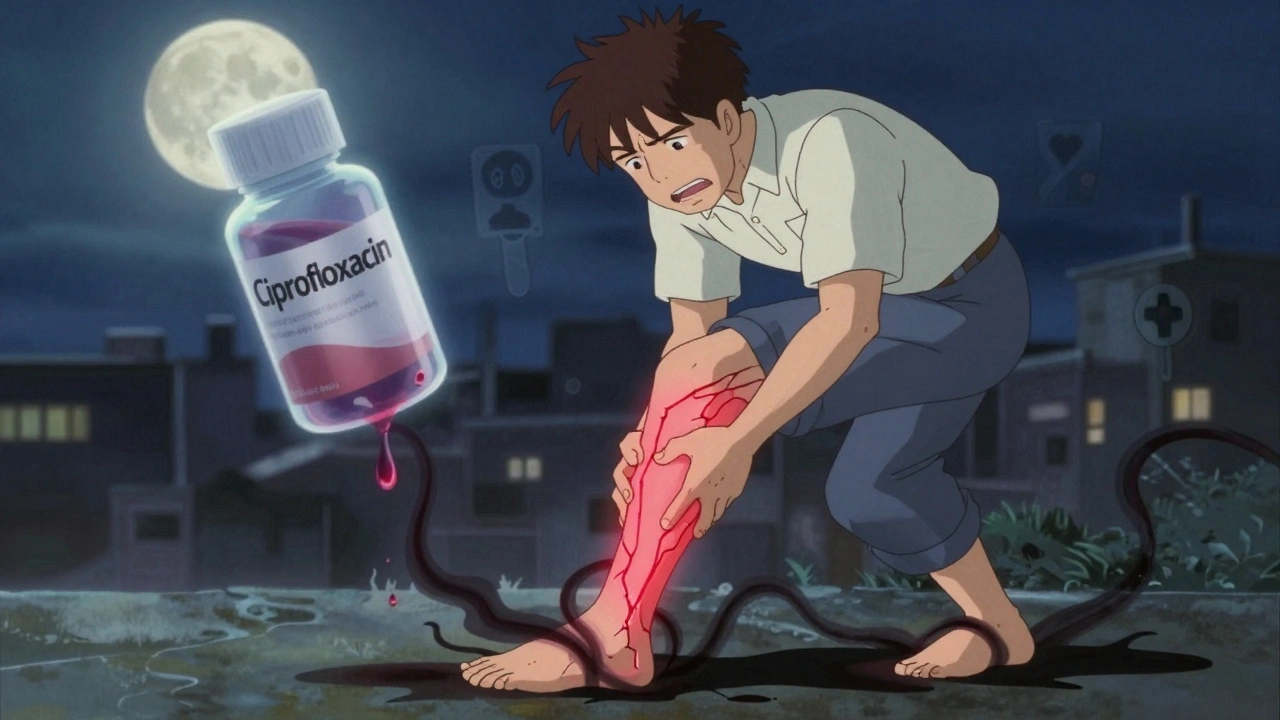
When you’re prescribed an antibiotic for a stubborn infection, you expect relief-not a lifetime of pain. But for some people, common fluoroquinolone antibiotics like ciprofloxacin, levofloxacin, and moxifloxacin can trigger devastating side effects that don’t go away. Tendon rupture and nerve damage aren’t rare footnotes in the prescribing info-they’re real, documented, and sometimes permanent risks that doctors are now told to take seriously.
What Are Fluoroquinolones, and Why Are They Still Used?
Fluoroquinolones are powerful antibiotics developed in the 1960s. They work against a wide range of bacteria, making them useful for serious infections like pneumonia, complicated urinary tract infections, and anthrax. Their ability to penetrate deep into tissues made them a go-to for hard-to-treat cases. But their power comes with a price.
Today, these drugs are no longer first-line treatment for common infections like sinus infections, bronchitis, or simple UTIs. Regulatory agencies like the FDA, EMA, and UK’s MHRA have tightened restrictions since 2016. Why? Because the risks for certain people now clearly outweigh the benefits for mild illnesses.
Tendinopathy: More Than Just a Sore Tendon
If you’ve ever felt a sudden, sharp pain in your heel while walking, you might think it’s just a strain. But if you’ve recently taken a fluoroquinolone, that pain could be the start of something far worse: tendinopathy.
The Achilles tendon is the most vulnerable-89.8% of cases involve it. But shoulders, hands, and thumbs can also be affected. Tendinitis (inflammation) happens in 83.7% of cases. In nearly 40% of those, the tendon completely ruptures. And here’s what many don’t know: half of these ruptures happen after you’ve finished the antibiotic course. Some patients report pain starting 152 days later.
Age is a major factor. People over 60 are 2.7 times more likely to suffer a rupture. If you’re also taking corticosteroids-common for arthritis or asthma-the risk jumps 46-fold. Diabetes and kidney problems also raise your chances.
Doctors now know that if you feel any tendon pain, swelling, or stiffness while on these drugs, you must stop immediately. Continuing the medication can turn a minor ache into a torn tendon. Immobilizing the area and avoiding corticosteroids is critical. Surgery isn’t always needed-90% of cases are managed without it-but recovery can take months. Some people never fully regain their mobility.
Nerve Damage: The Silent, Lasting Threat
Peripheral neuropathy is another serious, underrecognized side effect. It’s not just tingling. It’s burning, numbness, electric shocks, or loss of sensation in your hands and feet. Studies show it affects about 4.3% of fluoroquinolone users.
Unlike some side effects that fade after stopping the drug, nerve damage can be permanent. The FDA confirmed this in 2016 after reviewing hundreds of cases. Symptoms often start within the first month, but they can appear weeks or even months later. Patients report walking like they’re on ice, dropping things without realizing it, or losing balance.
There’s no reliable test to predict who will develop neuropathy. It can happen even in young, healthy people with no prior nerve issues. And once it’s there, treatment options are limited. Pain meds help a little, but they don’t reverse the damage.

Who’s at Highest Risk?
Not everyone taking fluoroquinolones will have problems. But certain groups face much higher odds:
- People over 60
- Those on corticosteroids (oral or injected)
- Patients with kidney disease
- Diabetics
- People with a history of tendon problems
- Those who’ve had prior fluoroquinolone reactions
Even if you’re young and fit, don’t assume you’re safe. A 2022 study found that 22% of tendon injuries occurred in patients under 50. And 38% of all reported adverse events came from people under 60. Age isn’t the only factor-your body’s ability to repair collagen and manage oxidative stress plays a role too.
What About Other Antibiotics?
Fluoroquinolones are not the only antibiotics available. For most common infections, safer options exist:
- Uncomplicated UTIs: Nitrofurantoin or trimethoprim
- Sinus infections: Amoxicillin or doxycycline
- Bronchitis: Usually no antibiotics needed
- Skin infections: Cephalexin or clindamycin
Studies show fluoroquinolones carry a 4.1-fold higher risk of Achilles tendon rupture compared to other antibiotics. For every 1,301 courses given for non-serious infections, one extra case of aortic aneurysm or dissection occurs. That’s not a small risk-it’s a preventable one.
The benefits of fluoroquinolones are real for life-threatening infections. But for routine illnesses? They’re not worth the gamble.
Real Patient Stories
On Reddit’s r/floxing community, over 14,000 members share their experiences. One user, 'TendonWarrior,' described how a 7-day course of levofloxacin for a sinus infection led to sudden, bilateral Achilles ruptures 12 days after finishing the pills. He needed 11 months of rehab.
Another patient from the Floxie Australia support group reported tendon pain lasting over four years. Thirty-five percent of surveyed members required surgery. On Drugs.com, ciprofloxacin has a 2.2/5 rating, with 68% of negative reviews citing tendon or nerve damage.
What’s heartbreaking? Many say their doctors dismissed their symptoms as "just aging" or "overuse." A 2021 survey by the Fluoroquinolone Effects Research Foundation found 72% of patients had their concerns ignored at first. That delay can make recovery harder-or impossible.
What Should You Do If You’re Prescribed One?
If your doctor suggests a fluoroquinolone, ask these questions:
- Is this infection serious enough to warrant a fluoroquinolone?
- Are there safer alternatives?
- What are the signs of tendon or nerve damage I should watch for?
- Will you document the risks and my consent?
Don’t be afraid to push back. You have the right to know the full picture. The UK’s MHRA and the FDA both require doctors to warn patients about the risk of disabling, long-lasting side effects. If they don’t mention it, ask.
If you start feeling pain in your tendons, numbness in your fingers or toes, or unusual weakness, stop the medication immediately and contact your doctor. Don’t wait. Early action can prevent permanent damage.
The Bigger Picture: Why This Matters
The global market for fluoroquinolones has dropped 27% since 2015. In the U.S., prescriptions for simple UTIs fell from 17% to just 5% in seven years. That’s because doctors are learning-and patients are speaking up.
Regulators are watching. The FDA’s Sentinel Initiative now tracks real-time data from 150 million Americans. The EMA confirmed the 4.1-fold tendon rupture risk in 2023. Research is even exploring whether doxycycline might help protect tendons in high-risk patients.
But the real change is cultural. More people now know these drugs aren’t harmless. They’re powerful tools for emergencies-not daily convenience. The goal isn’t to ban them. It’s to use them wisely.
If you’ve had a bad reaction, you’re not alone. And if you’re considering one, ask yourself: Is this infection worth risking a lifetime of pain?
Can fluoroquinolone tendon damage be reversed?
In some cases, yes-if caught early and treated properly. Stopping the drug immediately, resting the tendon, and avoiding corticosteroids can allow healing. But for many, the damage is permanent. Up to 10% of patients experience long-term disability, including chronic pain, reduced mobility, and difficulty walking. Recovery can take months or years, and some never fully regain function.
How soon after taking fluoroquinolones do side effects start?
Symptoms can appear as early as the first day, but most cases occur within the first month. The median onset is just 6 days after starting the drug. However, tendon pain and nerve damage can also show up weeks or even months after you’ve finished the course. That’s why doctors now warn patients to stay alert for symptoms long after treatment ends.
Are all fluoroquinolones equally risky?
No. Ciprofloxacin is the most commonly linked to tendon damage, followed by norfloxacin and levofloxacin. But all fluoroquinolones carry the same black-box warning from the FDA. The risk varies slightly by drug, but no fluoroquinolone is considered safe for routine use. The class as a whole has been restricted for good reason.
Can I take fluoroquinolones if I’ve had tendon problems before?
Absolutely not. If you’ve had a previous tendon rupture or tendinitis-especially if it was linked to antibiotics-fluoroquinolones are contraindicated. The risk of recurrence is extremely high. Your doctor should avoid prescribing them entirely in your case. Safer alternatives exist for nearly every infection.
Why do some doctors still prescribe fluoroquinolones?
Some doctors still prescribe them out of habit, lack of awareness, or because they’re treating a truly serious infection with no alternatives. But studies show only 43% of primary care doctors correctly identify fluoroquinolone-induced tendinopathy in case scenarios. Many are unaware of the latest guidelines. Always ask if there’s a safer option before accepting the prescription.
What should I do if I think I’m having side effects?
Stop taking the medication immediately. Contact your doctor or go to urgent care. Do not wait to see if it gets better. Document your symptoms-when they started, what they feel like, and whether they’re getting worse. Avoid corticosteroids and physical strain on the affected area. Report your experience to your country’s drug safety agency (like the FDA’s MedWatch or the UK’s Yellow Card scheme). Your report helps protect others.