Imagine landing in a beautiful coastal village in Italy or a bustling market in Thailand, only to be hit with a sudden bout of traveler's diarrhea or a nasty insect bite. It's a quick way to turn a dream vacation into a stressful search for a pharmacy in a language you don't speak. You don't need to pack your entire medicine cabinet, but having a curated travel medication kit can be the difference between a minor inconvenience and a ruined trip. The goal isn't to be a walking hospital, but to handle common health hiccups without needing an emergency room visit.
The Essential Core: Medications for Every Trip
Regardless of where you're headed, there are a few "non-negotiables" that every kit should have. These address the most common ailments that hit travelers: pain, allergies, and digestive distress. When packing, stick to travel-sized versions or original packaging to avoid confusion at customs.
For pain and fever, Ibuprofen is a great choice for inflammation, while acetaminophen is better for simple headaches or fever. A count of 10-20 tablets usually suffices for short trips. If you're prone to allergies, don't forget antihistamines. Loratadine or Cetirizine are standard non-drowsy options that keep you alert while sightseeing.
Digestive issues are perhaps the most frequent travel complaint. To manage this, pack Loperamide (often known as Imodium) to stop diarrhea in its tracks. For those who struggle with new cuisines, antacids containing calcium carbonate or famotidine can handle heartburn. If you're traveling to areas where water quality is a concern, include oral rehydration salts (ORS) to prevent dehydration, which can happen fast in hot climates.
| Category | Recommended Entity | Typical Use Case | Suggested Quantity |
|---|---|---|---|
| Pain Relief | Ibuprofen / Acetaminophen | Headaches, Muscle Aches, Fever | 10-20 tablets |
| Digestive | Loperamide | Diarrhea | 6-10 tablets |
| Allergy | Loratadine / Cetirizine | Hay fever, Hives, Itching | 7-10 tablets |
| Stomach | Calcium Carbonate | Heartburn, Indigestion | 7-10 tablets |
| Hydration | WHO-formulated ORS | Dehydration from illness | 5 packets |
Wound Care and Skin Protection
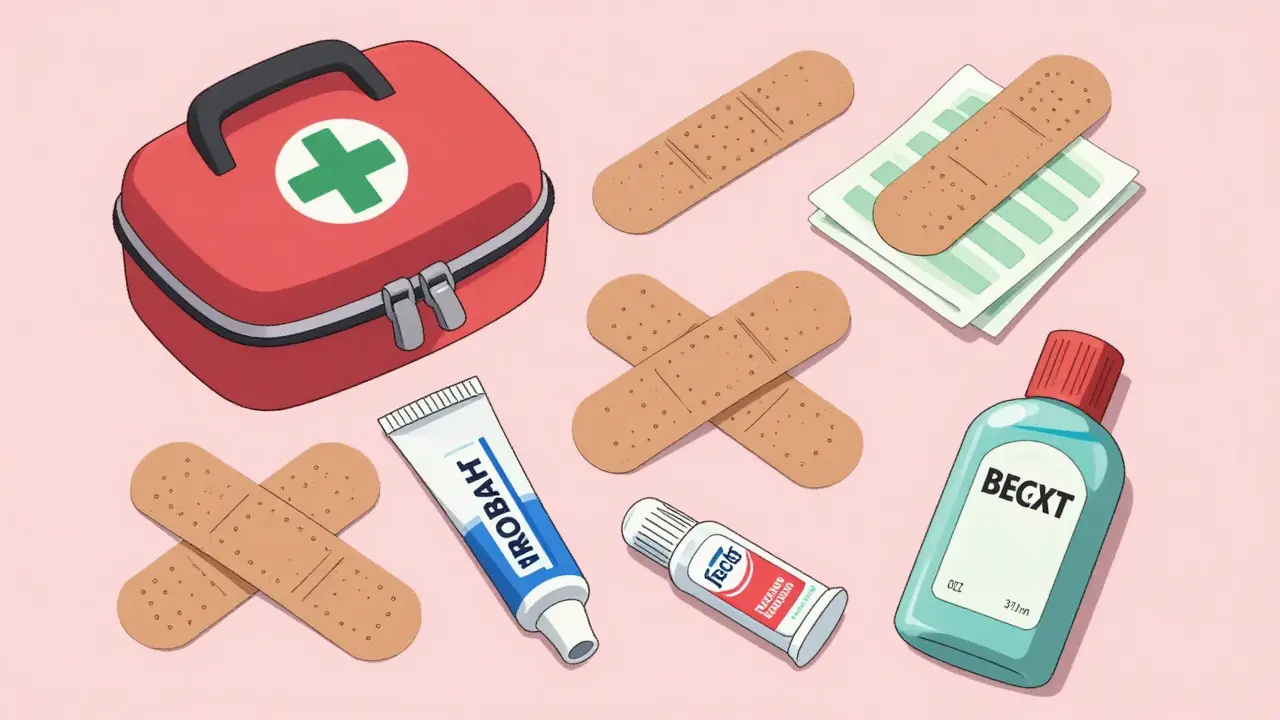
From blistered heels after a day of walking in Rome to a scraped knee during a hike, minor injuries are inevitable. Your kit should move beyond just pills to include basic first aid supplies. Start with a variety of Adhesive Bandages in different sizes. Add a few gauze pads and medical tape for larger scrapes that a simple band-aid won't cover.
Cleaning the wound is just as important as covering it. Use an antiseptic cleaner like chlorhexidine or povidone-iodine to prevent infection. A small tube of antibacterial ointment, such as Bacitracin, helps the skin heal faster and keeps the wound moist. For those itchy bug bites or mystery rashes, a 1% Hydrocortisone cream is a lifesaver for reducing swelling and irritation.
Customizing Your Kit by Destination
A trip to the Swiss Alps requires a very different kit than a weekend in Miami. You need to tailor your supplies to the environment. If you're heading to high altitudes, talk to your doctor about Acetazolamide, which helps your body adjust to lower oxygen levels and prevents altitude sickness.
For tropical destinations, the focus shifts to insect-borne illnesses and water safety. Pack a repellent with a 20-30% concentration of DEET to keep mosquitoes at bay. In areas where tap water isn't potable, water purification tablets are essential. If you're planning a camping trip or a long trek, add blister pads-they save your feet when your boots start rubbing.
Managing Prescription Medications Safely
If you take daily medication for a chronic condition, your travel kit isn't complete without a strategy for your prescriptions. The golden rule is to pack twice as much as you think you'll need. Why? Because flights get canceled, luggage gets lost, and trips sometimes get extended. Split your supply: keep half in your checked bag and half in your carry-on. If one bag disappears, you aren't left without your life-saving meds.
Documentation is where many travelers fail. Carry a printed list of your medications using Generic Names. Trade names (the brand names) vary by country; for example, a drug called "Tylenol" in the US is "Panadol" in other regions. Using the generic chemical name ensures a pharmacist in any country knows exactly what you need.
For those with specific needs, like Diabetes, carrying a doctor's letter is mandatory. This letter explains why you are carrying needles and syringes, preventing stressful delays at security checkpoints. Always keep this letter and a copy of your prescriptions in your handbag or wallet.
Packing and Legal Considerations
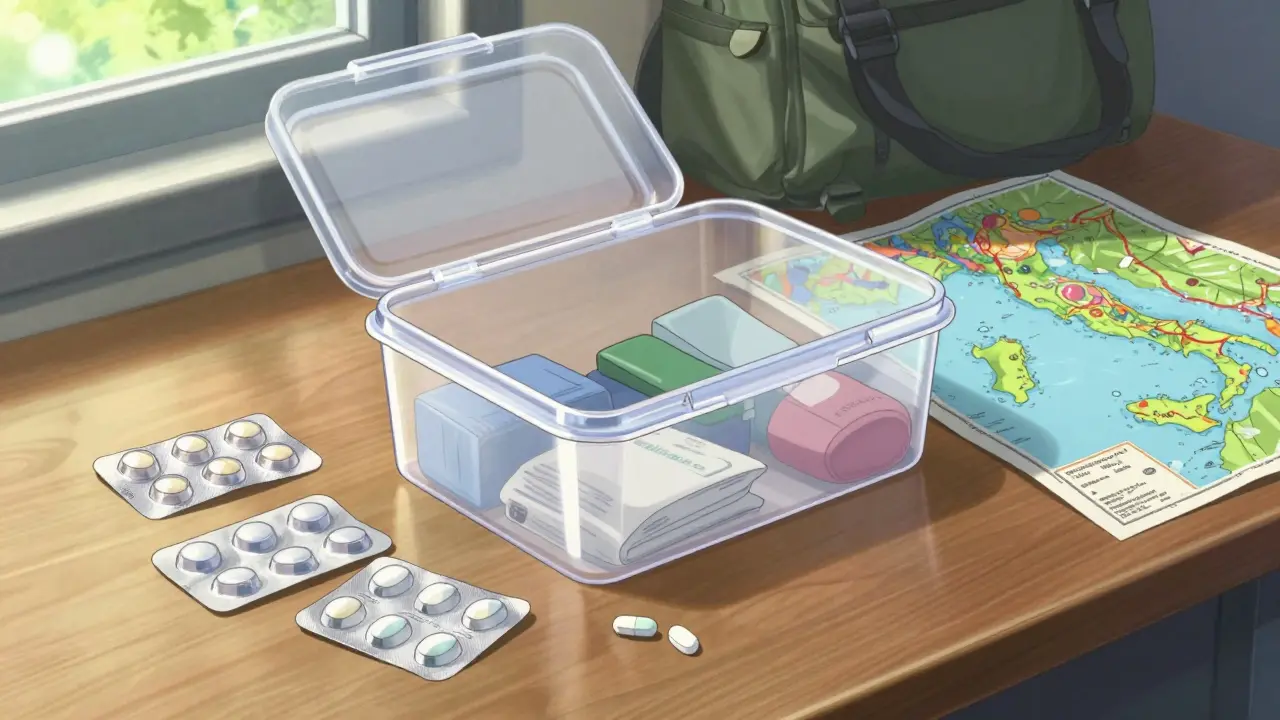
How you pack is as important as what you pack. Use a clear, waterproof, and squash-proof plastic box. This keeps everything organized and protects your pills from moisture or accidental crushing. Avoid keeping medications in direct sunlight or in hot cars, as heat can degrade the effectiveness of drugs like insulin.
Be mindful of international laws. Some countries have incredibly strict rules. For instance, Japan prohibits certain common cold medicines containing pseudoephedrine. Before you leave, check with the embassy or consulate of your destination. What is over-the-counter in the UK or US might be a controlled substance elsewhere.
A quick tip for airport security: items like scissors, tweezers, or heavy-duty safety pins should go in your checked luggage. While they are useful for first aid, TSA and other security agencies may confiscate them if found in your cabin bag.
Checklist for Final Review
- The Basics: Pain relievers, antihistamines, and antidiarrheals.
- Wound Care: Bandages, antiseptic, and antibacterial ointment.
- Destination Add-ons: DEET, water tablets, or altitude meds.
- Prescriptions: Double supply, generic name list, and doctor's letters.
- Organization: Waterproof container and labels.
- Emergency Contacts: A card with family, doctor, and embassy details.
Should I take my medications out of their original bottles?
It's best to keep them in their original packaging. This prevents confusion and is critical for customs officials who need to verify what the medication is and who it belongs to. If you must use a pill organizer, carry a copy of the prescription to match the meds.
How do I handle medications for infants and children?
Never use adult formulations for infants. Children under two require specific pediatric dosages and formulations. Consult your pediatrician to create a separate infant-specific kit with age-appropriate fever reducers and saline drops.
What happens if I lose my prescription meds while abroad?
This is why you should carry a printed list of generic names and a copy of your prescription. Take these documents to a local pharmacy or clinic. Having a digital copy (email or cloud storage) is a great backup if you lose the physical paper.
Are there any medications I should avoid bringing to certain countries?
Yes. Some countries, like Japan or the UAE, have strict bans on certain stimulants or strong painkillers (opioids). Always check the embassy website of your destination country to ensure your medications are legal to import.
How should I store my kit during a long flight?
Keep your kit in your carry-on bag. This ensures you have access to essential meds during the flight and prevents your medication from being lost if your checked luggage goes missing. Keep it away from extreme heat sources.
Next Steps and Troubleshooting
If you're traveling soon, your first move should be an appointment with your primary care provider. Check if you need updated vaccines or a specific prescription for malaria or altitude sickness. If you're traveling with a child, have your pediatrician calculate the exact dosages for their weight so you aren't guessing in a pharmacy aisle in another country.
For those with complex medical needs, such as severe allergies (carrying epinephrine) or diabetes, double-check that your medical alert jewelry is up to date. If you find yourself in a medical emergency abroad, your first point of contact should be the nearest embassy or consulate, who can help you find a reputable local hospital.