
Imagine your digestive system turning against you. That is essentially what happens during Pancreatitis, which is inflammation of the pancreas, an organ located behind the stomach that produces digestive enzymes and hormones regulating blood sugar. Instead of breaking down food in your intestines, these powerful enzymes activate inside the pancreas itself. This causes autodigestion, leading to severe pain, swelling, and potentially life-threatening complications. Understanding the difference between the sudden strike of acute pancreatitis and the slow burn of chronic pancreatitis is critical for survival and quality of life.
The stakes are high. According to the National Institute of Diabetes and Digestive and Kidney Diseases (NIDDK), acute pancreatitis leads to approximately 275,000 hospitalizations annually in the United States as of 2023. While most cases resolve with proper care, severe instances involving tissue death can carry a mortality rate of up to 30%. For those who survive the initial attack, the journey toward recovery is heavily dependent on how well they manage their diet and long-term health strategies.
Acute Pancreatitis: The Sudden Onset
Acute pancreatitis strikes without warning. It is characterized by a rapid onset of inflammation that typically resolves within days to weeks if treated correctly. The primary symptom is sudden, severe epigastric pain-pain in the upper middle abdomen-that often radiates to the back. The Mayo Clinic reports that this specific pain pattern occurs in 95% of acute cases.
Diagnosis relies on three key indicators, requiring at least two for confirmation: characteristic abdominal pain, serum amylase or lipase levels three times above the normal limit, and imaging findings such as pancreatic edema on a CT scan. The Revised Atlanta Classification system, updated in 2012, categorizes severity based on organ failure duration. Mild cases involve no organ failure, while severe cases feature persistent organ failure lasting beyond 48 hours.
Immediate medical intervention is crucial. Dr. Dhiraj Yadav from the University of Pittsburgh notes that early aggressive fluid resuscitation within the first 24 hours reduces pancreatic necrosis by 35%. Most patients with mild acute pancreatitis recover fully within one week with supportive care, including intravenous fluids and pain management.
Chronic Pancreatitis: The Progressive Decline
If acute pancreatitis is a fire, chronic pancreatitis is the smoldering ash. It involves permanent structural damage, fibrosis (scarring), and calcification of the pancreatic tissue. Unlike the acute form, this condition persists over months to years, leading to progressive functional impairment. The European Pancreatic Club describes its progression through three phases: early recurrent pain, intermediate pain with developing digestive issues, and late-stage failure where pain may decrease but metabolic problems dominate.
Chronic pancreatitis affects an estimated 5-12 per 100,000 people globally. The primary culprits are long-term alcohol exposure and genetic mutations. In fact, 90% of alcohol-related cases show markers of long-term exposure in hair testing. Genetic factors, such as mutations in PRSS1, SPINK1, or CFTR genes, account for 10-15% of cases. Over time, the pancreas loses its ability to produce essential digestive enzymes and insulin, leading to exocrine insufficiency and diabetes.
| Feature | Acute Pancreatitis | Chronic Pancreatitis |
|---|---|---|
| Onset | Sudden, severe | Gradual, recurrent |
| Pain Pattern | Constant, epigastric, radiating to back | Postprandial (after meals), variable intensity |
| Diagnostic Markers | Elevated lipase (>3x normal) | Steatorrhea (fatty stools), calcifications on CT |
| Tissue Damage | Reversible inflammation | Irreversible fibrosis and scarring |
| Long-term Outcome | Full recovery possible | Progressive loss of function, diabetes risk |
| Mortality Rate | 5% overall (up to 30% in severe cases) | 10-year survival ~70% |
Nutrition in Recovery: The Core Strategy
Food becomes both a trigger and a medicine when managing pancreatitis. The approach differs significantly depending on whether you are recovering from an acute flare or managing chronic disease. The goal is to reduce the workload on the pancreas while preventing malnutrition.
During an acute flare, the standard protocol often involves bowel rest initially, followed by the reintroduction of enteral nutrition within 24-48 hours. The American Society for Parenteral and Enteral Nutrition (ASPEN) recommends starting with low-fat, easily digestible foods. As tolerance improves, protein intake should reach 1-1.5 g/kg/day to support tissue repair. Enteral nutrition is preferred over parenteral (IV) nutrition because it maintains gut barrier function and reduces infection rates by 30%.
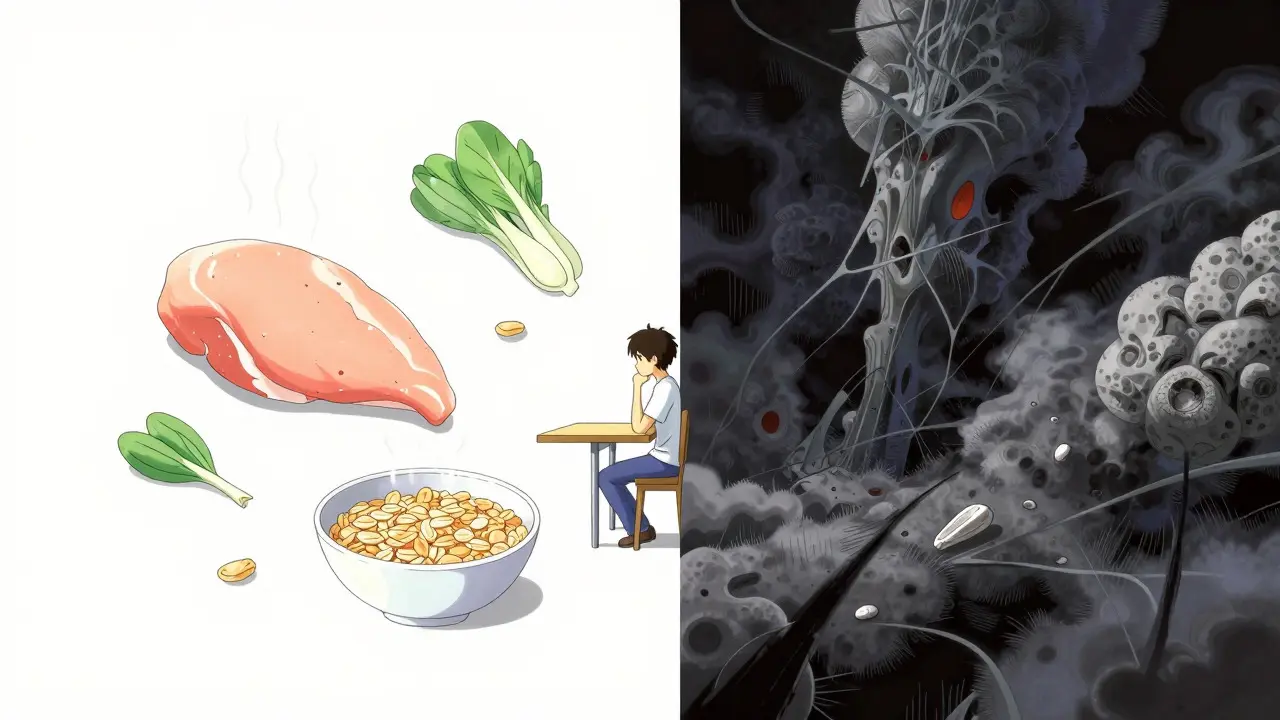
For chronic pancreatitis, the focus shifts to managing maldigestion. Since the pancreas cannot produce enough enzymes, undigested fat passes through the body, causing steatorrhea (oily, foul-smelling stools) and weight loss. This is where Pancreatic Enzyme Replacement Therapy (PERT) comes into play. PERT supplements provide the missing enzymes, allowing the body to absorb nutrients properly.
Understanding Pancreatic Enzyme Replacement Therapy (PERT)
Pancreatic Enzyme Replacement Therapy is not optional for many with chronic pancreatitis; it is essential for survival and quality of life. The European Society for Clinical Nutrition and Metabolism (ESPEN) guidelines specify dosing at 40,000-90,000 Lipase Units (LU) per main meal and 25,000 LU per snack. These enzymes must be taken with every bite of food containing fat or protein.
Effectiveness is monitored through fecal fat testing. If more than 7% of ingested fat is excreted, the dose is likely inadequate. Newer formulations, such as Creon 36,000, have shown improved absorption rates compared to older versions. However, even with optimal dosing, some patients struggle with weight maintenance, highlighting the need for precise nutritional planning.
Dietary Adjustments: What to Eat and Avoid
Your plate plays a massive role in symptom control. Here is a practical breakdown of dietary adjustments:
- Fat Intake: During acute flares, strict fat restriction (20-30g/day) is necessary. In chronic management, moderate restriction (40-50g/day) is recommended. Medium-chain triglycerides (MCT oil) are particularly beneficial because they do not require pancreatic enzymes for digestion.
- Protein Sources: Lean proteins like chicken breast, fish, tofu, and egg whites are easier to digest. Avoid fatty cuts of meat and processed meats.
- Carbohydrates: Complex carbohydrates such as oats, brown rice, and whole grains provide sustained energy without spiking blood sugar too rapidly, which is crucial since diabetes is a common complication.
- Vitamin Supplementation: Malabsorption leads to deficiencies in fat-soluble vitamins. Studies show 85% of chronic pancreatitis patients are deficient in Vitamin D, 40% in Vitamin B12, and 25% in Vitamin A. Regular monitoring and supplementation are vital.
- Meal Frequency: Small, frequent meals (6-8 daily) prevent overwhelming the pancreas and help stabilize blood sugar levels.
Avoid alcohol completely. Smoking cessation is equally important, as smoking accelerates disease progression by 50% compared to non-smokers. Caffeine should be limited, as it can stimulate acid secretion and increase pain in some individuals.

Living with Pancreatitis: Beyond the Plate
Managing pancreatitis extends beyond diet. Pain management is complex, with 65% of chronic patients requiring opioid medications. However, there is a risk of opioid use disorder, affecting 30% of patients within five years. Multidisciplinary care teams-including gastroenterologists, pain specialists, endocrinologists, and nutritionists-are essential for addressing this complexity.
Emotional health also suffers. Fear of eating due to pain triggers anxiety and depression. Support groups and counseling can help patients cope with the lifestyle changes required. Additionally, regular surveillance is necessary due to the increased risk of pancreatic cancer, which is 15-20 times higher in chronic pancreatitis patients. Annual MRI or MRCP scans are recommended for high-risk individuals.
Emerging Treatments and Future Outlook
Research continues to evolve. New biomarkers like pancreatic stone protein (PSP) offer better prediction of acute severity. Stem cell therapy trials, such as REGENERATE-CP, show promise in restoring exocrine function. Probiotics containing Lactobacillus rhamnosus GG and Bifidobacterium lactis have demonstrated a 40% reduction in abdominal pain scores in recent studies. Furthermore, continuous glucose monitoring systems tailored for pancreatogenic diabetes, like the Dexcom G7, help manage blood sugar variability more effectively.
While there is no cure for chronic pancreatitis, early intervention and strict adherence to nutritional and medical protocols can significantly slow progression and improve quality of life. The key lies in proactive management rather than reactive treatment.
What is the main difference between acute and chronic pancreatitis?
Acute pancreatitis is a sudden inflammation that usually resolves within days to weeks with treatment. Chronic pancreatitis involves permanent scarring and progressive loss of pancreatic function over years, leading to long-term digestive and hormonal issues.
How much fat should I eat if I have chronic pancreatitis?
For chronic pancreatitis, moderate fat restriction of 40-50 grams per day is generally recommended. During acute flares, this drops to 20-30 grams per day. Medium-chain triglyceride (MCT) oil is a good alternative as it does not require pancreatic enzymes for digestion.
When should I start taking Pancreatic Enzyme Replacement Therapy (PERT)?
PERT should be started when symptoms of malabsorption appear, such as steatorrhea (fatty stools) or unexplained weight loss. Dosing typically starts at 40,000-90,000 LU per main meal and is adjusted based on symptom response and fecal fat tests.
Can pancreatitis cause diabetes?
Yes. Chronic pancreatitis damages the insulin-producing cells in the pancreas. Approximately 50% of patients develop diabetes within 12 years of diagnosis. This type, known as pancreatogenic diabetes, requires careful monitoring and management.
Is alcohol strictly forbidden for pancreatitis patients?
Yes. Alcohol is a major cause of both acute and chronic pancreatitis. Complete abstinence is crucial to prevent further damage, reduce pain episodes, and slow disease progression. Even small amounts can trigger severe flares.