

Tacrolimus Neurotoxicity Risk Calculator
Estimate Your Neurotoxicity Risk
This tool estimates your risk of tacrolimus neurotoxicity based on published data. Actual risk depends on many factors not included here.
Important Note: This calculator uses published data to estimate risk. Actual risk varies based on individual factors. Always discuss your symptoms and treatment plan with your transplant team before making any changes.
Tremor, Headache, and the Hidden Risk of Tacrolimus
Imagine waking up with your hands shaking so badly you can’t hold a coffee cup. Or having a headache that won’t quit, even after taking painkillers. For many transplant patients, this isn’t a coincidence-it’s tacrolimus neurotoxicity. Tacrolimus is one of the most powerful immunosuppressants used after kidney, liver, heart, or lung transplants. It keeps the body from rejecting the new organ. But for 1 in 3 people taking it, the drug also starts attacking the nervous system. And the symptoms? They often show up even when blood levels look "normal."
Doctors rely on blood tests to guide dosing. The usual target range? 5 to 15 ng/mL, depending on the organ. But here’s the problem: someone can have a level of 7.2 ng/mL-well within range-and still develop severe tremors. Another person might hit 14 ng/mL with no issues. Why? Because it’s not just about the number in the blood. It’s about how your brain reacts.
What Does Tacrolimus Neurotoxicity Actually Look Like?
Tremor is the most common sign. About 65 to 75% of patients who develop neurotoxicity report it. It’s not just a slight shake. It can be so intense that writing, buttoning a shirt, or using a spoon becomes impossible. Headache comes next-reported by nearly half of affected patients. These aren’t typical tension headaches. They’re often described as crushing, constant, and unresponsive to regular pain relief.
Other symptoms pile on: pins and needles in the fingers or toes, trouble sleeping, dizziness, confusion, or even slurred speech. In rare but serious cases, patients develop Posterior Reversible Encephalopathy Syndrome (PRES), which shows up on MRI as swelling in the back of the brain. Or worse-central pontine myelinolysis, a condition where the brainstem’s protective coating gets damaged. Autopsy studies show this happens in up to 17% of liver transplant patients.
What’s scary is how often these symptoms are missed. A 2022 survey of transplant patients found that 55% waited two to three weeks before their doctors connected the dots. By then, the tremor had worsened, the headaches were daily, and the patient was terrified. Many thought they were just stressed or tired from surgery.
Why Do Blood Levels Lie
The standard practice is to check tacrolimus blood levels every few days after transplant, then monthly. But those numbers don’t tell the whole story. A 2023 study in Annals of Transplantation found no clear link between average blood levels and whether someone developed neurotoxicity. Some patients with levels under 10 ng/mL had severe symptoms. Others with levels over 15 ng/mL felt fine.
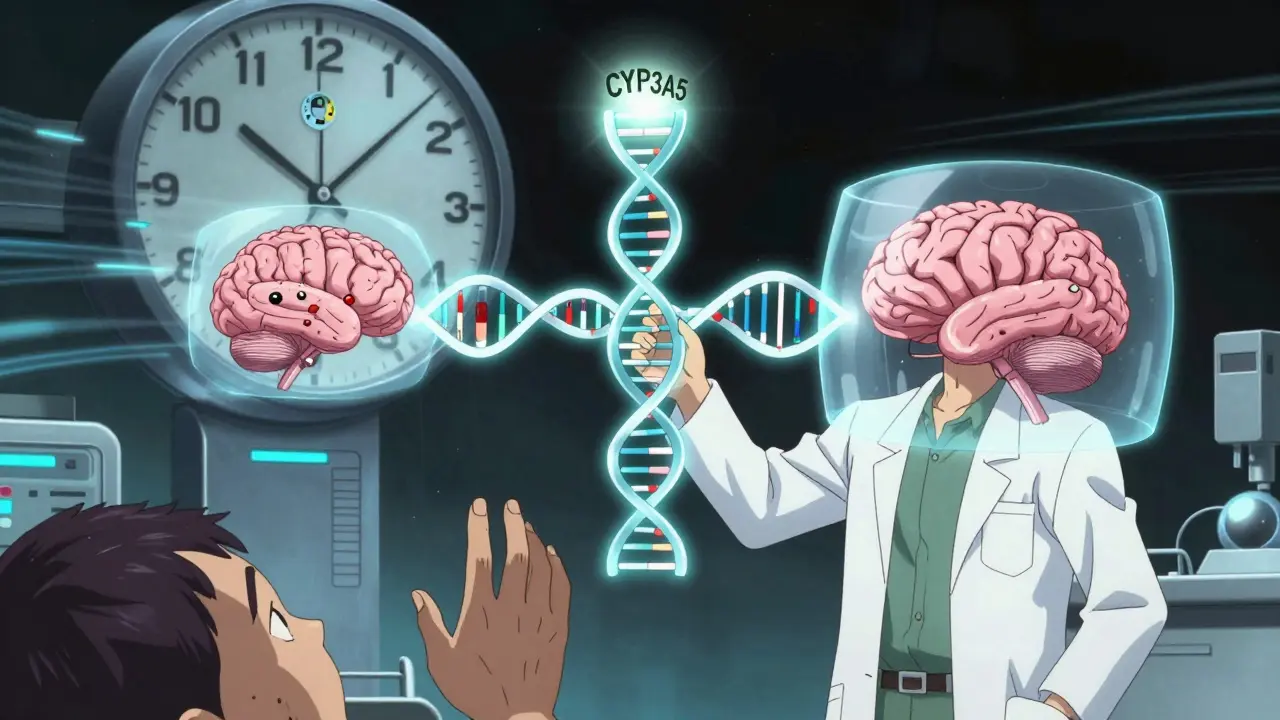
The real culprit? How much of the drug crosses the blood-brain barrier. That varies wildly from person to person. Some people’s brains soak up tacrolimus like a sponge. Others barely let any in. Why? Genetics. Specifically, the CYP3A5 gene. About 10-15% of people are "fast metabolizers"-they break down tacrolimus quickly and need higher doses. But their brains end up with more of the drug because of how it’s processed. A 2021 study from the University of Toronto showed that testing for CYP3A5 status before starting tacrolimus reduced neurotoxicity by 27%.
Yet most clinics don’t do this test. It’s expensive. Insurance often won’t cover it. So doctors keep dosing based on weight and blood levels-ignoring the fact that two people with the same level can have completely different brain exposures.

Who’s at Highest Risk?
Not everyone is equally vulnerable. Liver transplant patients face the highest risk-35.7% develop neurotoxicity. Kidney recipients follow at 22.4%. Heart and lung transplant patients are less affected, at 15.2% and 18.9% respectively. Why? The liver processes tacrolimus, so after a liver transplant, the body’s ability to clear the drug changes dramatically. It’s like suddenly losing your detox system.
Other risk factors include:
- Low sodium levels (hyponatremia)-this makes the brain more sensitive to the drug
- Use of other neurotoxic meds: antibiotics like linezolid, sedatives like midazolam, or antipsychotics like haloperidol
- High blood pressure, especially if uncontrolled
- Older age and pre-existing nerve damage
One patient on a transplant forum described it this way: "My sodium dropped after surgery. My headache started the next day. My level was 8.5. They said it was fine. It wasn’t."
What Happens When You Stop or Lower Tacrolimus?
Stopping tacrolimus isn’t simple. If you lower the dose too much, your body may reject the new organ. But if you don’t act on neurotoxicity, quality of life plummets. Many patients become anxious, depressed, or isolated because they can’t do basic tasks.
The good news? Symptoms often reverse quickly once the drug is adjusted. In 78.6% of cases, doctors either reduce the dose or switch to cyclosporine. Most patients feel better within 3 to 7 days. One patient on the National Kidney Foundation forum reported his tremor vanished in 72 hours after dropping his dose from 0.1 mg/kg to 0.07 mg/kg-even though his blood level stayed in the "therapeutic" range.
Switching to cyclosporine is common. It’s less likely to cause tremors or headaches-but it carries a higher risk of rejection and kidney damage. So it’s a trade-off: better nerves, worse kidneys.
There’s also a third option: newer drugs like belatacept or sirolimus. They don’t cause neurotoxicity at all. But they’re more expensive, harder to manage, and not always approved for every type of transplant. For now, tacrolimus remains the gold standard-despite its risks.
What You Can Do Right Now
If you’re on tacrolimus and experiencing tremors, headaches, or confusion:
- Don’t wait. Tell your transplant team immediately-even if your blood level looks fine.
- Ask for a sodium test. Low sodium is a hidden trigger.
- Ask if you’ve been tested for CYP3A5. If not, request it.
- Review all your other medications. Some common antibiotics and sleep aids can make neurotoxicity worse.
- Track your symptoms daily. Note when the tremor started, how bad the headache is, whether sleep is affected.
Many patients feel like they’re being paranoid. But neurotoxicity is real, common, and treatable. The sooner you speak up, the sooner you’ll feel better.
The Future: Personalized Dosing and New Drugs
Right now, tacrolimus dosing is like driving blindfolded. We know the destination-preventing rejection-but we’re guessing the turns. The future is changing that.
A new trial called TACTIC, launched in 2023, is testing a smarter dosing algorithm. It doesn’t just look at blood levels. It factors in CYP3A5 genetics, magnesium levels, and blood pressure. Early results suggest it could cut neurotoxicity in half.
Even more promising? A new drug called LTV-1. Designed to barely cross the blood-brain barrier, it’s entering phase 2 trials in 2024. If it works, it could replace tacrolimus entirely by 2027. No more tremors. No more crushing headaches. Just the same protection against rejection.
Until then, we’re stuck with a drug that saves lives but steals quality of life for too many. The key isn’t just better monitoring. It’s better thinking. Blood levels aren’t the whole story. Your brain matters too.
Can tacrolimus cause tremors even if my blood level is normal?
Yes. About 30% of patients who develop tremors or headaches from tacrolimus have blood levels within the recommended therapeutic range (5-15 ng/mL). This happens because individual differences in genetics, blood-brain barrier permeability, and electrolyte balance affect how much of the drug reaches the brain-not just how much is in the bloodstream.
What should I do if I start having headaches or shaking after a transplant?
Don’t ignore it or assume it’s just stress. Contact your transplant team right away. Ask for a sodium test, a review of all your medications, and whether you’ve been tested for the CYP3A5 gene. Keep a symptom journal-note when the tremor started, how bad the headache is, and whether it’s worse at certain times of day. Early intervention can reverse symptoms within days.
Is switching from tacrolimus to cyclosporine safe?
It’s a common solution for neurotoxicity, and symptoms often improve quickly. But cyclosporine carries a higher risk of kidney damage and acute rejection-about 15-20% higher than tacrolimus. The switch should be done under close supervision with frequent blood tests to monitor both drug levels and organ function.
Can other medications make tacrolimus neurotoxicity worse?
Yes. Several drugs can increase the risk, including linezolid (an antibiotic), midazolam and propofol (sedatives), haloperidol and risperidone (antipsychotics), and even some painkillers. Always tell every doctor you see that you’re on tacrolimus before starting any new medication-even over-the-counter ones.
Is there a genetic test that can predict if I’ll get neurotoxicity from tacrolimus?
Yes-the CYP3A5 gene test. People with certain variants of this gene process tacrolimus differently, leading to higher brain exposure. Studies show that using this test to guide dosing reduces neurotoxicity by up to 27%. While not yet routine in most clinics, it’s available through specialized transplant centers and may be covered by insurance if requested with proper documentation.