When a brand-name drug’s patent runs out, you might think generic versions immediately appear on pharmacy shelves. But in reality, it often takes years after patent expiration before patients can buy a cheaper version. The gap between legal availability and real-world access isn’t a glitch - it’s built into the system.
Why Patents Don’t Mean Instant Generics
The 20-year patent clock starts when a drug is first filed, not when it hits the market. By the time a drug gets FDA approval after clinical trials, 8 to 10 years of that patent term are already gone. That leaves only 7 to 12 years of actual market exclusivity - not the full 20. But even that isn’t the whole story.On top of patents, the FDA grants regulatory exclusivity periods that block generics even after the patent expires. A new chemical entity gets 5 years of exclusivity. If the drug gets tested for a new use, that adds 3 more years. Orphan drugs - those treating rare conditions - get 7 years. Pediatric studies add another 6 months. These protections stack up. A single drug might have multiple overlapping exclusivities, pushing back generic entry by years.
The ANDA Process: Faster, But Still Slow
Generic manufacturers don’t need to redo expensive clinical trials. Instead, they file an Abbreviated New Drug Application (ANDA), proving their version is bioequivalent to the brand drug. Sounds simple, right? Not quite.The FDA takes an average of 25 months and 15 days just to review an ANDA. That’s over two years before approval - and approval doesn’t mean sale. Many generics sit on shelves waiting for patent or exclusivity barriers to clear. In 2021, the FDA approved 1,165 generic drugs, but only 62% reached the market within six months of approval. The rest were stuck in legal limbo.
Patent Challenges and the 30-Month Stay
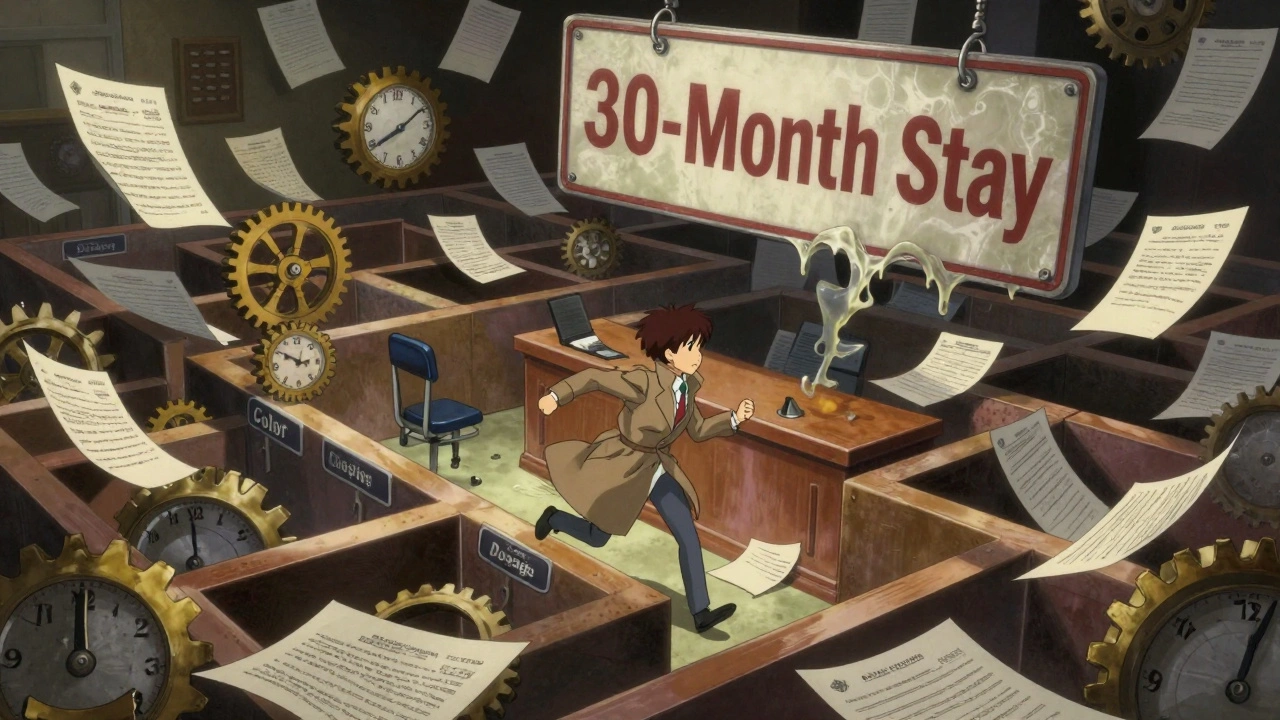
Generic companies can challenge a patent by filing a Paragraph IV certification - basically saying, "This patent is invalid or we don’t infringe." If the brand-name company sues within 45 days, the FDA can’t approve the generic for up to 30 months. That’s the 30-month stay.But here’s the catch: research shows this stay is rarely the main delay. On average, generic drugs launch 3.2 years after the 30-month stay ends. Why? Because patent litigation drags on. Court cases can take over three years to resolve. And sometimes, the brand company and generic maker settle - often with the generic agreeing to delay entry in exchange for a cut of brand sales. These "reverse payment" deals cost consumers an estimated $3.5 billion a year, according to the FTC.
Patent Thickets: The Hidden Wall
Brand-name companies don’t rely on one patent. They file dozens - covering the active ingredient, how it’s made, how it’s taken, even the color of the pill. The average drug has 14.2 patents listed in the FDA’s Orange Book. These form a "patent thicket" - a legal maze that makes it hard for generics to enter without getting sued.Drugs with more than 10 patents face 37% longer delays to generic entry. Cardiovascular drugs, which often have complex formulations, take an average of 3.4 years after patent expiration to see generics. Dermatological drugs? Just 1.2 years. The difference? Patent thickets.
The 180-Day Exclusivity Race
The first generic company to successfully challenge a patent gets 180 days of market exclusivity - no other generics can enter during that time. It’s a huge incentive. But it’s also a minefield.That first filer has to launch within 75 days of FDA approval to keep the exclusivity. Many don’t make it. Manufacturing issues, quality control problems, or last-minute lawsuits cause 22% to forfeit the period. Another 10% lose it because of legal outcomes. Only 68% successfully launch in time. That means even when a generic clears the legal hurdles, it still might not reach patients fast enough.
Complex Drugs: A Whole Different Game
Not all drugs are created equal. Simple pills? Generics usually arrive within 1.5 years of patent expiration. But complex drugs - injectables, inhalers, creams with tricky delivery systems - take much longer. The FDA’s Biologics Price Competition and Innovation Act (BPCIA) governs biosimilars, and those face an average 4.7-year delay after the original biologic’s patent expires.That’s because biosimilars aren’t exact copies. They’re highly similar, but require more testing. The FDA is trying to cut review times from 36 months to 24 months under GDUFA II, but as of mid-2024, only 62% of complex generic applications met the target.
Who Controls the Market?
The generic drug market isn’t fragmented. It’s dominated by a few giants: Teva, Viatris, and Sandoz control nearly half of the $70 billion U.S. generic market. That concentration means fewer players to challenge patents, and sometimes less pressure to move quickly. Meanwhile, the number of Paragraph IV challenges has jumped 47% since 2015 - mostly targeting high-revenue drugs. A drug making over $1 billion a year gets hit with an average of 17.3 patent challenges. That’s why the biggest drugs often have the longest delays.What’s Changing?
There are signs of progress. The CREATES Act of 2019 stopped brand companies from blocking generic makers from getting samples needed for testing. The Supreme Court’s 2021 ruling in Amarin v. Helsinn cracked down on secret patent settlements. The Orange Book Transparency Act of 2020 forced more accurate patent listings - cutting disputes by 32% in the first year.But "patent evergreening" is still rampant. Nearly 70% of brand-name drugs get a new patent within 18 months of the original expiring - often for minor changes like a new coating or dosage form. The FDA is exploring AI to speed up bioequivalence testing, which could cut development time by 25%. Biosimilars are also gaining ground - projected to capture 45% of the biologics market by 2030, saving an estimated $150 billion annually.
Why This Matters
Generic drugs make up 92% of all prescriptions in the U.S. but only 16% of total drug spending. They saved the system $373 billion in 2023 alone. But when generics are delayed, patients pay more. A one-year delay in launching a top-selling drug costs Medicare $1.2 billion. For many, that means choosing between medication and rent.Even with all the reforms, the median time from patent expiration to generic availability is still 18 months. That’s 1.5 years of higher prices for millions of people. The system was designed to balance innovation and access. But today, access is being held hostage by legal complexity - not science.
Why don’t generic drugs appear right after a patent expires?
Because other legal protections - like FDA exclusivity periods, patent litigation, and the 30-month stay - can delay approval and market entry even after the patent ends. Generic manufacturers must wait for these barriers to clear before selling their product.
What is the Hatch-Waxman Act and how does it affect generics?
The Hatch-Waxman Act of 1984 created the ANDA pathway, letting generic makers prove bioequivalence without redoing clinical trials. It also introduced the 180-day exclusivity for first filers and the 30-month stay if a patent lawsuit is filed. It was meant to speed up generics while protecting innovation - but over time, it’s become a tool for delay.
What’s a Paragraph IV certification?
It’s a legal notice from a generic manufacturer claiming a brand-name drug’s patent is invalid or won’t be infringed. This triggers a 30-month stay if the brand company sues. It’s the main way generics challenge patents early - but it also starts legal battles that can delay entry for years.
Do all generic drugs get approved by the FDA?
Yes, every generic sold legally in the U.S. must be FDA-approved. But approval doesn’t mean it’s on the market. Many sit in limbo due to patent disputes, manufacturing delays, or exclusivity periods held by other companies.
Why do some generic drugs take longer than others to appear?
Complex drugs - like injectables, inhalers, or biologics - require more testing and face stricter regulations. Drugs with many patents (patent thickets) also delay entry. Cardiovascular drugs, for example, average 3.4 years after patent expiry before generics appear. Simple pills? Often under 1.5 years.
Are reverse payment settlements still common?
They’ve decreased since the Supreme Court ruled them potentially illegal in 2013 and 2021, but they still happen. About 55% of delayed generic entries are linked to these deals, where a brand company pays a generic maker to delay launch. They’re harder to prove now, but they still cost consumers billions each year.
Can I trust generic drugs as much as brand-name ones?
Absolutely. The FDA requires generics to be bioequivalent - meaning they work the same way in the body as the brand drug. They must contain the same active ingredient, strength, dosage form, and route of administration. The only differences are in inactive ingredients like fillers or colors - which don’t affect how the drug works.