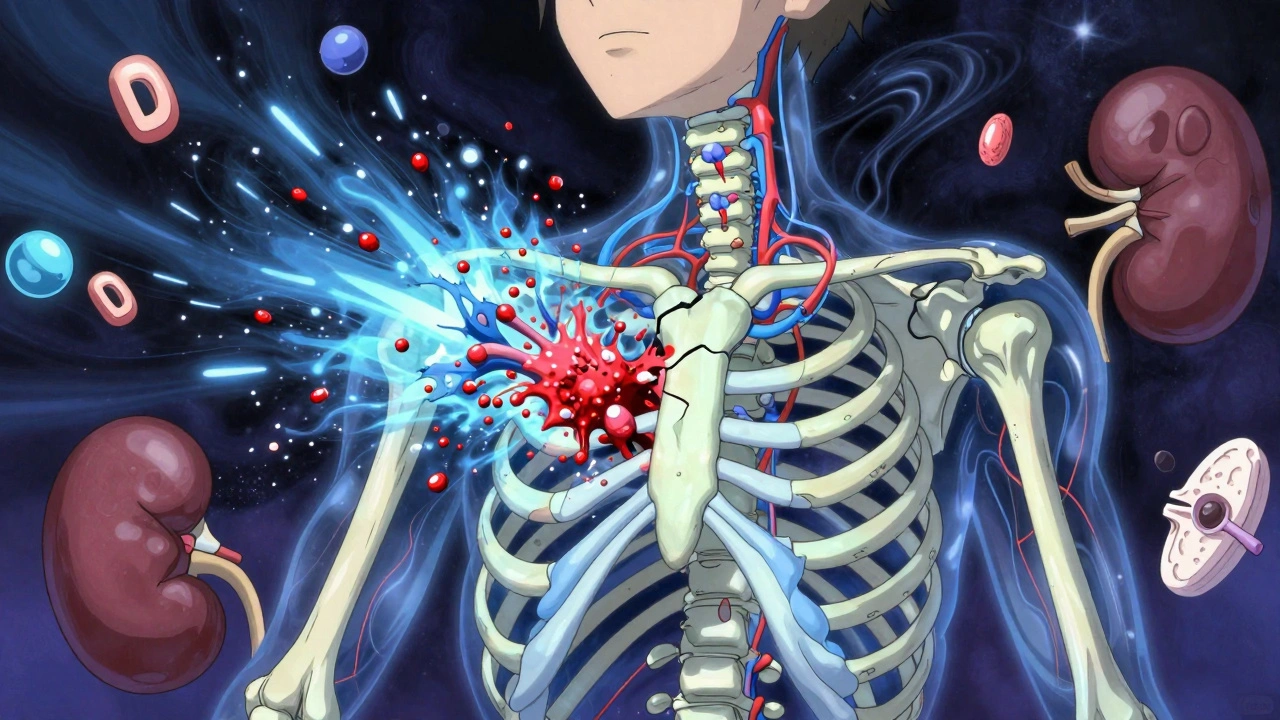
CKD-MBD: Understanding Kidney Disease and Bone Disorder Connections
When your kidneys fail, they don’t just stop filtering waste—they also stop regulating calcium, a mineral critical for bone strength and nerve function, phosphorus, a key element in energy production and bone structure, and parathyroid hormone, the body’s main regulator of calcium levels. This trio of imbalances defines CKD-MBD, or Chronic Kidney Disease–Mineral and Bone Disorder. It’s not just a side effect of kidney failure—it’s a systemic disease that weakens bones, hardens arteries, and raises your risk of heart attack, even before you need dialysis.
Most people think kidney disease is about swelling or fatigue, but CKD-MBD creeps in silently. As kidneys lose function, they can’t remove excess phosphorus. That triggers the parathyroid glands to overproduce hormone, leaching calcium from your bones. Over time, your skeleton becomes porous and fragile. At the same time, calcium and phosphorus build up in your blood and start depositing in your heart valves and arteries. That’s why someone with advanced kidney disease might break a hip from a simple fall—or die suddenly from a blocked artery—without ever having classic pain or symptoms. The problem? Doctors often focus on dialysis or blood pressure and miss the mineral cascade until it’s too late.
What makes CKD-MBD even trickier is that it overlaps with other conditions you might already be managing. High blood pressure meds, diuretics, and even some bone drugs can worsen the imbalance. And if you’re on dialysis, your diet, phosphate binders, and vitamin D supplements become part of a daily tightrope walk. The good news? You don’t have to guess. Blood tests for calcium, phosphorus, and PTH are simple. Lifestyle changes—like cutting processed foods, avoiding phosphate additives, and staying active—can slow the damage. And newer treatments, like non-calcium-based binders and targeted vitamin D analogs, are making a real difference.
Below, you’ll find real-world guides on how these imbalances show up in lab results, how medications like phosphate binders actually work, why some supplements can make things worse, and what to ask your doctor before starting any new treatment. These aren’t theoretical articles—they’re written by people who’ve lived with this, or helped others through it. Whether you’re managing CKD yourself, caring for a loved one, or just trying to understand why your blood work looks off, this collection gives you the facts you need to take control.