Color Blindness: Understanding Red-Green Defects and How They're Passed Down
Red-green color blindness is a common genetic condition affecting 8% of men and 0.5% of women. Learn how it's inherited, how it affects daily life, and what tools can help.

When you see a red stop sign or a ripe tomato, you might not think about how your eyes process those colors—but for someone with color vision deficiency, a condition where the eyes have trouble distinguishing certain colors, often due to missing or altered light-sensitive pigments. Also known as color blindness, it doesn’t mean seeing only in black and white—it means some colors look muddy, washed out, or confused with others. This isn’t rare. About 1 in 12 men and 1 in 200 women have some form of it, mostly inherited. It’s not a disease you can cure, but understanding it helps you adapt—and even spot when something else might be going on.
Most cases are red-green color blindness, the most common type, caused by issues with photopigments in the retina that respond to red or green light. People with this might mix up red and brown, green and yellow, or see purple as blue. Less common is blue-yellow color deficiency, where blues look greener and yellows appear violet or light gray. These aren’t just inconveniences—they affect real-life choices. Picking ripe fruit, reading color-coded wires in electronics, interpreting traffic lights, or even matching clothes can become tricky. Some jobs—pilots, electricians, graphic designers—require accurate color perception, and this condition can limit career paths if not accounted for.
It’s not always genetic. Aging, eye diseases like glaucoma or macular degeneration, certain medications, and even head injuries can cause acquired color vision problems. If you suddenly start seeing colors differently, it’s not normal—and you should see a doctor. But for most people, color vision deficiency is lifelong and stable. Tools like color-correcting glasses, phone apps that label colors, and high-contrast settings can help. Many websites and apps now follow color-blind-friendly design rules, making digital life easier. The key isn’t fixing the eyes—it’s designing the world to work with how you see.
Below, you’ll find real-world insights from people who live with this condition, plus practical advice on managing it, recognizing warning signs, and avoiding common mistakes that make daily life harder. These aren’t theoretical guides—they’re based on experiences, medical data, and tools that actually work.
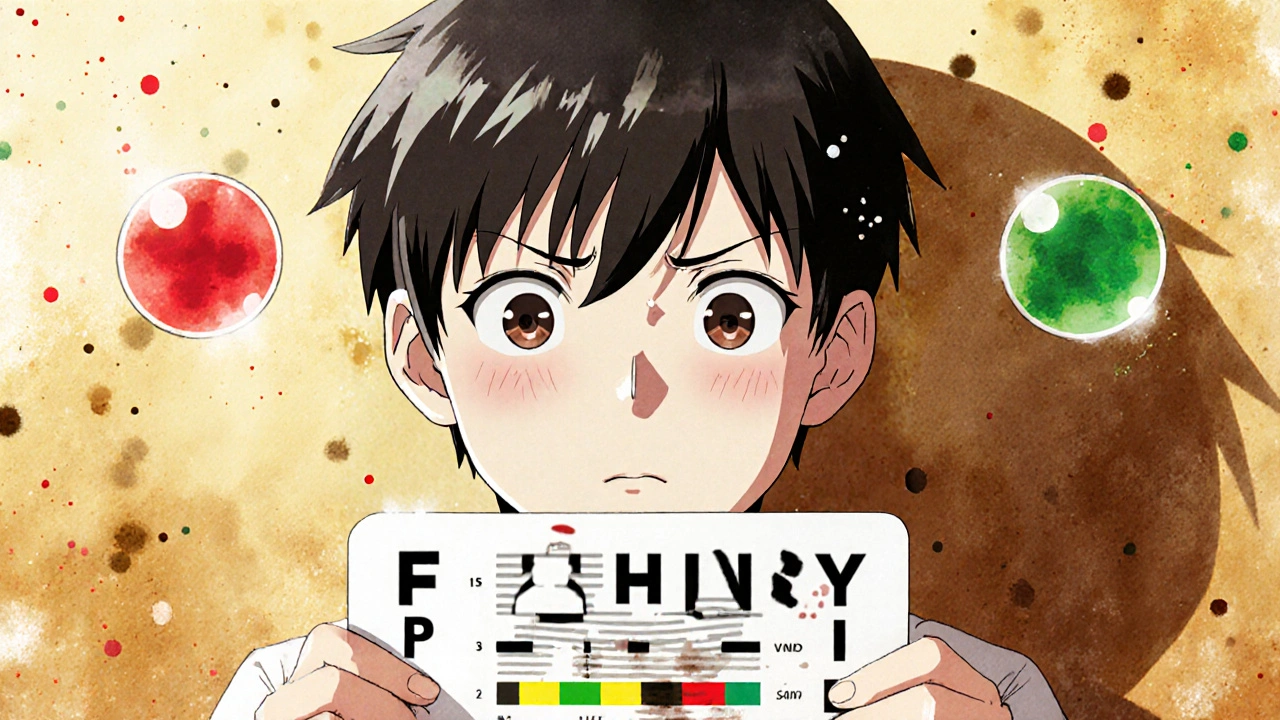
Red-green color blindness is a common genetic condition affecting 8% of men and 0.5% of women. Learn how it's inherited, how it affects daily life, and what tools can help.