When Expired Medications Become Toxic and Dangerous
Most expired medications aren’t toxic-but some can be deadly. Learn which drugs turn dangerous after expiration and how to store and dispose of them safely.

When you find an old bottle of pills in your medicine cabinet, you might wonder: is it still safe to take? Expired medications, drugs that have passed their manufacturer-set expiration date. Also known as out-of-date pills, they don’t suddenly turn toxic overnight—but they do lose strength, and sometimes become unpredictable. The FDA requires expiration dates based on real-world testing: how long the drug stays at least 90% potent under proper storage. That doesn’t mean it’s dangerous after that date, but it might not work as well. For life-saving meds like insulin, epinephrine, or nitroglycerin, even a small drop in potency can be risky. For pain relievers or antihistamines, you might just feel like they’re not doing their job.
Storage matters more than you think. Medication storage, how and where you keep your drugs affects shelf life more than the date on the label. Heat, moisture, and light break down chemicals. A bathroom cabinet? Bad idea—steam from showers ruins pills. A drawer in a cool, dry room? Better. Some meds, like liquid antibiotics or insulin, need refrigeration. If you’ve left your pills in a hot car or a humid basement, they’re probably degraded even if the date hasn’t passed. Drug safety, the practice of using medications correctly to avoid harm isn’t just about dosage—it’s about keeping them in conditions that preserve their integrity.
What about those old antibiotics or blood pressure pills you never finished? Don’t take them. You can’t tell if they’re still effective by looking at them. A pill that’s cracked, discolored, or smells weird is definitely compromised. Even if it looks fine, the active ingredients may have broken down into unknown compounds. The risk isn’t always immediate, but it’s real. You could end up with a treatment that doesn’t work, letting an infection spread or your condition worsen. And if you’re taking expired meds regularly, you might think your treatment isn’t working—when it’s just the pills that have failed you.
There’s a reason pharmacies don’t sell expired drugs, and why hospitals throw out old stock. The system is built on trust that what’s in the bottle will do what it’s supposed to. That trust breaks down when you start using old pills. If you find expired medication, don’t flush it or toss it in the trash without checking local disposal guidelines. Many pharmacies and police stations offer take-back programs. And if you’re unsure whether a pill is still good, ask your pharmacist. They’ve seen it all—and they’ll tell you the truth, no sugarcoating.
Below, you’ll find real stories and science-backed insights on what happens to drugs over time, how to spot when they’ve gone bad, and what to do with old bottles gathering dust. These aren’t theoretical warnings—they’re lessons from people who’ve been there, and experts who’ve studied the data.
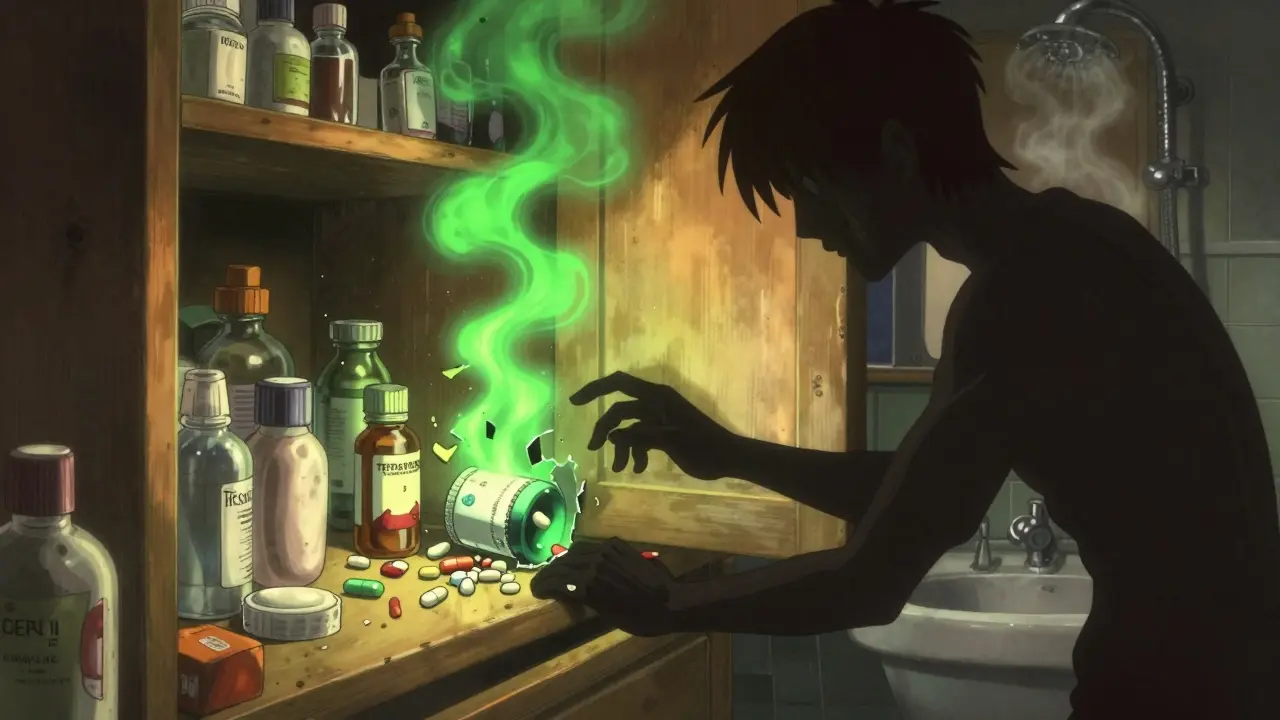
Most expired medications aren’t toxic-but some can be deadly. Learn which drugs turn dangerous after expiration and how to store and dispose of them safely.
Storing medications in the bathroom can make them less effective or even dangerous. Learn why heat, humidity, and easy access make this common habit risky-and what to do instead.