Most people assume that if a pill is past its expiration date, it’s just weaker-maybe it won’t work as well, but it won’t hurt you. That’s not always true. While the vast majority of expired medications are harmless, a few can turn dangerous. And when they do, the consequences can be life-threatening.
What Does an Expiration Date Really Mean?
The expiration date on your medicine isn’t just a marketing tactic or a way for drug companies to make you buy more. It’s the last day the manufacturer guarantees the drug will be fully potent and safe under proper storage conditions. This requirement came from U.S. law in 1979, and since then, the FDA has tested thousands of drugs under real-world conditions.
The FDA’s Shelf Life Extension Program (SLEP), run with the Department of Defense, found that 90% of medications still worked just as well 5 to 15 years after their expiration date-when stored in cool, dry places. That means your old aspirin or ibuprofen bottle might still be effective even if it’s been sitting in a drawer for a decade.
But here’s the catch: not all drugs behave the same. Some don’t just lose strength-they break down into harmful chemicals. And those are the ones you need to worry about.
The Real Danger: When Drugs Turn Toxic
The most infamous case happened in 1963. Three people took expired tetracycline-an antibiotic-and developed severe kidney damage. The drug had degraded into epitetracycline and anhydro-4-epitetracycline, both toxic to the kidneys. It was a rare event, but it’s the only well-documented case of toxicity from expired medication in modern history.
Since then, researchers have found other drugs that can turn dangerous when they expire. Here are the ones you should never risk using past their date:
- Nitroglycerin: Used for chest pain, this medication breaks down into unstable nitrogen oxides. Studies show it loses half its potency within three months of expiration. If you’re having a heart attack and your nitroglycerin doesn’t work, you could die waiting for help.
- Insulin: After expiration, insulin forms clumps called fibrils that your body can’t absorb. Research from the Journal of Diabetes Science and Technology shows you could lose 20-30% of its effectiveness each year. For someone with diabetes, that’s not just ineffective-it’s dangerous.
- Epinephrine auto-injectors (EpiPens): A 2017 study found that after one year past expiration, EpiPens lose 85% of their potency. In anaphylaxis, every second counts. A weak EpiPen might not stop swelling or breathing problems.
- Liquid antibiotics: Amoxicillin-clavulanate and other liquid antibiotics break down chemically after expiration. This doesn’t just make them weak-it can create compounds that trigger allergic reactions. One parent reported their child developed severe diarrhea after taking an expired liquid antibiotic just three days past the date.
- Eye drops: Once opened, they lose preservatives within 28 days. Bacteria can grow inside, and using contaminated drops can cause corneal ulcers-or even blindness.
- Aspirin: While not deadly, expired aspirin breaks down into acetic acid and salicylic acid. A 2021 study found this increases the risk of stomach irritation by 50% after two years past expiration.
These aren’t hypothetical risks. In 2023, the National Poison Data System recorded 1,247 cases of adverse events tied to expired meds-and 92% of them involved these high-risk drugs.
Storage Matters More Than You Think
Your medicine’s shelf life depends heavily on where you keep it. The FDA says a "cool, dry place" means 15-25°C (59-77°F) with 35-45% humidity. Sounds simple, right? But here’s the problem: most homes don’t meet that standard.
Bathrooms? Too humid. Nightstands? Too warm. Sunlit cabinets? Too hot. A 2022 study from the University of California, San Francisco found that humidity in bathrooms averages 80%, and temperatures hit 32°C (90°F)-way above safe levels. That’s why insulin stored in a bathroom might lose potency in months, while the same bottle in a bedroom drawer could last years.
Proper storage isn’t just about keeping pills dry. It’s about keeping them stable. Nitroglycerin tablets stored in original amber glass bottles last longer than those in plastic containers. Liquid medications need refrigeration to stay safe. And once you open a bottle of eye drops or antibiotics, the clock starts ticking-even if the expiration date is still months away.
What About All Those "Expired but Still Good" Stories?
You’ve probably heard people say they took expired medicine and were fine. Reddit threads, Facebook groups, and online forums are full of stories like: "Took my 3-year-old Xanax-worked fine." Or, "Used expired EpiPen during allergy attack-saved my life."
These stories are real, but they’re not proof it’s safe. Most people who take expired meds don’t get sick because they’re taking drugs that don’t degrade into toxins. Antihistamines, antidepressants, and blood pressure pills? Most stay stable for years. The danger isn’t in the pills-it’s in the ones that do.
And here’s the hidden risk: even if a drug doesn’t turn toxic, it might not work at all. A 2023 Consumer Reports survey found 68% of adults had used expired medication. 12% said it didn’t work. That’s not just inconvenient-it’s dangerous. If your asthma inhaler doesn’t open your airways, or your seizure medication fails, you’re not just wasting time-you’re risking your life.
Why Do Companies Set Such Short Expiration Dates?
It’s not because they want to sell more pills. It’s because the law requires them to prove stability only up to the date they put on the bottle. Manufacturers don’t test drugs for 10 or 15 years. It’s expensive. So they pick a conservative date-usually 2-3 years out-to stay safe and avoid liability.
The FDA’s SLEP program proved that most drugs last far longer. But without mandatory retesting, companies aren’t required to update labels. The result? Millions of perfectly good pills get thrown away every year. The U.S. pharmaceutical industry loses over $8 billion annually from expired meds that could still be used.
Some experts argue we should change the system. In 2024, Senator Bernie Sanders introduced a bill to require the FDA to update expiration dates based on real data. Pfizer and Merck are already testing smart packaging that tracks a drug’s actual condition in real time. By 2027, your prescription might come with a digital expiration date that changes based on how you stored it.
What Should You Do?
You don’t need to panic every time you find an old pill bottle. But you do need to be smart:
- Check the drug type. If it’s insulin, nitroglycerin, EpiPen, liquid antibiotic, or eye drops-don’t use it past the date.
- Store properly. Keep meds in a cool, dry place-like a bedroom drawer, not the bathroom.
- Don’t rely on smell or color. Expired aspirin might smell like vinegar, but many toxic drugs look and smell normal.
- When in doubt, toss it. If you’re unsure, especially with critical medications, get a new one.
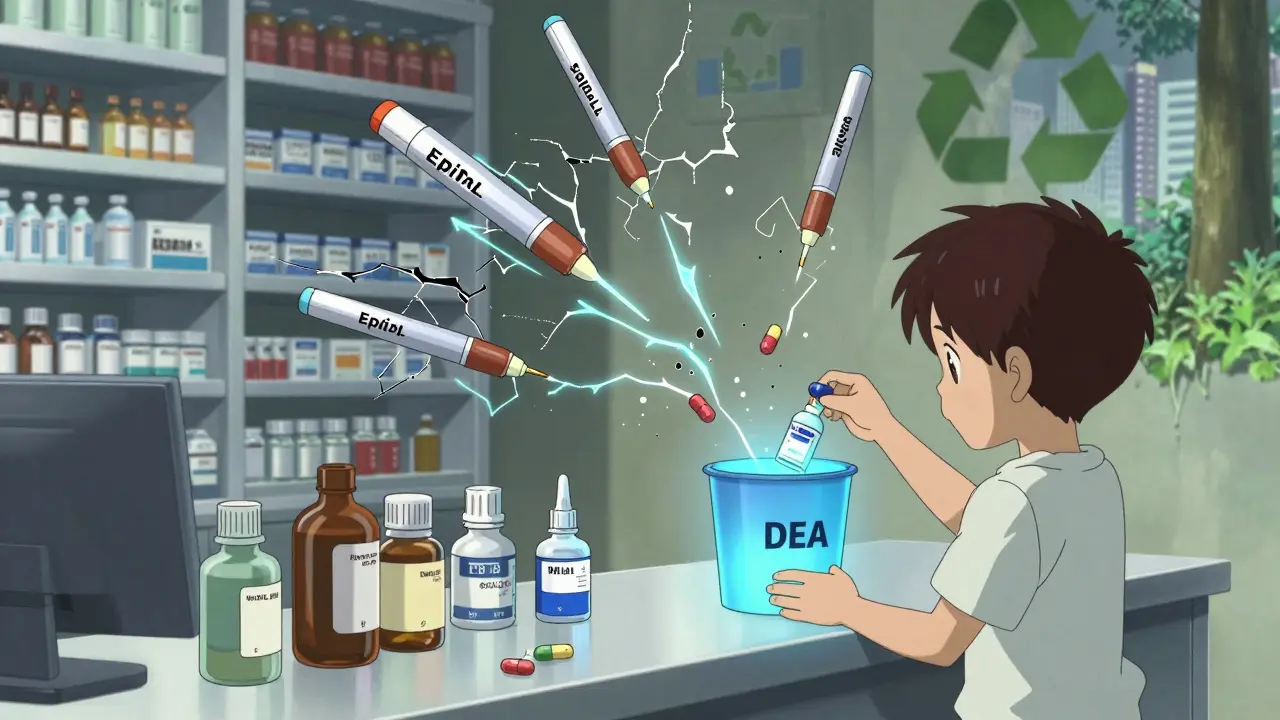
- Dispose safely. Use pharmacy take-back programs. The DEA’s 2023 National Prescription Drug Take-Back Day collected nearly a million pounds of unused meds. Don’t flush them or throw them in the trash-especially if kids or pets are around.
There’s a big difference between "this might not work" and "this could poison you." For most pills, it’s the former. For a few, it’s the latter. Know which ones they are.
What Happens If You Accidentally Take Expired Medicine?
If you took a regular pill-like ibuprofen or a blood pressure med-1-2 years past expiration and feel fine, you’re probably okay. You might not have gotten full relief, but you didn’t get poisoned.
But if you took expired insulin, nitroglycerin, or an antibiotic and feel unwell-nausea, vomiting, dizziness, kidney pain, or trouble breathing-seek medical help immediately. Call Poison Control at 1-800-222-1222 (U.S.) or your local emergency number. Don’t wait.
The truth? Most expired meds are harmless. But the ones that aren’t? They’re the ones that kill.
Are all expired medications dangerous?
No. The vast majority of expired medications-like pain relievers, antihistamines, and antidepressants-are not toxic. They just lose potency over time. The real danger comes from a small number of drugs, including insulin, nitroglycerin, epinephrine, liquid antibiotics, and eye drops, which can degrade into harmful substances or lose effectiveness to the point of being life-threatening.
Can expired medications make you sick?
Yes, but only in rare cases. The most documented case of toxicity was from expired tetracycline in 1963, which damaged kidneys. Today, the main risks are from degraded insulin (causing high blood sugar), expired nitroglycerin (failing to treat a heart attack), or contaminated liquid antibiotics (leading to infections or allergic reactions). Most people who take expired pills won’t get sick-but if you’re using a high-risk medication, the consequences can be severe.
How long can you safely use medicine after it expires?
For most solid pills stored properly (cool, dry, out of sunlight), potency lasts 1-5 years past expiration. The FDA found 90% of drugs tested still worked 5-15 years later. But liquids, injectables, and sensitive drugs like insulin or EpiPens degrade much faster. Insulin loses potency within a year, and EpiPens drop to 15% effectiveness after 12 months past expiration. Always check the specific drug type.
Is it safe to use expired EpiPens?
No. A 2017 study showed EpiPens lose 85% of their potency after one year past expiration. In a life-threatening allergic reaction, even a 15% dose might not be enough to stop swelling or breathing failure. While some people report using expired EpiPens successfully, it’s a gamble with your life. Always replace them before they expire.
Why do pharmacies have expiration dates if drugs last longer?
Manufacturers are only required to test stability up to the expiration date they print. Testing for 10+ years is expensive and not mandatory. So they pick a conservative date-usually 2-3 years-to ensure safety and avoid liability. This creates massive waste: over $8 billion in U.S. pharmaceuticals are thrown away each year. Experts are pushing for updates based on real data, and some smart packaging systems are already being tested.
How should I dispose of expired medications?
Never flush pills or throw them in the trash. Use a pharmacy take-back program. The DEA runs National Prescription Drug Take-Back Days twice a year, and most pharmacies like CVS and Walgreens have permanent drop-off boxes. This prevents accidental poisoning in children and pets, and stops drugs from polluting water supplies.