Color Blindness: Understanding Red-Green Defects and How They're Passed Down
Red-green color blindness is a common genetic condition affecting 8% of men and 0.5% of women. Learn how it's inherited, how it affects daily life, and what tools can help.

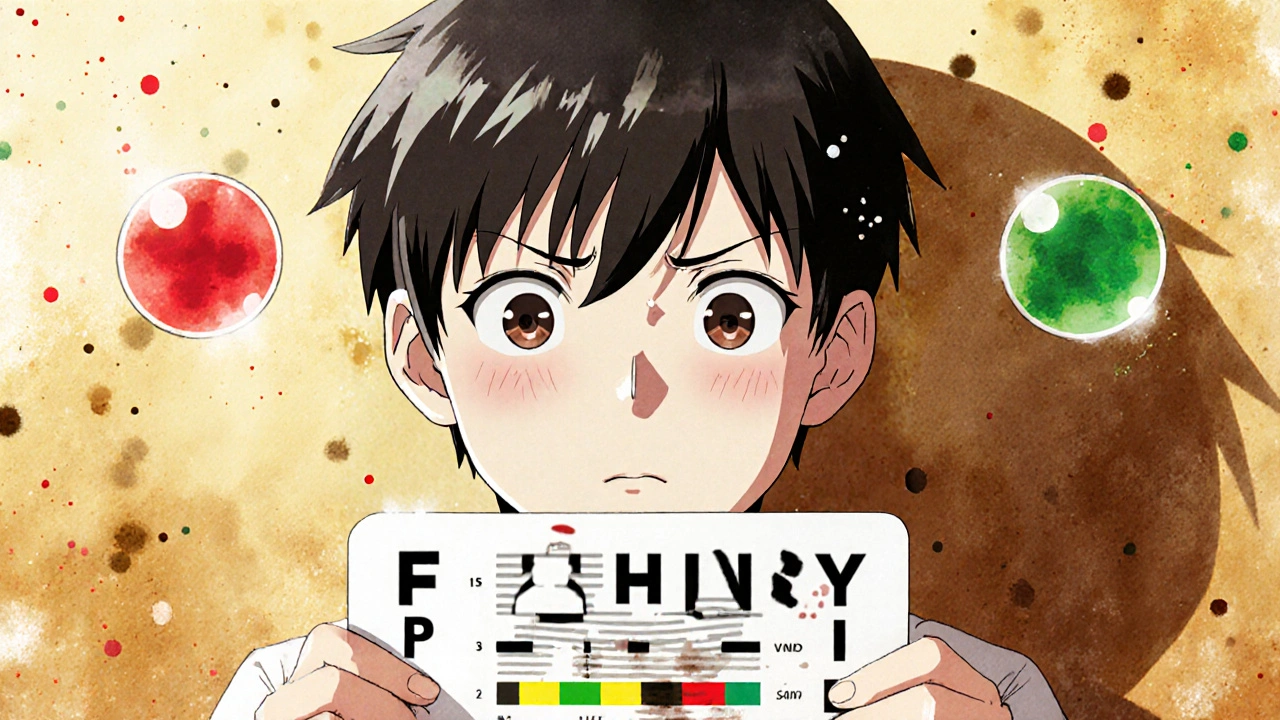
When someone has protanopia, a form of red-green color blindness caused by missing or non-functional long-wavelength cone cells in the retina. Also known as red-blindness, it means the brain doesn’t get the full signal from red light, making reds look darker, duller, or even confused with black or green. This isn’t just about not seeing "red"—it’s about how your whole color system shifts. People with protanopia often mix up reds, oranges, yellows, and greens, especially in low light or when colors are similar in brightness.
Protanopia is a genetic condition, mostly passed down through the X chromosome, which is why it affects about 1 in 100 men and far fewer women. It’s not something you develop over time—it’s there from birth. You might not even know you have it until you fail a color test, notice you pick the wrong socks, or someone points out you can’t tell ripe tomatoes from green ones. Unlike temporary color vision issues from eye strain or medication, protanopia doesn’t change. But it also doesn’t get worse. It’s a stable, lifelong difference in how you see the world.
It’s not a disease, and it doesn’t cause other health problems. But it can affect everyday choices: reading color-coded charts, picking out clothing, spotting warning lights, or even judging if meat is cooked right. Some jobs—like electricians, pilots, or graphic designers—have strict color vision requirements, and protanopia can make those harder to qualify for. But many people live full, successful lives without ever needing special tools. Apps that enhance color contrast, filters on phones, and even simple habits like labeling wires or using texture cues help a lot.
There’s no cure for protanopia, but there are ways to adapt. Some specialized glasses claim to improve color distinction, though results vary. More importantly, awareness helps. If you know you have it, you can plan around it. Ask for labels instead of relying on color. Use apps that identify colors by camera. Tell your doctor if you’re taking medications that might affect vision—some drugs can worsen color perception, even in people without protanopia.
What you’ll find below are real, practical posts about how color vision differences connect to broader health topics. From how medications affect eyesight, to how drug storage impacts your body’s response, to how patient stories shape medical decisions—these aren’t just about color. They’re about how your body works, what you can control, and how to make smarter choices with your health. Whether you’re managing a condition, taking daily meds, or just trying to understand your own vision, there’s something here that’ll help you see things more clearly.
Red-green color blindness is a common genetic condition affecting 8% of men and 0.5% of women. Learn how it's inherited, how it affects daily life, and what tools can help.