Absolute vs Relative Risk Calculator
Calculate Risk Changes
Understanding Your Results
The absolute risk shows your actual chance of experiencing the event. The relative risk compares two groups. Always ask: "What's the starting risk?" before trusting a percentage reduction claim.
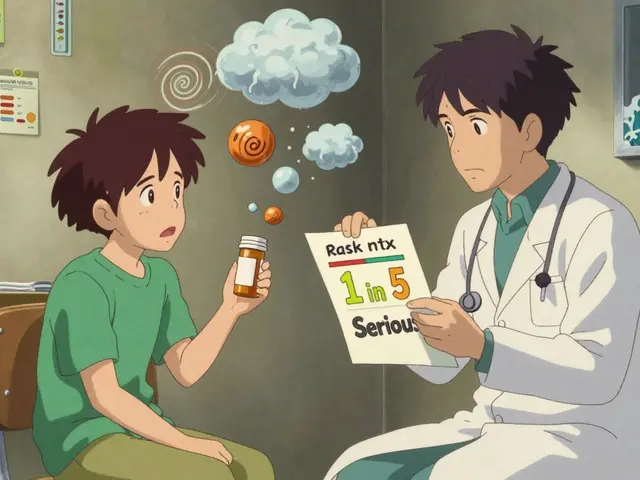
Have you ever seen a drug ad that says, "This medication reduces your risk of heart attack by 50%"? It sounds impressive-until you realize it might mean going from a 2% chance to a 1% chance. That’s not a half-off deal. It’s a tiny change in real life. The problem? Most people don’t know the difference between absolute risk and relative risk. And pharmaceutical companies? They know exactly which one to use to make a drug look better.
What Absolute Risk Actually Means
Absolute risk tells you the real, honest chance something will happen to you. No tricks. No math tricks. Just numbers. For example, if 1 in 100 people who take a certain drug get a serious side effect, that’s an absolute risk of 1%. If 5 out of 1,000 get it, that’s 0.5%. Simple. Clear. No interpretation needed.Let’s say you’re considering a new blood pressure pill. The clinical trial shows that 2 out of every 100 people (2%) on this drug developed a dangerous liver reaction. That’s the absolute risk. It’s not "a small risk." It’s 2%. If you’re one of those 100, you’re the one who got it. No sugarcoating.
Absolute risk is calculated by dividing the number of people who had the side effect by the total number of people in the group. So if 15 people out of 3,000 had nausea, the absolute risk is 15 ÷ 3,000 = 0.005, or 0.5%. That’s the number you should care about when deciding whether the side effect is worth it.
What Relative Risk Does (and Doesn’t Do)
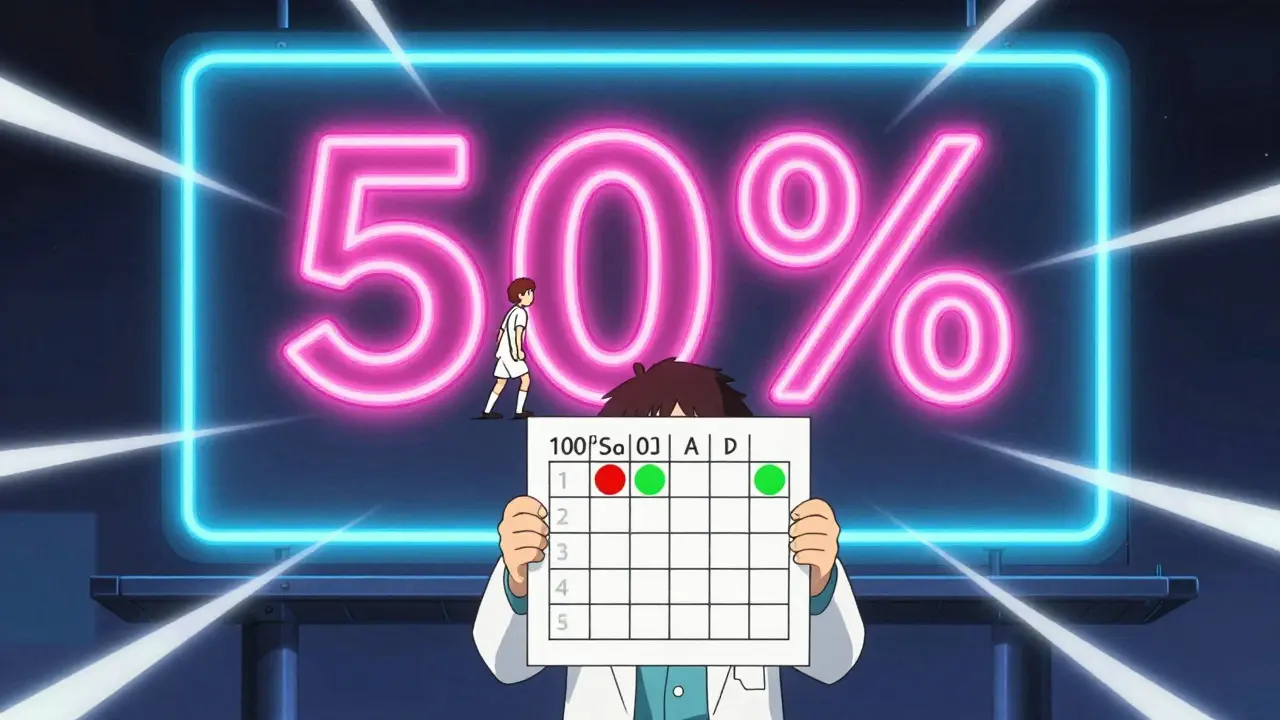
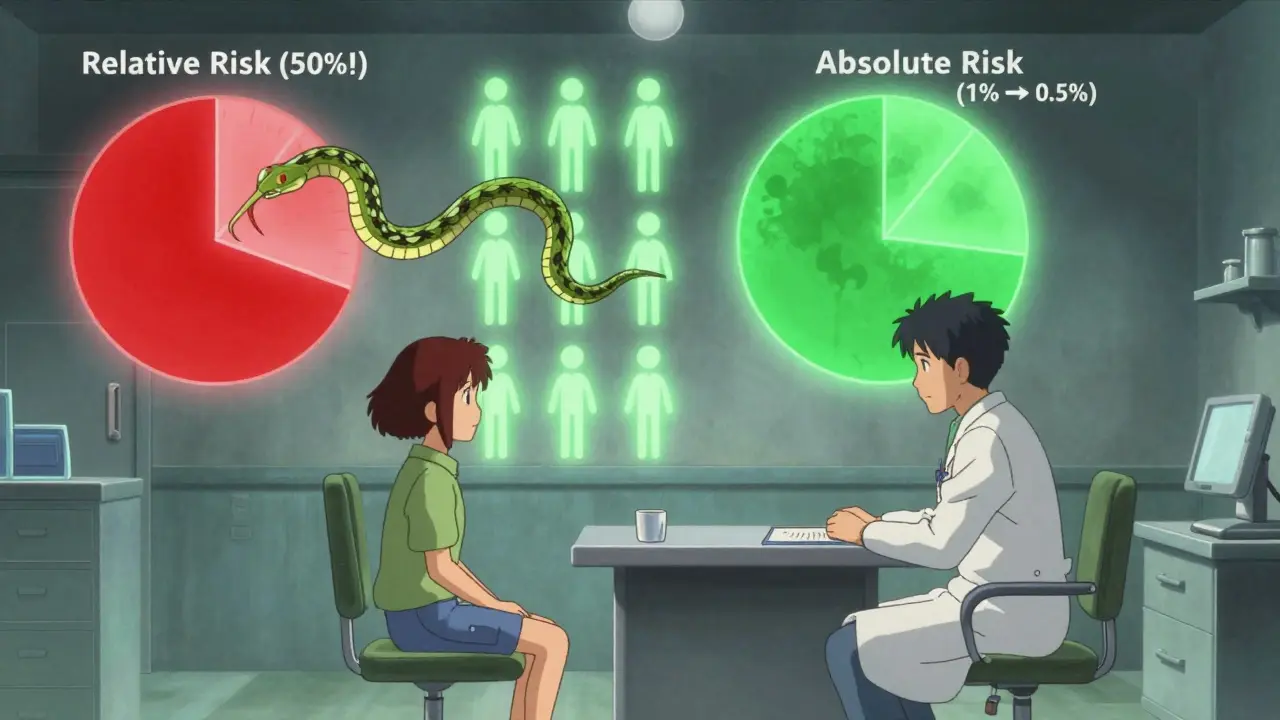
Relative risk compares two groups. It doesn’t tell you how likely you are to have a side effect. It tells you how much more or less likely you are compared to someone else. That’s why it’s so misleading.Imagine two groups: one taking a placebo, one taking a new drug. In the placebo group, 4% of people had a headache. In the drug group, 2% did. The absolute risk reduction? Just 2 percentage points (4% - 2% = 2%). But the relative risk reduction? That’s 50%. Because 2% is half of 4%. So the ad says: "Reduces headaches by 50%!"
That’s not false. It’s mathematically correct. But it’s deceptive. It makes you think half the people won’t get headaches anymore. In reality, only 2 out of every 100 people avoided a headache. The other 98? Their risk didn’t change. That’s the hidden truth.
Relative risk is useful for researchers. It helps compare effects across different populations. But for you? It’s a trap. A drug that cuts your risk of stroke by 30% sounds great-until you learn your baseline risk was 0.4%. The absolute reduction? Just 0.12%. That’s 1 in 833 people helped. Not a miracle. Just a small shift.
Why This Matters for Side Effects
Side effects are where this gap becomes dangerous. Take antidepressants. A 2018 study found that 20% of people on venlafaxine had sexual side effects. On placebo? 8.3%. The relative risk? 2.41. So you’re 2.4 times more likely to have this problem. Sounds scary.But the absolute difference? Only 11.7 percentage points. That means, out of 100 people, 12 more will have this side effect than if they took a sugar pill. That’s serious-but not catastrophic. For some, it’s worth it. For others? Not. But if you only hear "2.4 times more likely," you might quit the drug thinking it’s unbearable. You’re missing the real picture.
Same with statins. Ads say they "cut heart attack risk in half." But if your baseline risk is 2%, cutting it to 1% means you go from 2 chances in 100 to 1 chance in 100. That’s a real benefit. But if your risk was only 0.5%, cutting it to 0.25%? That’s a tiny gain. The relative risk reduction is still 50%. The absolute? Just 0.25%. That’s 1 in 400 people helped.
How the Industry Uses This Against You
The pharmaceutical industry knows this. And they use it. A 2021 study found that 78% of direct-to-consumer drug ads in the U.S. only showed relative risk reductions. Not a single one mentioned the absolute numbers. Why? Because 50% sounds better than 0.5%.Think about it: a drug that reduces cancer risk from 0.75% to 1.25% after radiation exposure? That’s a 67% relative increase. Newspapers ran headlines: "Cancer Risk Jumps 67% After Nuclear Accident." But the absolute risk? It went from 3 in 400 to 5 in 400. That’s a 0.5 percentage point rise. Still very low. The relative number scared people. The absolute number? Not so much.
And it works. Market data shows drugs marketed with relative risk reductions get 23% more prescriptions at first. But when patients later learn the real numbers, adherence drops by 15%. People feel misled. And they stop taking the meds.
What You Should Ask Your Doctor
You don’t need to be a statistician. But you do need to ask two simple questions:- "What’s my actual risk of having this side effect?"
- "How much does this drug reduce that risk-or increase it?"
If your doctor says, "This reduces your risk by 40%," ask: "40% of what?" Then ask for the numbers in plain terms: "Out of 100 people like me, how many would avoid this problem? How many would get it?"
Good doctors will show you a simple chart. Picture 100 people. Color 5 of them red for side effects. Now show how many turn green with the drug. That’s what absolute risk looks like. Visuals like this cut through the noise. A 2016 Cochrane Review found that patients who saw pictograms understood their risk 62% better than those who just heard numbers.
The Number That Matters: Number Needed to Treat (NNT)
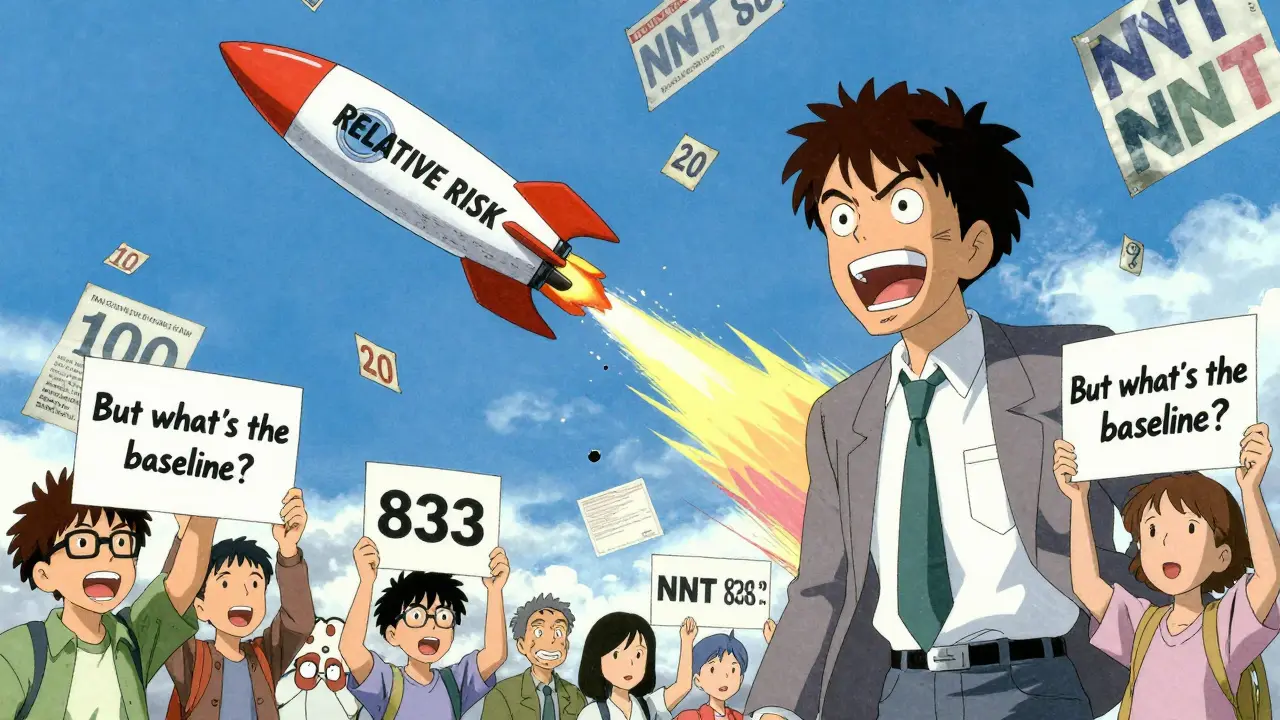
There’s one more number you should know: NNT. It stands for Number Needed to Treat. It tells you how many people need to take a drug for one person to benefit.Let’s say a drug reduces heart attacks from 4% to 3%. The absolute reduction is 1%. So NNT = 1 ÷ 0.01 = 100. That means 100 people need to take the drug for one person to avoid a heart attack. The other 99? They got no benefit. But they still risk side effects.
For side effects? There’s also NNT for harm. If 5 out of 100 people get nausea, the NNT for harm is 20. That means 1 in 20 people will get sick just from taking the drug.
Compare those numbers. If NNT for benefit is 50 and NNT for harm is 20? That’s a bad trade-off. You’re more likely to feel worse than better.
How to Spot Misleading Claims
Here’s a quick checklist to use when you see a drug claim:- Is the benefit or risk given as a percentage (like "50% reduction")? Ask: "50% of what?"
- Is there a baseline number? If not, demand it.
- Is the time frame mentioned? "Reduces risk by 30% over 5 years" is different from "over 1 year."
- Is the population described? "People with high cholesterol" is different from "all adults."
- Is there a comparison to placebo? If not, the benefit might be tiny.
If the ad or doctor says "cut risk in half" without context, walk away. That’s not a fact. It’s a sales pitch.
What’s Being Done to Fix This
Thankfully, change is coming. The FDA issued draft guidance in January 2023 requiring clearer risk reporting in ads. The European Medicines Agency already requires both absolute and relative numbers in patient leaflets. Harvard Medical School now teaches this in its curriculum. And 37 major medical journals use standardized templates to present risk data.But it’s slow. Most patients still get the flashy numbers. Most doctors still say "50% reduction" without explaining what it means. And most drug ads? Still hiding the real numbers.
The truth? You’re not stupid for being confused. You’re being sold a story. And stories are easier to sell than statistics.
What’s the difference between absolute risk and relative risk?
Absolute risk tells you the actual chance of something happening to you-for example, "2 out of 100 people get this side effect." Relative risk compares two groups, like "your risk is cut in half." The problem? A "50% reduction" could mean going from 2% to 1%-a tiny change that sounds huge.
Why do drug ads only use relative risk?
Because relative risk numbers are bigger and sound more impressive. Saying "reduces heart attack risk by 50%" is more powerful than "reduces risk from 2% to 1%." The first grabs attention. The second doesn’t. Pharmaceutical companies know this-and they use it.
How can I tell if a drug’s benefit is real or just hype?
Ask for the absolute risk numbers and the Number Needed to Treat (NNT). If the NNT to prevent one heart attack is 100, that means 99 people take the drug for no benefit. If the NNT for a side effect is 20, you’re more likely to be one of the unlucky ones than to get the benefit.
Is it ever okay to rely on relative risk?
Only if you know the baseline. Relative risk helps researchers compare treatments across populations. But for personal decisions, it’s useless without absolute numbers. Always ask: "What’s the starting risk?"
What should I do if my doctor only gives me relative risk?
Say: "I’d like to understand the real numbers. What’s my chance of having this side effect without the drug? What’s it with the drug?" If they resist, ask for written materials or a second opinion. You have a right to clear information.
Understanding absolute and relative risk isn’t about becoming a math expert. It’s about seeing through the noise. The numbers are there. You just need to ask for them. And once you do, you’ll stop being sold on percentages-and start making decisions based on reality.