When you walk into a pharmacy and see two identical pills side by side-one with a familiar name and price tag, the other plain and cheap-what do you pick? For many, it’s not about science. It’s about trust. And that trust varies wildly depending on how old you are.
Generic drugs are not second-rate. They contain the exact same active ingredients as brand-name drugs, meet the same safety standards, and work the same way in your body. In the U.S., generics make up 90% of all prescriptions filled. Yet they account for only 23% of total drug spending. Why? Because perception doesn’t follow the data. And that gap is widest between generations.
Boomers: The Brand-Bound Generation
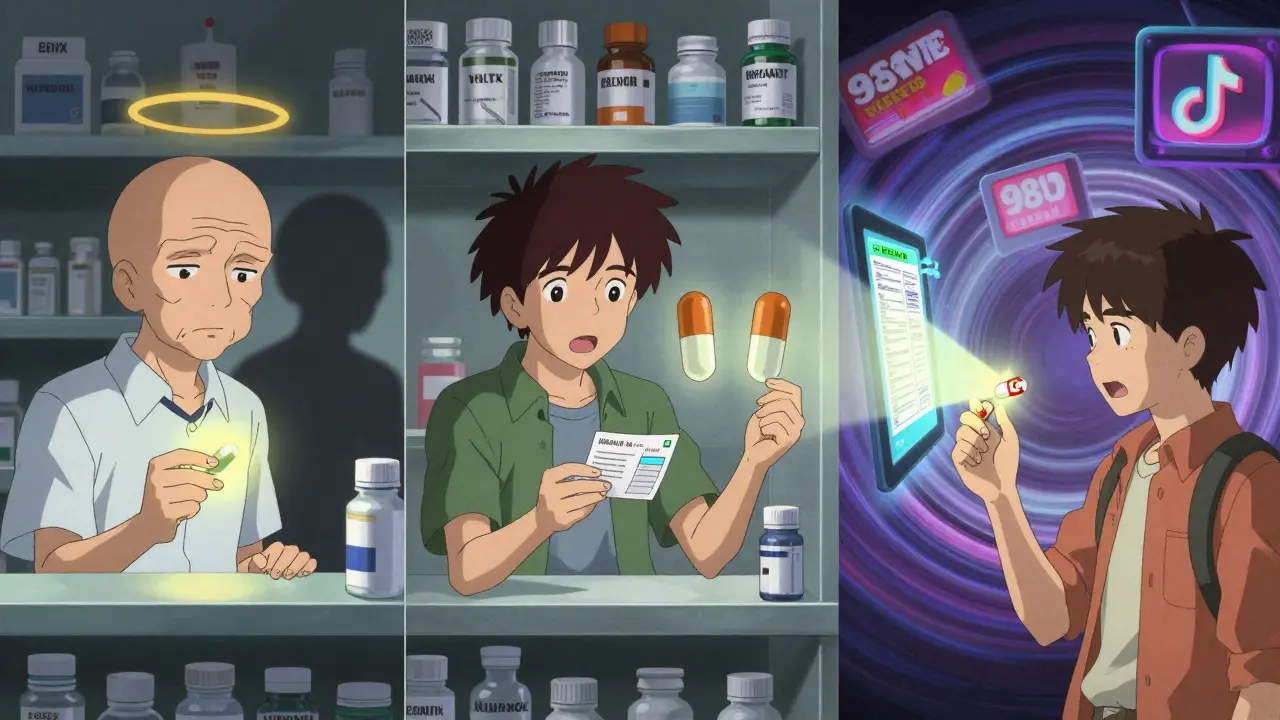
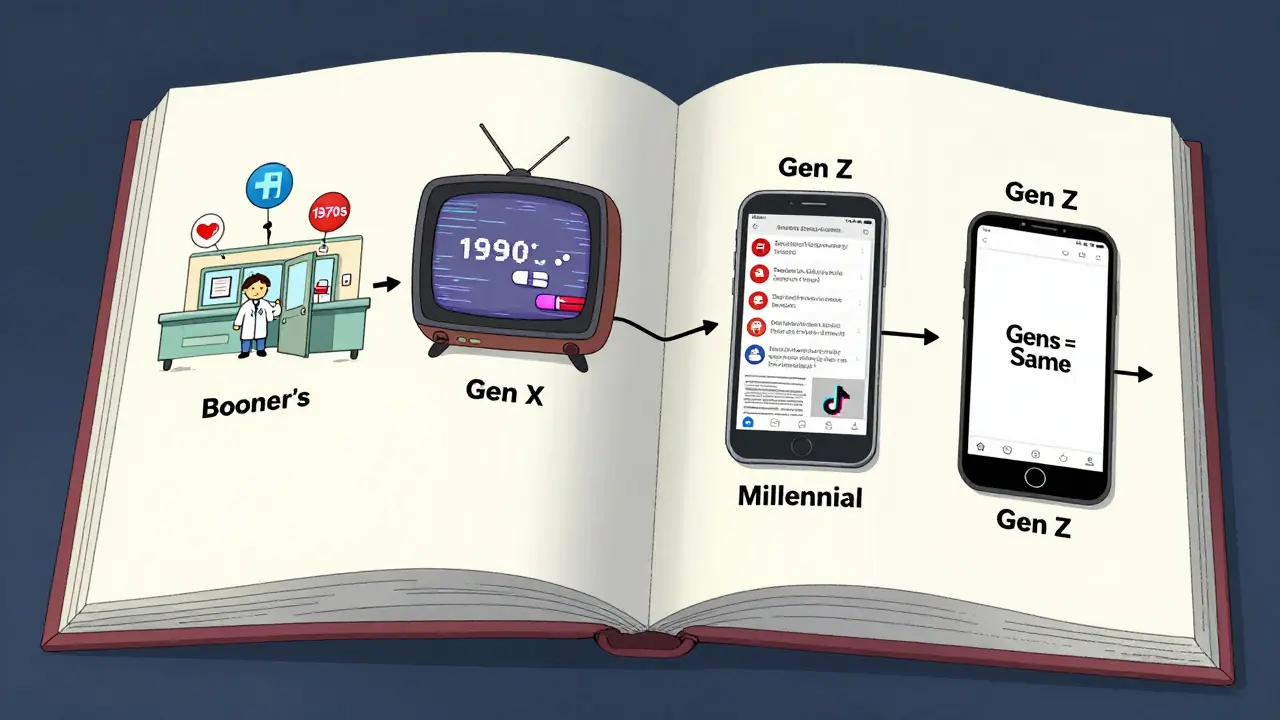
If you’re a Baby Boomer (born 1946-1964), you likely grew up in an era where drug ads were rare, prescriptions were handed out like candy, and brand names were everything. You remember when Lipitor was the only option for cholesterol. When Prilosec was the cure-all for heartburn. You saw those names on TV, in magazines, on your doctor’s pad. They became symbols of reliability.
Now, when your doctor suggests switching to a generic, you might hesitate. Not because you’re ignorant. But because you’ve been conditioned to believe that if it doesn’t look like the name you know, it can’t work the same. A 2015 study found that 35.6% of laypeople believe generics are less effective-and that number is highest among older adults.
It’s not just about marketing. It’s about experience. Many Boomers have been on long-term medications for decades. They remember when generics were inconsistent. When early versions caused stomach upset or didn’t seem to work. Even though today’s generics are held to strict bioequivalence standards, old memories stick. And when you’ve lived through medical systems that didn’t always deliver, you learn to be cautious.
Gen X: The Skeptical Middle
Gen X (born 1965-1980) grew up as pharmaceutical marketing exploded. You remember the first direct-to-consumer ads. The jingles. The colorful pills with names like "Zoloft" and "Claritin." You saw your parents take generics and complain. You also saw your own prescriptions switch from brand to generic without explanation.
This generation is caught between two worlds. On one hand, they’re pragmatic. They know generics save money. Many have been through insurance deductibles and surprise bills. They’ve learned to check the label, ask questions, and compare prices. But they’re also the most likely to report side effects when switching-even when clinical studies show no difference.
Why? Because they’re the first generation to experience "generic switching" as a routine part of care. A 2022 survey found that 41% of Gen Xers had been switched to a generic without being told. That breeds distrust. If you’re told a drug is "the same," but you feel different afterward, your brain doesn’t trust the science. It trusts your body.
Millennials: The Data-Driven Shift
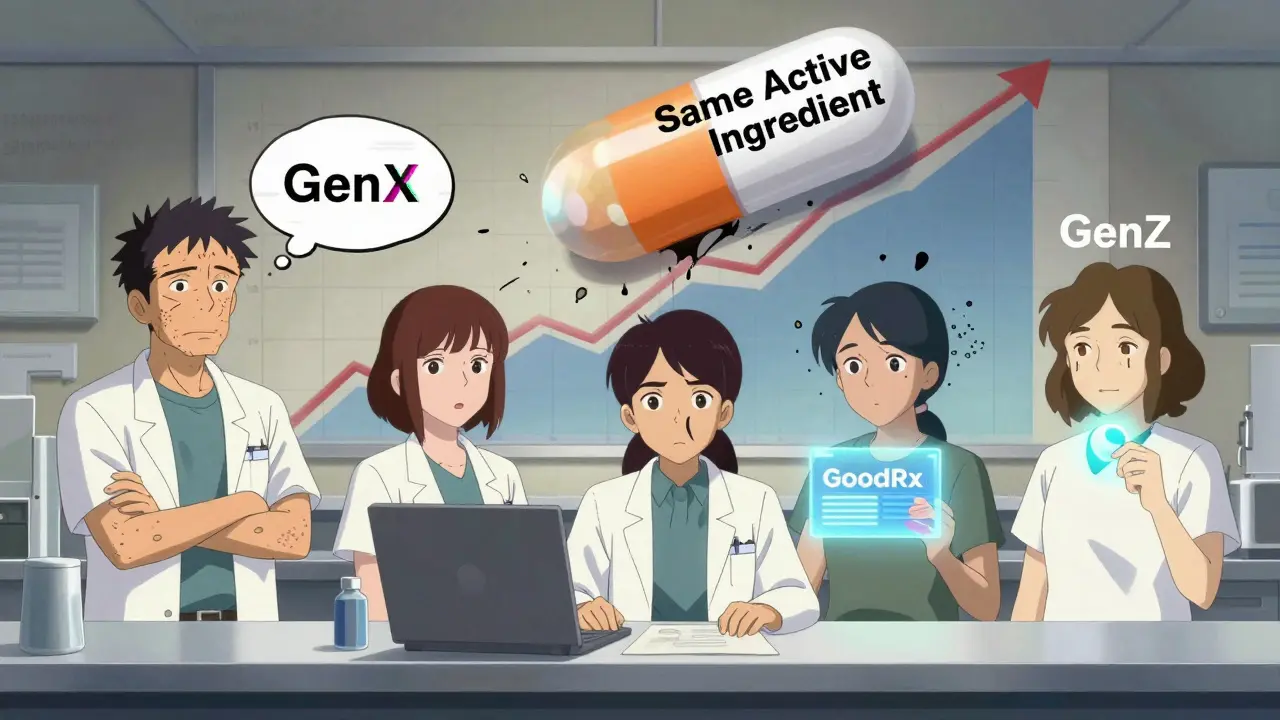
Millennials (born 1981-1996) are the first generation to Google their prescriptions before taking them. They read FDA pages. They compare prices on GoodRx. They’ve grown up with transparency.
Studies show Millennials are significantly more likely to choose generics than older groups. Why? They don’t have the same brand loyalty. They didn’t grow up with branded ads as gospel. They’ve seen how corporate pricing works-how a $1,200 monthly pill becomes $12 as a generic. They understand cost-saving isn’t a myth; it’s a necessity.
But here’s the twist: Millennials are also the most likely to switch back to brand-name drugs if they’re dissatisfied-even when there’s no medical reason. Why? Because they’ve been trained to believe that "you get what you pay for." They’ve seen influencer culture, wellness trends, and branded supplements marketed as superior. So while they’re more open to generics, they still equate packaging with quality.
And they’re the first generation where pharmacists routinely explain bioequivalence. That matters. When a pharmacist says, "This generic has the same active ingredient, same dose, same release rate-and it’s been tested on thousands of people," Millennials listen. They don’t always trust it, but they’re willing to try.
Gen Z: The Cost-First, Trust-Second Group
Gen Z (born 1997-2012) doesn’t care about brand names. They care about price. They’ve never known a world without prescription cost transparency. They use apps to find the cheapest option. They’ve seen friends skip meds because they couldn’t afford them. They’ve watched TikTok videos explain how generics are identical.
Surprisingly, Gen Z is the most accepting of generics-even more than Millennials. Why? Because they’ve never had the luxury of brand loyalty. For them, the idea of paying $300 for a drug when a $12 version exists isn’t just irrational. It’s unethical.
They’re also the most likely to report that they’ve never had a bad experience with a generic. Not because they’re naive. But because they’ve never been sold on the myth of superiority. They don’t remember the 1990s ad campaigns. They don’t have decades of conditioned trust in a logo. Their trust is built on evidence: "Does it work? Is it cheaper? Does my pharmacy say it’s safe?"
But there’s a risk. Gen Z is also the most likely to stop taking meds if they don’t see immediate results. If a generic takes three days to work instead of one, they assume it’s broken. They don’t understand that some drugs take weeks to build up in the system. That’s where education fails-not because they’re skeptical, but because they’re rushed.
The Trust Deficit: Why Science Doesn’t Win
Here’s the hard truth: No amount of clinical data changes how people feel. A 2012 study found that even patients who understood generics were bioequivalent still believed brand-name drugs were more effective. Why? Because perception is shaped by emotion, not evidence.
Generations don’t just differ in knowledge. They differ in experience. Boomers remember when generics were unreliable. Gen X remembers being switched without consent. Millennials were sold wellness culture. Gen Z was born into a world where price is the first question.
Healthcare systems keep assuming that if we just explain the science, people will comply. But we’re missing the real issue: trust isn’t built in a pamphlet. It’s built over time-with consistency, transparency, and respect.
Pharmacists who say, "I’ve prescribed this generic for 15 years and never seen a problem," have more impact than any FDA brochure. A doctor who says, "I take this same generic for my blood pressure," changes minds faster than any study.
What Works: Real Strategies for Each Generation
One-size-fits-all messaging doesn’t work. Here’s what does:
- For Boomers: Use familiar language. Compare it to a trusted brand. "This generic is the same as the one your doctor prescribed in 2005, just without the logo."
- For Gen X: Acknowledge their experience. "I know you’ve been switched before and didn’t feel right. This version has stricter testing. Let’s try it together."
- For Millennials: Give them data. Show them the FDA bioequivalence report. Let them compare prices. They’ll do the math themselves.
- For Gen Z: Be direct. "This costs $12. The brand is $280. They’re identical. Want me to show you the test results?"
The goal isn’t to convince people generics are safe. It’s to show them that their trust isn’t being ignored-it’s being earned.
Why This Matters More Than You Think
It’s not just about saving money. It’s about access. In the U.S., 1 in 4 adults skip meds because of cost. Generics are the biggest tool we have to fix that. But if half the population doesn’t use them-even when they’re available-we’re not solving the crisis. We’re just moving it.
And it’s not just the U.S. Countries like China have boosted generic use by 17% in just two years by changing policy. But even there, older patients resisted. Only when pharmacists were trained to explain generics face-to-face did adoption climb.
Generational attitudes aren’t just a curiosity. They’re a public health blind spot. Until we tailor communication to how each age group thinks, feels, and remembers-we’ll keep losing ground.
Are generic drugs really as effective as brand-name drugs?
Yes. Generic drugs must meet the same strict standards as brand-name drugs set by the FDA. They contain the same active ingredients, work the same way in the body, and are tested to ensure they deliver the same clinical effect. The only differences are in inactive ingredients (like color or shape) and cost. Studies show they work just as well for conditions like high blood pressure, diabetes, and depression.
Why do some people feel worse after switching to a generic?
Most people feel no difference. But some report side effects after switching. This is usually due to the placebo effect or sensitivity to inactive ingredients (like dyes or fillers), not the active drug. If you notice a change, talk to your pharmacist or doctor. They can check if the generic is the same formulation or suggest switching back temporarily. It’s rare, but it happens.
Do pharmacists prefer generics over brand-name drugs?
Yes, many do-especially pharmacists. They see firsthand how much money generics save patients and how often brand-name drugs are too expensive for people to afford. Pharmacists are also more familiar with the manufacturing process and regulatory standards. While some doctors still hesitate, pharmacists are often the strongest advocates for generics because they’re on the front lines of access.
Why do older generations trust brand names more?
Older generations grew up when drug advertising was limited to doctors, and brand names were the only option available for decades. They associate those names with reliability and consistency. Many also had negative experiences with early generics in the 1980s and 1990s, when quality control wasn’t as strict. Even though today’s generics are far better, those memories stick.
Can I trust generics from other countries?
If it’s sold in the U.S. or EU, yes. The FDA and EMA require generics to meet the same standards as brand-name drugs, no matter where they’re made. Some generics are made in India or China, but they’re inspected just like U.S. factories. The problem isn’t origin-it’s whether the product is approved by your country’s health authority. Always check the label for FDA or EMA approval.
If you’re over 50, you might still hesitate. If you’re under 30, you probably already switched. But here’s the thing: no matter your age, the best choice isn’t the one with the logo. It’s the one that works-and lets you keep taking it.