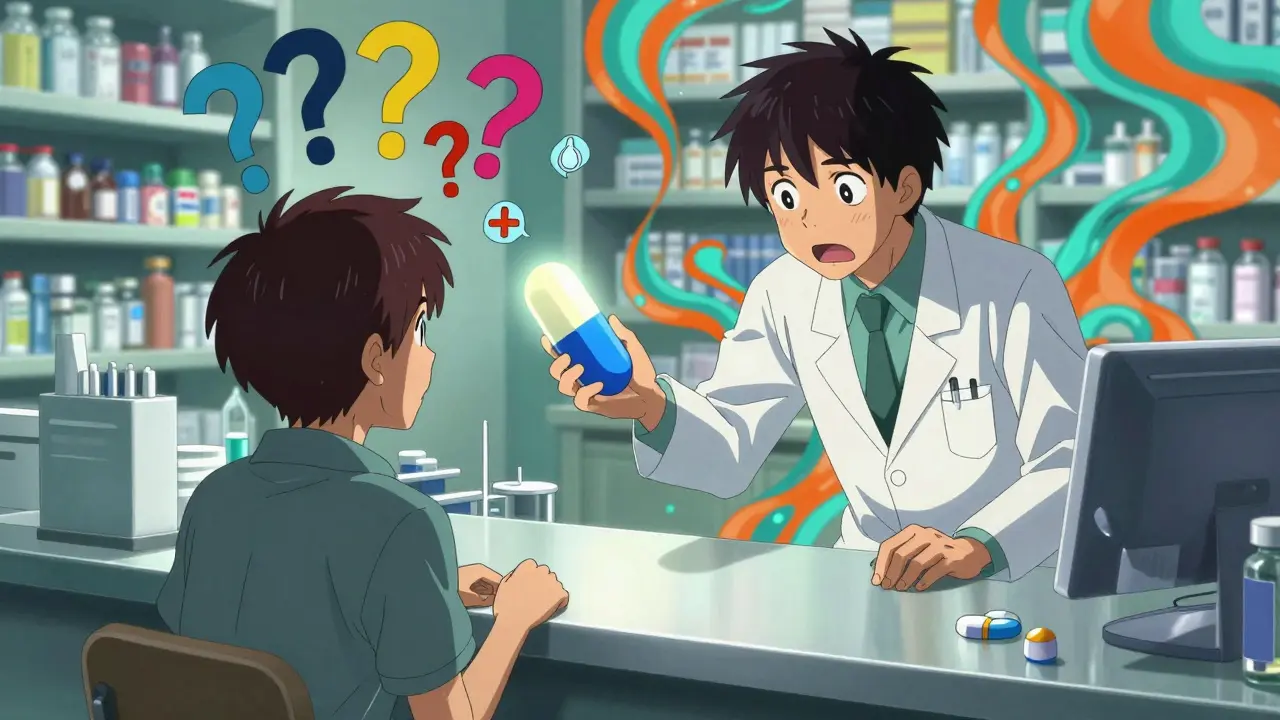
Have you ever looked at your prescription and wondered why the pharmacy handed you a different-looking pill than what your doctor wrote? Or perhaps you’ve heard someone say their generic medication didn’t work as well as the original brand? These are common concerns, but the short answer is reassuring: for the vast majority of patients, generic drugs are chemically identical to their brand-name counterparts and deliver the exact same health benefits.
The confusion usually stems from the fact that generics look different-different colors, shapes, or sizes. But beneath that exterior, the science tells a very clear story. Let’s break down what actually goes into these pills, how regulators ensure they are safe, and when you might actually need to stick with the more expensive option.
The Core Science: What Makes Them Equivalent?
To understand why generics are trusted by doctors worldwide, we have to look at the active ingredient. This is the part of the drug that does the actual work-lowering blood pressure, killing bacteria, or balancing hormones. By law, a generic must contain the exact same active ingredient, in the exact same amount, and in the exact same form (tablet, capsule, liquid) as the brand-name drug.
So, if your doctor prescribes atorvastatin (the active ingredient in Lipitor), the generic version contains atorvastatin. No substitutes, no watered-down versions.
The real test isn't just what's inside the pill, but how your body absorbs it. This is where bioequivalence comes in. The U.S. Food and Drug Administration (FDA) requires manufacturers to prove that the generic releases the drug into your bloodstream at nearly the same rate and extent as the brand-name version. Specifically, the generic’s performance must fall within an 80% to 125% range compared to the brand. In practical terms, this tiny margin of difference has zero impact on clinical outcomes for almost all patients.
| Feature | Brand-Name Drug | Generic Drug |
|---|---|---|
| Active Ingredient | Specific chemical compound | Identical chemical compound |
| Inactive Ingredients | Proprietary mix (fillers, dyes) | May differ (fillers, binders) |
| Appearance | Distinctive color/shape (trademarked) | Can vary by manufacturer |
| Cost | High (covers R&D costs) | Low (80-85% cheaper) |
| FDA Approval Pathway | New Drug Application (NDA) | Abbreviated New Drug Application (ANDA) |
Why Do Generics Cost So Much Less?
If they do the same thing, why is one $400 and the other $4? It comes down to economics, not quality. When a pharmaceutical company develops a new brand-name drug, they spend billions of dollars and years conducting clinical trials to prove it is safe and effective. To recoup those costs, they hold a patent that gives them exclusive rights to sell the drug for about 20 years.
Once that patent expires, other companies can step in. Thanks to the Hatch-Waxman Act of 1984, these competitors don’t need to repeat those expensive human trials. They simply submit an Abbreviated New Drug Application (ANDA) proving their product is bioequivalent. Without the multi-billion-dollar research bill to pay off, generic manufacturers can sell the drug at a fraction of the cost. This competition drives prices down dramatically, saving the U.S. healthcare system over $300 billion annually.

The Role of Inactive Ingredients
You might hear people say, “But my generic gave me a stomach ache!” This is usually linked to inactive ingredients. While the active drug is identical, the fillers, binders, preservatives, and dyes can differ. These inactive components make up the bulk of the pill’s weight but don’t treat your condition.
For most people, these differences are irrelevant. However, if you have specific allergies-for example, to lactose, gluten, or certain dyes-you should always check the inactive ingredient list with your pharmacist. A small percentage of patients may experience mild side effects due to sensitivity to a specific filler used by one generic manufacturer versus another. If this happens, switching to a different generic brand often solves the problem without needing to go back to the expensive brand-name version.
When Should You Stick With the Brand?
While generics are safe for nearly everyone, there is a small category of medications known as Narrow Therapeutic Index (NTI) drugs. These are medicines where even a tiny change in blood concentration can lead to serious problems. Examples include:
- Warfarin (blood thinner)
- Levothyroxine (thyroid hormone)
- Certain anti-seizure medications (like phenytoin)
For NTI drugs, the FDA allows a tighter bioequivalence range (90%-111%) rather than the standard 80%-125%. Even with this stricter standard, many experts recommend staying with the same manufacturer-whether brand or generic-once you find a version that works for you. Switching between different generic brands of NTI drugs can sometimes cause fluctuations in blood levels, requiring closer monitoring by your doctor.
Another exception involves complex delivery systems, such as inhalers or extended-release patches. While generics exist for these, the mechanism of delivery is harder to replicate perfectly. Some patients report better consistency with the brand-name version for these specific formats, though clinical data generally supports generic efficacy here too.
Real-World Evidence: Do They Work?
Skepticism is natural, but the data is overwhelming. A landmark study published in JAMA Internal Medicine analyzed over 3.5 million patients and found comparable clinical outcomes between generic and brand-name drugs across major conditions like diabetes, hypertension, and depression. Patients taking generic metformin had the same control over blood sugar as those on Glucophage. Those on generic amlodipine saw identical blood pressure reductions compared to Norvasc users.
Patient surveys back this up. GoodRx’s 2023 survey of 5,000 respondents found that 87% reported no difference in effectiveness. Furthermore, Kaiser Permanente data showed that patients were 28% more likely to stay consistent with their medication regimen when using generics, simply because they could afford to keep refilling them. Consistency is key to treatment success, and affordability plays a huge role in that.
How to Navigate Your Prescription
In 49 U.S. states, pharmacists are allowed to automatically substitute a generic for a brand-name prescription unless your doctor explicitly writes “Dispense as Written” (DAW). This is standard practice and helps keep your insurance premiums lower.
If you have concerns, talk to your pharmacist. They can check the FDA’s Orange Book, which lists therapeutic equivalence ratings. An “AB” rating means the generic is therapeutically equivalent to the brand. If you’re worried about inactive ingredients, ask if your pharmacy can source a specific generic manufacturer that avoids your allergens.
Remember, the goal is effective treatment at a sustainable cost. For the vast majority of prescriptions-from antibiotics to antidepressants-the generic option is not just a budget choice; it’s a scientifically validated equivalent.
Are generic drugs tested on humans?
Generally, no. Because the active ingredient is already proven safe and effective through the brand-name drug's clinical trials, generic manufacturers only need to conduct bioequivalence studies. These studies typically involve small groups of healthy volunteers to prove the drug enters the bloodstream at the same rate as the brand-name version. This saves time, money, and reduces the number of people exposed to experimental treatments.
Why do generic pills look different from brand-name pills?
Trademark laws prevent generic manufacturers from copying the exact appearance of a brand-name drug. If a generic looked exactly like the brand, it could confuse consumers or be mistaken for counterfeit products. Therefore, generics often come in different colors, shapes, or imprints, even though the internal medicine is identical.
Can I switch between different generic brands?
Yes, for most medications, you can switch between different generic manufacturers without issue. However, for Narrow Therapeutic Index (NTI) drugs like warfarin or levothyroxine, it is best to stick with one manufacturer to maintain stable blood levels. If you notice any changes in effectiveness or side effects after a switch, consult your doctor.
Is it legal for my pharmacy to give me a generic instead of the brand?
In most U.S. states, yes. Pharmacists are permitted to dispense a generic equivalent unless your prescribing physician specifically indicates that the brand-name drug is medically necessary. This process is called automatic substitution and is designed to reduce healthcare costs while maintaining patient safety.
Do generic drugs expire faster than brand-name drugs?
No. Both generic and brand-name drugs must meet the same strict stability and shelf-life requirements set by the FDA. They undergo rigorous testing to ensure they remain potent and safe until the expiration date printed on the bottle.