
Every year, over 250,000 medication errors happen in U.S. nursing homes-most of them preventable. For seniors taking five, ten, or even more pills a day, one wrong dose, one missed alarm, or one mislabeled bottle can lead to a hospital trip, a fall, or worse. These aren’t just mistakes. They’re systemic failures that happen because the system is overloaded, under-resourced, and often silent when things go wrong.
What Counts as a Medication Mistake in Seniors?
A medication error isn’t just giving the wrong pill. It’s giving the right pill at the wrong time. It’s giving two different drugs that interact dangerously. It’s giving expired medication. It’s documenting that a pill was taken when it wasn’t. It’s prescribing a drug the FDA says seniors should avoid-like certain antihistamines or sleep aids that increase fall risk. According to the Beers Criteria® 2023, 43.8% of Medicare beneficiaries are prescribed at least one medication that’s considered inappropriate for their age. Common examples include diphenhydramine (Benadryl) for sleep, chlorpheniramine for allergies, or long-acting benzodiazepines like diazepam. These drugs slow reaction time, blur vision, and confuse the brain-exactly what seniors don’t need. The most frequent errors, based on data from the Medication Error Quality Initiative, are:- Wrong dosage (42.7%)-too much or too little
- Wrong time or rate (23.1%)-giving a pill meant for morning at night
- Wrong medication (15.8%)-confusing similar-sounding names like lisinopril and losartan
- Wrong administration (12.3%)-crushing a pill that shouldn’t be crushed
And here’s the hidden danger: polypharmacy. Seniors on five or more medications have a 13.2% chance of an error. With eight or more? That jumps to 57.9%. It’s not the pills themselves-it’s the chaos of managing them.
How to Spot a Medication Error
You don’t need medical training to catch a mistake. You just need to pay attention. Start with the Five Rights:- Right patient-Is this pill for your parent, or someone else’s?
- Right drug-Does the label match what the doctor said? Check the name and purpose.
- Right dose-Is it 5 mg or 50 mg? Is it one tablet or three?
- Right route-Is it supposed to be swallowed, placed under the tongue, or applied to the skin?
- Right time-Is it morning, bedtime, or with food?
Use a pill organizer-but don’t rely on it blindly. Check the labels every time you refill. Compare the pharmacy label to the doctor’s prescription. If you see a drug you didn’t ask for, ask why.
Watch for signs your loved one is reacting badly:
- Sudden confusion or memory lapses
- Unexplained bruising or bleeding
- Dizziness, fainting, or falls
- Loss of appetite or weight
- Extreme drowsiness or agitation
One family noticed their mother, who used to read the newspaper daily, stopped reading. She was on a new blood pressure med that caused dizziness. Once the dose was lowered, she went back to her routine. It took them weeks to connect the dots.
Why Errors Keep Happening
It’s not just bad people. It’s broken systems. Nursing homes are understaffed. The average is 2.1 nurses per 100 residents. That’s less than one nurse for every 50 people. When staff are rushed, they skip checks. They rely on memory. They assume the last shift did it right. Many facilities still use paper records. Pills are handwritten on charts. Transcribing errors happen. One nurse writes “5 mg,” another reads “50 mg.” No one double-checks. And then there’s fear. Staff are scared to report mistakes. They think they’ll get fired. So they hide them. Families are told, “Your mom was confused.” Or, “It was a one-time thing.” But data shows something else: 83.6% of errors are caught in voluntary reporting systems like MEDMARX, where people can report anonymously. In mandatory systems? Only 14.3% get reported. That’s because people don’t trust the system.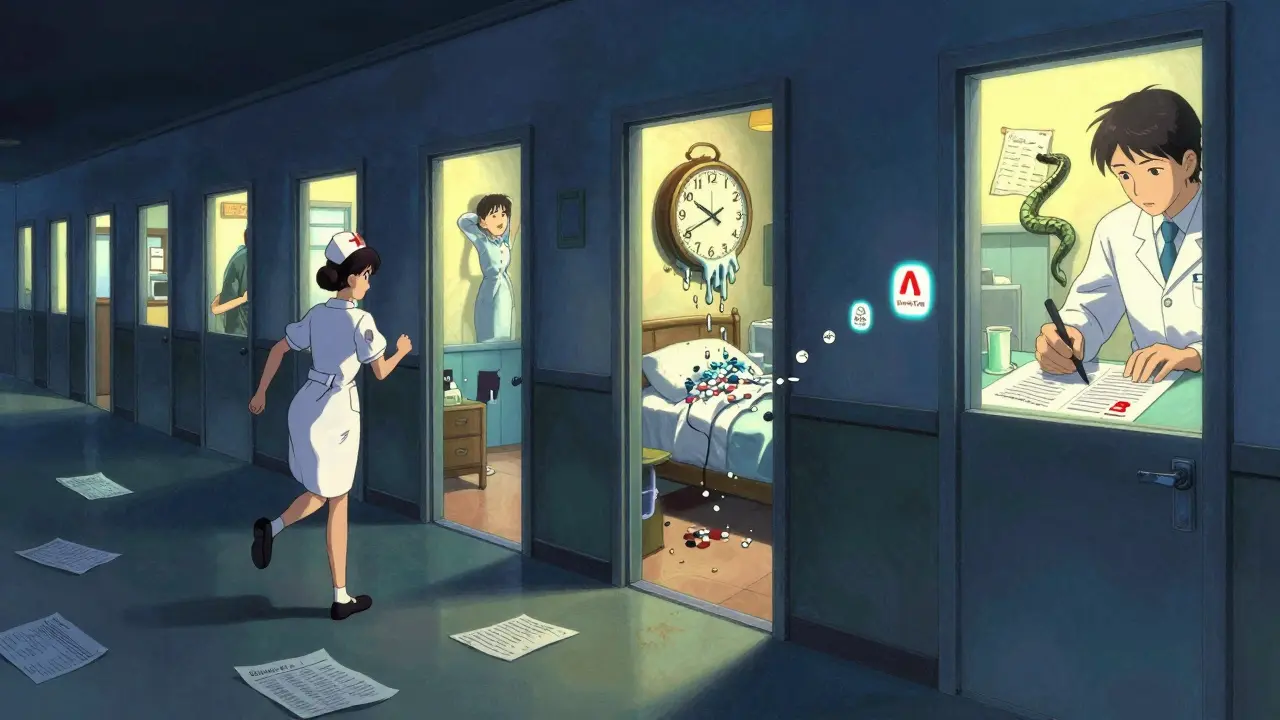
How to Report a Medication Error
If you suspect a mistake, act fast. Don’t wait. Don’t hope it won’t happen again. Step 1: Talk to the staff immediately. Say: “I noticed my mother was given 10 mg of metoprolol at 8 PM, but her prescription says 5 mg in the morning. Can we check the chart?” Step 2: Document everything. Write down:- Date and time of the error
- Medication name and dose
- Who gave it
- What happened after (e.g., dizziness, vomiting)
- Who you spoke to and what they said
Take photos of pill bottles and labels if you can. Keep a log. This isn’t being paranoid. It’s being prepared.
Step 3: Contact the prescribing doctor. If it’s life-threatening-like an overdose of blood thinner or insulin-call the doctor right away. Then call 911 if needed. Step 4: Report to the facility’s safety officer. Most nursing homes have a designated person for incident reports. Ask for the Medication Error Reporting Form. Fill it out. Keep a copy. Step 5: Contact your state’s Long-Term Care Ombudsman. This is your most powerful tool. The ombudsman is a free, independent advocate for nursing home residents. Call 1-800-677-1116 or visit ombudsman.org. They can investigate, demand records, and push for change. Families who report to ombudsmen see 68.4% of issues resolved within 72 hours. Step 6: Report serious events to the FDA. If the error caused serious harm-hospitalization, permanent injury, or death-file a report with FDA MedWatch. You don’t need to be a doctor. Families can file directly.What Happens After You Report?
Some facilities will deny it. They’ll say, “We checked the logs-everything’s correct.” Don’t back down. Ask to see the electronic medication administration record (eMAR). Ask for the nurse’s signature and timestamp. If they refuse, that’s a red flag. In states like California and New York, facilities are legally required to report serious errors within 24-48 hours. If they don’t, you can file a complaint with the state health department. The good news? When families report, change happens. After one family reported a pattern of missed insulin doses, their facility implemented barcode scanning for all meds. Error rates dropped by 40% in six months.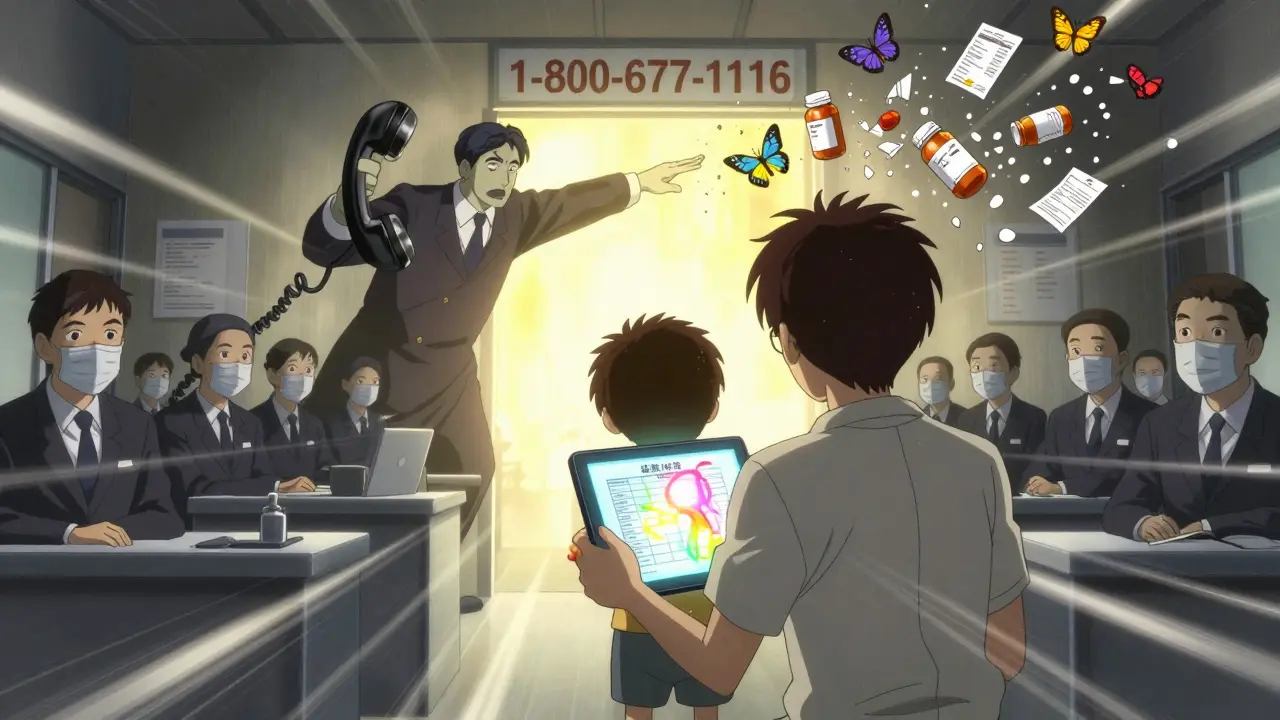
How to Prevent Future Mistakes
Prevention starts with you.- Keep a current list of every medication-name, dose, purpose, and time. Update it every time the doctor changes something.
- Use one pharmacy for all prescriptions. This helps catch dangerous interactions.
- Ask the pharmacist: “Is this safe for someone my parent’s age?”
- Request a medication reconciliation at every hospital discharge or doctor visit. This means comparing all meds to make sure nothing’s duplicated or conflicting.
- Use the teach-back method: After the nurse explains a new med, ask your parent to explain it back. If they can’t, the nurse didn’t explain it well.
Technology helps, but it’s not magic. Only 54.7% of nursing homes use barcode scanning. Most still rely on paper. So don’t wait for the system to fix itself. Be the check.
What to Do If No One Listens
If the facility ignores you, threatens retaliation, or blames your loved one’s “confusion,” escalate.- Call the state ombudsman again. Ask for a formal investigation.
- File a complaint with your state’s Department of Health.
- Reach out to local media. Stories about medication errors in nursing homes have led to state-wide audits.
- Consider switching facilities. Your parent’s safety is more important than loyalty to a place.
One Reddit user wrote: “When I caught the nurse giving my mother double doses of blood pressure medication, the facility initially refused to file an incident report until I threatened to contact the state ombudsman. This is why families need to know their rights.”
They’re right. You have rights. And you have power-not because you’re loud, but because you’re paying attention.
Resources You Can Use Right Now
- Long-Term Care Ombudsman Program: 1-800-677-1116
- FDA MedWatch: Report serious side effects or errors at www.fda.gov/medwatch
- National Response Center: For life-threatening emergencies, call 1-800-332-1088
- Beers Criteria® 2023: Download the list of unsafe meds for seniors from the American Geriatrics Society website
- ISMP Medication Safety Tips: Free guides for families on how to spot and prevent errors
Medication errors aren’t accidents. They’re signals. They tell you the system is failing. But they also tell you what to do next. Check. Document. Report. Push. Your parent’s life depends on it-and so does the future of care for millions of others.