When a patient walks into a hospital or clinic needing a life-saving drug, and it’s not there, the consequences aren’t theoretical-they’re immediate, personal, and sometimes deadly. In 2025, over 250 drugs were still in short supply across the U.S., including critical medications like chemotherapy agents, antibiotics, and even basic IV fluids. This isn’t a temporary glitch. It’s a systemic failure that’s been building for years-and it’s changing how care is delivered, who gets it, and at what cost.
What Happens When a Life-Saving Drug Disappears?
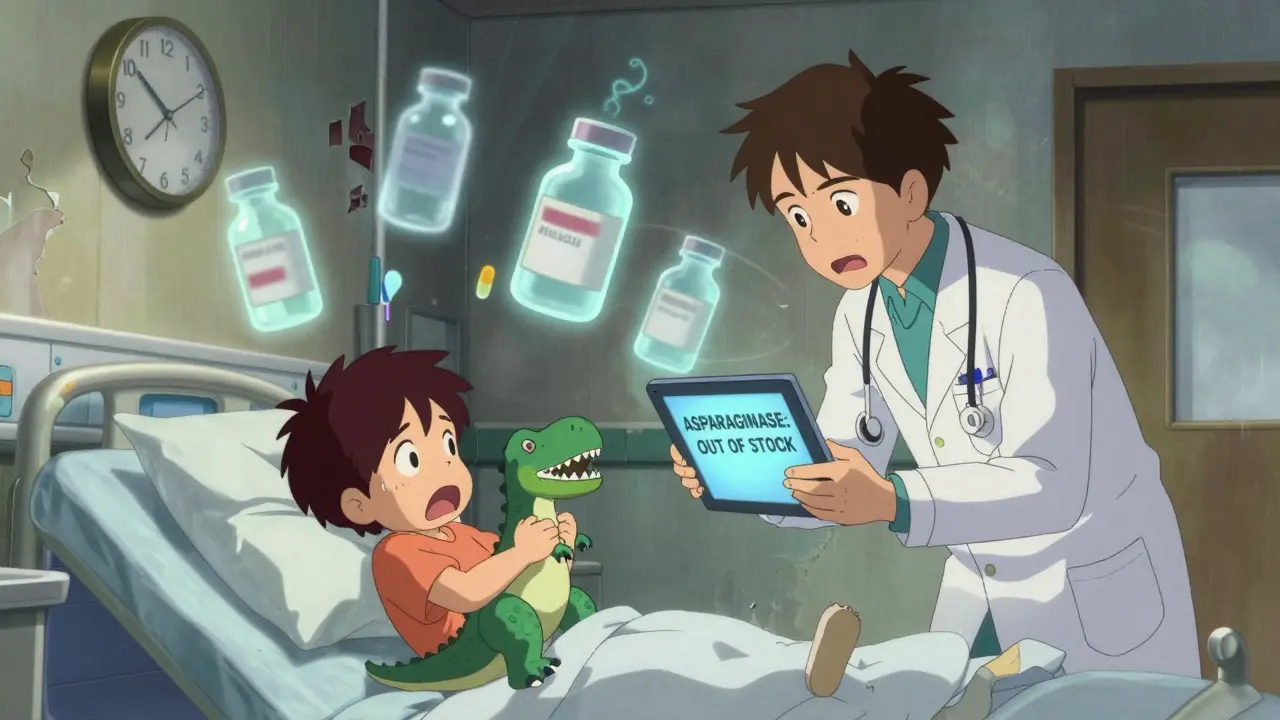
Imagine a child with acute lymphoblastic leukemia. Their treatment plan depends on a drug called asparaginase. When that drug vanishes from shelves, doctors don’t just say, "We’ll get it next week." They scramble. They try alternatives that may be less effective. They delay doses by weeks. Studies show delays of 7 to 14 days during asparaginase shortages directly increase the risk of relapse. For these kids, time isn’t just a factor-it’s survival. The same thing happens with antibiotics. When a patient develops a severe infection and the go-to drug isn’t available, clinicians are forced to use older, more toxic alternatives. One study found that during antimicrobial shortages, infection-related complications rose by 22%. Nurses and pharmacists spend hours tracking down vials, calling distributors, and switching protocols. All while the patient waits.Who Pays the Price?
The burden doesn’t fall equally. Patients with chronic conditions-cancer, epilepsy, heart disease-are hit hardest. When lorazepam injection is unavailable, seizure patients go without. When heparin, a blood thinner used in surgeries, runs out, cardiac procedures get postponed or rerouted. In one hospital, procedure times jumped 22% because staff had to learn new anticoagulation methods on the fly. And it’s not just hospitals. Outpatient infusion centers saw 41% of patient treatments delayed or skipped entirely. People with autoimmune disorders, chronic pain, or cancer who rely on regular infusions often miss doses. Some skip doses to stretch out their supply. Others stop entirely. A 2024 JAMA Network Open study found that nearly 1 in 4 patients admitted to not taking their medication as prescribed because of availability issues. Even simple drugs like saline bags-used in almost every hospital procedure-have been in shortage. When those run out, staff have to dilute existing bags, ration usage, or delay treatments. One hospital reported that 85% of pharmacists had to create new protocols just to keep basic care going.The Hidden Costs: Time, Stress, and Errors
Behind every shortage is a team of pharmacists, nurses, and doctors working overtime to make up for what’s missing. Hospitals now spend an average of 15 to 20 hours per week per shortage just managing the fallout. Pediatric units? That number jumps 25% because kids need special formulations that aren’t always available. This isn’t just about extra work. It’s about mistakes. When a nurse switches from one drug to a substitute, even if it’s "similar," the risk of error spikes. Studies show medication errors tied directly to shortages rose 43% between 2019 and 2024. A dose that’s too high. A wrong route. A missed interaction. These aren’t hypotheticals-they happen in real time, in real hospitals. The financial toll is just as heavy. Hospitals spent nearly $900 million in 2023 just on extra labor, emergency purchases, and protocol changes. Patients paid more too. Out-of-pocket costs for medications during shortages increased by nearly 19% on average. For someone on a fixed income, that’s not a minor bump-it’s choosing between food and medicine.
Why Do These Shortages Keep Happening?
It’s not one problem. It’s a chain of failures. Most shortages (83%) involve generic drugs. Why? Because they’re cheap. Pharmaceutical companies make pennies on each pill, so they stop making them unless demand is huge. When one factory shuts down for quality issues-a common reason for shortages-it can take months to restart. And many of these factories are overseas. A broken supply line in India or China can ripple across U.S. hospitals. Manufacturing problems account for 32% of shortages. Raw material shortages? That’s 21%. And 47%? That’s global supply chain breakdowns. The system was built for efficiency, not resilience. When demand spikes-like during a flu season or a pandemic-it cracks. Even when the FDA requires manufacturers to report potential shortages six months in advance (a rule that took effect in 2023), many still don’t. Or they report too late. By then, hospitals are already out of stock.What’s Being Done? And Is It Enough?
Some hospitals have formed shortage response teams. Others use software that tracks inventory in real time. Group purchasing organizations like Vizient have helped save $300 million in avoided costs since 2023 by pooling resources across hundreds of facilities. But these are patches, not fixes. Only 87% of large hospital systems have formal shortage management programs now-up from 58% in 2019. That sounds good, until you realize 13% still have no plan. And even those with plans are overwhelmed. Congress held hearings. The White House issued executive orders. But the core issue remains: there’s no financial incentive for companies to make low-margin drugs. Until that changes, shortages will keep coming.