

Statin Monitoring Schedule Calculator
This tool helps you determine which lab tests you should get while on statin therapy based on current medical guidelines. It's designed to prevent unnecessary testing while ensuring you get the right tests at the right time.
When you start taking a statin, your doctor might order a bunch of blood tests. But do you really need them all? And how often? For years, patients were told to get their liver enzymes checked every few months - even if they felt fine. But the science has changed. Today, statin monitoring is far less about routine checking and more about smart, targeted care.
Why Monitor Statins at All?
Statin drugs like atorvastatin, rosuvastatin, and simvastatin lower LDL (bad) cholesterol by blocking an enzyme your liver uses to make cholesterol. That’s good - it cuts heart attack and stroke risk by up to 30%. But like all medicines, they can cause side effects. The big ones doctors watch for are liver stress and muscle damage. That’s why lab tests exist. But here’s the twist: most of those tests don’t catch serious problems early - and they often cause more harm than good.What Tests Are Actually Needed?
Not all blood tests are created equal. Here’s what you really need:- Lipid panel - This checks your total cholesterol, LDL, HDL, and triglycerides. It’s the only test that tells you if the statin is working. You should get this 4 to 12 weeks after starting or changing your dose. After that, once a year is enough if your numbers are stable.
- Baseline liver enzymes (ALT/AST) - One test before you start. That’s it - unless you have symptoms or other liver issues. A 2011 analysis of 83,000 patients found no difference in serious liver injury between those on statins and those on placebo.
- Creatine kinase (CK) - Only if you have persistent muscle pain, weakness, or dark urine. Don’t get it after a hard workout - that can spike CK and cause false alarms.
- Estimated kidney function (creatinine) - Done once at the start, especially if you’re over 65 or have diabetes. Not needed again unless your health changes.
- HbA1c - Not routine. Statins slightly raise blood sugar in some people, but the risk is small. Only test this if you already have prediabetes (fasting glucose 5.6-6.9 mmol/L) or other risk factors like obesity or high triglycerides.
What About Routine Liver Tests?
For years, doctors ordered liver function tests (LFTs) every 3 to 6 months. It felt safe. But it wasn’t necessary. The FDA removed this requirement in 2012 after reviewing data from dozens of studies. Here’s why:- Only about 1 in 6 patients on statins have ALT levels above normal - and most of those are mild and go away on their own.
- ALT levels above 3 times the upper limit of normal (ULN) are rare - and even then, they rarely mean liver damage.
- Stopping a statin because of a slightly high ALT increases your risk of heart attack by 10-20%, according to a 2017 JAMA study.
- The cost of unnecessary LFTs in the U.S. alone is over $1.2 billion a year.
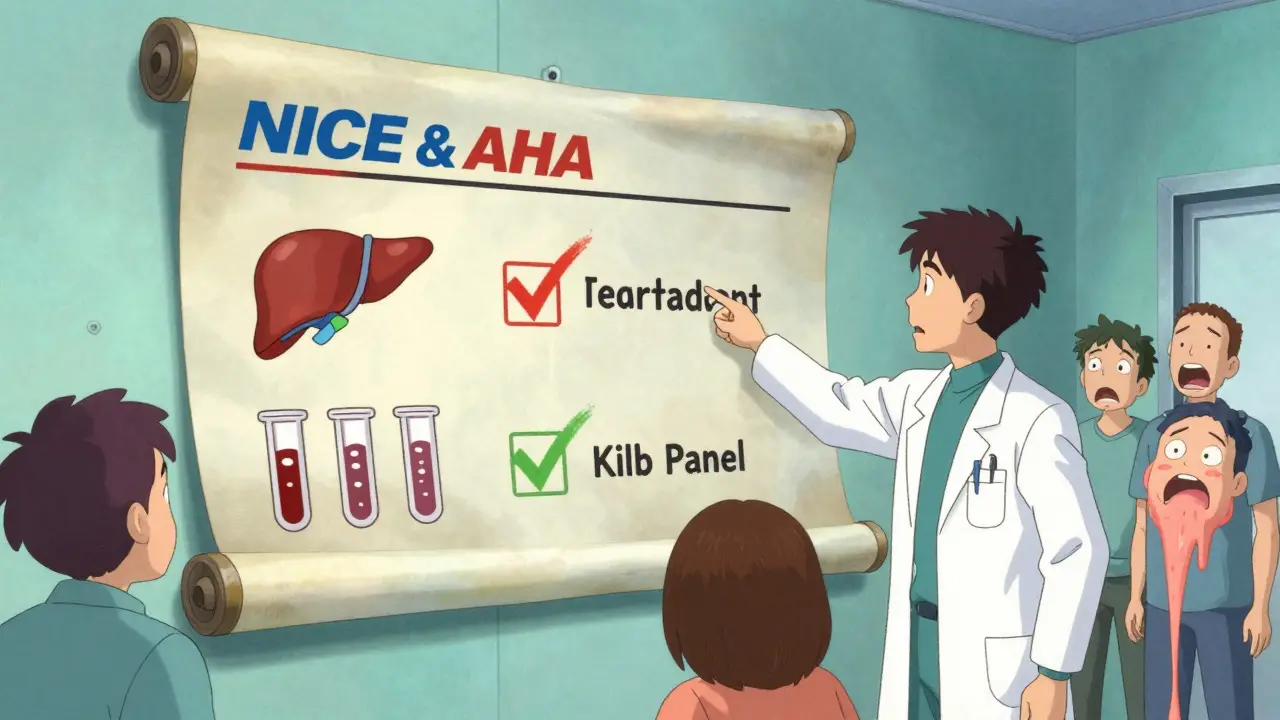
Current guidelines from NICE (UK), the American Heart Association, and the American College of Cardiology all agree: test liver enzymes only at baseline, then again at 3 months and 12 months. After that, only if you have symptoms like fatigue, yellowing skin, or dark urine.
When to Worry About Muscle Pain
Muscle aches are the most common complaint. But here’s the truth: most people who say their muscles hurt on statins don’t actually have statin-related muscle damage. In fact, studies show up to 90% of reported muscle pain is unrelated to the drug.Real statin-induced myopathy is rare. It happens when muscle cells break down, releasing a protein called creatine kinase (CK) into the blood. If your CK is more than 10 times the upper limit of normal, and you have muscle weakness or dark urine, your doctor should stop the statin immediately.
But if you just feel a little sore after walking the dog? That’s not it. Don’t ask for a CK test. Exercise, dehydration, or even a bad night’s sleep can raise CK. Getting tested when you’re not symptomatic leads to false positives - and unnecessary statin stops.
Who Needs Extra Monitoring?
Not everyone follows the same rules. Some people need more attention:- People with liver disease - If you have hepatitis, cirrhosis, or fatty liver, your doctor may check LFTs more often.
- Those on multiple medications - Drugs like fibrates, cyclosporine, or certain antibiotics can increase statin side effects. More frequent checks may be needed.
- Older adults (over 75) - Kidney function drops with age. A creatinine test every year helps adjust doses.
- People with diabetes or prediabetes - Monitor HbA1c every 3-6 months, not because statins cause diabetes, but because you’re already at higher risk.
- Those with a family history of muscle disorders - Genetic testing for SLCO1B1 variants can help predict risk for simvastatin muscle problems. It’s not routine yet, but it’s becoming more common.
What Your Doctor Shouldn’t Do
Many doctors still order quarterly LFTs because “that’s what we’ve always done.” Here’s what you should push back on:- Monthly or quarterly liver tests if you feel fine and have no risk factors.
- Stopping your statin because your ALT is 58 U/L (normal range is up to 55-60 U/L depending on the lab).
- Testing CK after a gym session or hiking trip.
- Ordering HbA1c every year if you’re not diabetic or prediabetic.
One patient in Bristol told me she had 47 liver tests over 5 years - all normal. Her doctor finally stopped after she showed him the NICE guidelines. She’s been on statins for 8 years now. No heart issues. No liver problems. Just peace of mind.
How to Talk to Your Doctor
You don’t need to argue. Just ask:- “Why am I getting this test?”
- “Is this based on current guidelines?”
- “What happens if my result is slightly off?”
- “Will you stop my statin if my ALT is high?”
Most doctors will respond well. Many are unaware of the 2012 FDA changes or the 2018 ACC/AHA updates. Bring up NICE or the American Heart Association guidelines. You’re not challenging their authority - you’re helping them follow the best science.

What’s Changing in 2025?
The future of statin monitoring is personalized. New tools are emerging:- ApoB testing - Instead of LDL, some experts now measure ApoB, a protein that better predicts heart risk - especially if your triglycerides are high.
- Genetic testing - The SLCO1B1 gene test can tell you if you’re more likely to get muscle pain from simvastatin. It’s not routine, but it’s available.
- AI-driven alerts - Some hospitals now use AI to flag patients who truly need extra monitoring - based on age, meds, and past results - not blanket rules.
By 2027, experts predict routine liver tests will drop by half. The goal isn’t to test more - it’s to test smarter.
Bottom Line: Less Testing, Better Outcomes
Statin therapy saves lives. But over-testing can hurt them. You don’t need monthly blood draws. You don’t need to panic over a slightly high ALT. You don’t need to stop your statin because a test came back “abnormal” when you feel fine.Here’s your simple monitoring plan:
- Before starting: Get baseline lipid panel, ALT/AST, creatinine, and HbA1c (if you have risk factors).
- At 3 months: Repeat lipid panel. Check ALT/AST again if you’re high-risk.
- At 12 months: Repeat lipid panel.
- After that: Lipid panel once a year. Only test liver or muscle markers if you have symptoms.
Stick to this, and you’ll get the full benefit of your statin - without the noise, the cost, or the fear.
Do I need to get my liver tested every 3 months on statins?
No. Current guidelines from NICE, the American Heart Association, and the FDA say liver tests are only needed at baseline, 3 months after starting, and at 12 months. After that, only repeat them if you have symptoms like yellowing skin, dark urine, or unexplained fatigue. Routine testing doesn’t prevent liver damage and can lead to unnecessary statin stops.
Can statins cause liver damage?
Severe statin-induced liver injury is extremely rare - less than 1 case per 1 million patient-years. Mild, temporary rises in liver enzymes happen in about 1 in 6 people, but they almost always go back to normal on their own. Stopping the statin for these minor changes doesn’t help and increases your heart risk. Only stop if ALT is more than 3 times the upper limit of normal and stays high after retesting.
I have muscle aches. Should I stop my statin?
Not necessarily. Most muscle pain on statins isn’t caused by the drug. If the pain is mild and doesn’t come with weakness or dark urine, don’t stop. Get a creatine kinase (CK) test only if symptoms are persistent and severe. If CK is over 10 times the upper limit of normal, then stop the statin. Otherwise, try switching to a different statin or lowering the dose.
Do statins raise blood sugar? Should I check HbA1c regularly?
Yes, statins can slightly raise blood sugar - but the heart benefits far outweigh this small risk. You only need to check HbA1c if you already have prediabetes (fasting glucose 5.6-6.9 mmol/L), obesity, or high triglycerides. For most people, annual HbA1c testing isn’t needed. Don’t let a slight rise scare you off your statin.
Why do some doctors still order monthly blood tests?
Many doctors learned to monitor statins years ago, before the science changed. Electronic health records often auto-populate quarterly liver tests by default. Some doctors are cautious and fear missing something. But studies show this approach causes more harm - unnecessary anxiety, statin discontinuation, and wasted healthcare dollars. Ask for the current NICE or ACC/AHA guidelines - most will adjust their practice.
Is there a better test than LDL to monitor statin effectiveness?
For most people, LDL is still the standard. But if your triglycerides are above 175 mg/dL, or if you have diabetes or metabolic syndrome, ApoB may be a better marker. It measures the number of cholesterol-carrying particles, not just the cholesterol inside them. Some specialists now use ApoB as a primary target, especially when LDL numbers look good but heart risk remains high.
What to Do Next
If you’re on a statin and unsure about your testing schedule:- Check your last lipid panel result. Is your LDL down by 30-50%? If yes, you’re on track.
- Look at your last liver test. Was it done more than a year ago? If so, you’re probably due for a lipid panel - not an LFT.
- Write down any symptoms: muscle pain? Fatigue? Nausea? Share them honestly with your doctor.
- Ask: “What’s the goal of this test? What happens if it’s abnormal?”
Statin therapy is one of the most effective tools we have to prevent heart disease. But it only works if you stay on it. Don’t let outdated testing rules scare you off. Ask the right questions. Get the right tests. And keep taking your pill.