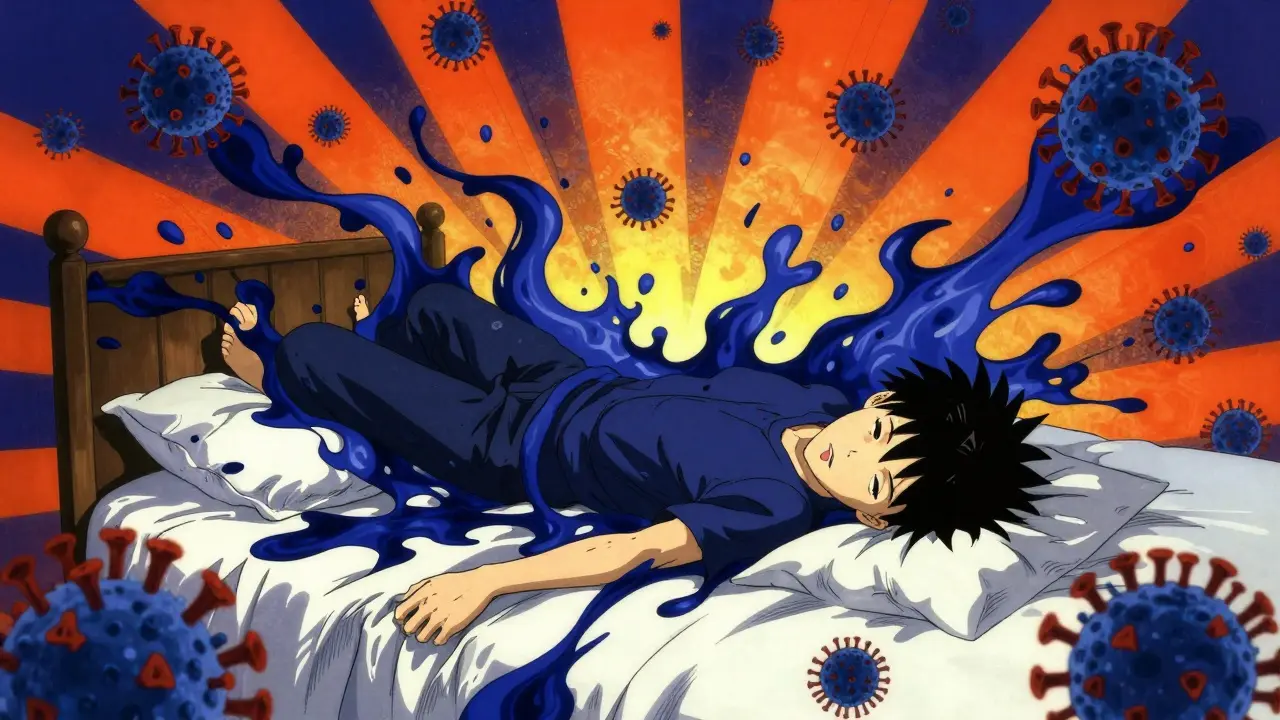
You feel like you’ve been hit by a truck. Your throat is on fire, your glands are swollen, and the exhaustion isn’t just tired-it’s bone-deep. If this sounds familiar, you might be dealing with mononucleosis, commonly known as mono or "the kissing disease." It is caused by the Epstein-Barr virus (EBV), a herpesvirus that infects over 90% of adults by age 35. While most people recover without specific treatment, the journey from initial infection to full energy restoration can take months, not weeks.
This guide breaks down exactly what happens when EBV takes hold, how to distinguish it from strep throat or the flu, and-most importantly-how to manage the notorious fatigue so you can get back to your life safely.
Understanding the Epstein-Barr Virus and Mono
The Epstein-Barr virus (EBV) is incredibly common. In fact, it’s so widespread that most of us carry it for life without ever knowing we were infected. However, when it strikes during adolescence or young adulthood, it often triggers infectious mononucleosis.
EBV spreads through saliva. You don’t need to kiss someone to catch it; sharing a drink, utensils, or even a toothbrush can transmit the virus. The incubation period-the time between exposure and symptoms-is typically 4 to 6 weeks. During this window, you can spread the virus to others even if you feel perfectly fine.
Why do some people get sick while others don’t? Children who contract EBV usually have mild or no symptoms. But in teenagers and young adults, the immune system reacts more aggressively, leading to the classic symptoms we associate with mono. About 500,000 cases are diagnosed annually in the United States among people aged 15-24, making it a rite of passage for many college students.
Recognizing the Classic Symptoms
Mono doesn’t always announce itself with fanfare, but when it does, it presents a distinct triad of symptoms:
- Extreme Fatigue: This is the hallmark of mono. Unlike normal tiredness, this exhaustion affects 98% of patients and can persist for months.
- Sore Throat: Severe pharyngitis occurs in about 85% of cases. It often looks like strep throat, with white patches on the tonsils, but antibiotics won’t help because it’s viral.
- Swollen Lymph Nodes: Glands in the neck (especially the posterior cervical region) and armpits swell in 70-90% of cases.
Other common signs include fever (often spiking between 101°F and 104°F), headache, muscle aches, and an enlarged spleen (splenomegaly). About half of all mono patients develop an enlarged spleen, which is a critical factor in recovery planning.
A key red flag: If you take ampicillin or amoxicillin for a suspected bacterial throat infection but actually have mono, you will likely develop a rash. This happens in up to 90% of mono patients given these antibiotics. It’s not an allergy; it’s a reaction specific to the virus-medication interaction.
Diagnosis: Monospot vs. Blood Panels
If you suspect mono, your doctor will likely start with a physical exam, checking for swollen glands and spleen size. Then comes testing.
| Test Name | What It Detects | Accuracy & Timing |
|---|---|---|
| Monospot Test | Heterophile antibodies | Quick and cheap. ~85% sensitive in week 2. May be negative in week 1. |
| EBV Antibody Panel | VCA-IgM, VCA-IgG, EBNA | Gold standard. Confirms acute vs. past infection. Takes longer to process. |
| Complete Blood Count (CBC) | Atypical lymphocytes | Shows elevated white blood cells with unusual shapes. Supports diagnosis. |
The Monospot test is the go-to screening tool because it provides results quickly. However, it has a blind spot: it can miss early infections. Up to 25% of patients test negative in the first week. If your symptoms persist but the Monospot is negative, doctors may order an EBV-specific antibody panel. This looks for specific markers like VCA-IgM (present in acute infection) and EBNA (which appears later, indicating past infection).

The Danger Zone: Protecting Your Spleen
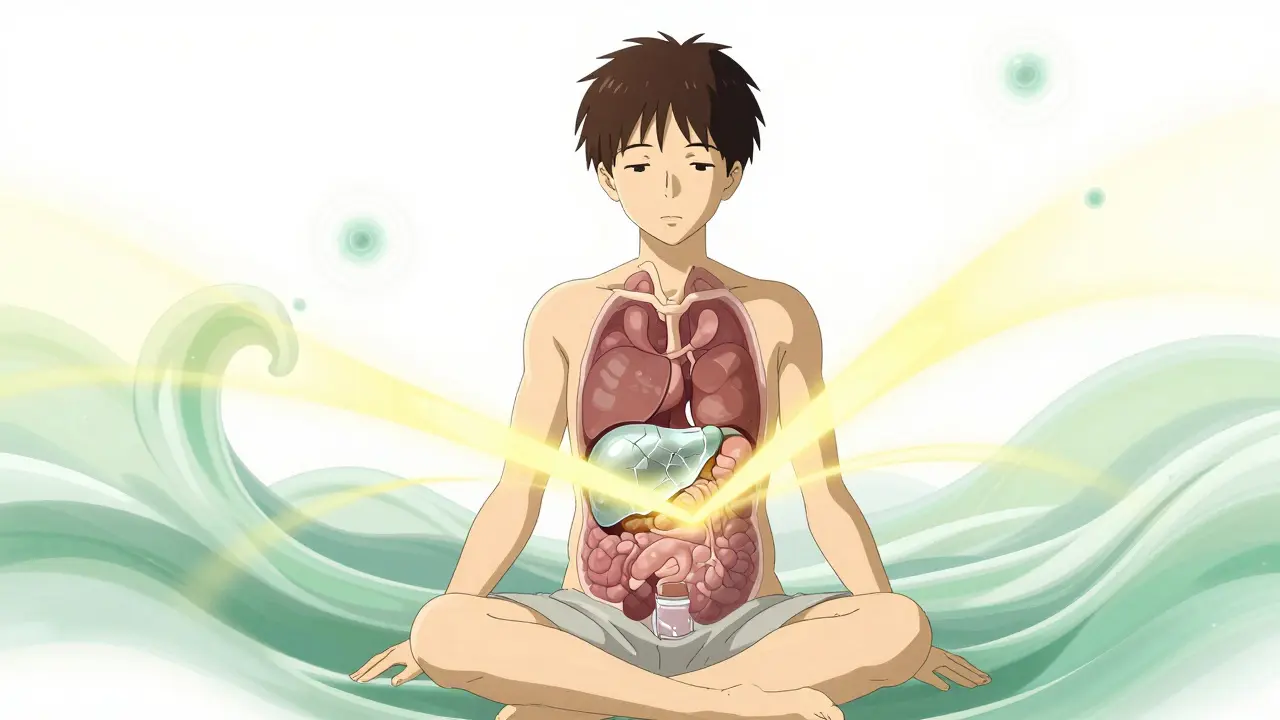
This is the most critical part of mono management. When EBV infects your body, it causes the spleen to enlarge in about 50% of patients. An enlarged spleen is fragile and prone to rupture.
Splenic rupture is rare (occurring in 0.1-0.5% of cases) but life-threatening. It usually happens during weeks 2 to 4 of illness. To prevent this, you must avoid contact sports and heavy lifting. The American College of Sports Medicine recommends staying out of contact activities for at least 4 weeks after diagnosis.
Don’t guess when you’re safe. Return to play should only happen after a doctor confirms your spleen has returned to normal size, often via ultrasound. In 90% of cases, the spleen shrinks within 30 days, but severe cases can take up to 12 weeks. Pushing too hard too soon is the biggest mistake patients make.
Managing Fatigue: The Long Haul
Fatigue is the symptom that catches people off guard. You might feel better after two weeks, then hit a wall at week five where showering feels like climbing a mountain. This is normal. Studies show that 63% of patients take 4 to 8 weeks to return to normal work or academic performance, and fatigue can linger for 2 to 4 months.
Here’s how to handle it:
- Pace Yourself: Use the "Pacing, Prioritizing, Planning" method. Start at 50% of your pre-illness activity level. If you can handle that for a few days without worsening symptoms, increase by 10% each week.
- Hydrate Aggressively: Dehydration worsens fatigue. Aim for consistent water intake throughout the day.
- Rest Without Guilt: Sleep when you need to. Your body is fighting a war against the virus. Rest is not laziness; it’s treatment.
- Avoid NSAIDs Initially: Acetaminophen is preferred for fever and pain. Non-steroidal anti-inflammatory drugs (NSAIDs) like ibuprofen can increase bleeding risk if you have low platelets, a potential complication of mono.
There is no antiviral drug that cures mono. Drugs like acyclovir may reduce viral shedding slightly but do not shorten the illness or improve symptoms significantly. Corticosteroids are reserved for severe cases with airway obstruction or extreme thrombocytopenia, as they can prolong viral presence otherwise.
When to Seek Immediate Care
While mono is self-limiting, complications require urgent attention. Go to the ER if you experience:
- Sudden, sharp pain in the upper left abdomen (possible spleen rupture).
- Difficulty breathing or swallowing due to swollen tonsils.
- Severe dizziness, fainting, or confusion.
- Jaundice (yellowing of skin or eyes), indicating liver involvement.
Also, watch for neurological issues. Though rare (0.05-0.1%), conditions like Guillain-Barré syndrome can follow EBV infection. Numbness, tingling, or weakness in limbs needs immediate evaluation.
Long-Term Outlook and Research
For most people, mono is a one-time event. Once infected, you remain immune to symptomatic mono, though the virus stays dormant in your B-cells for life. Reactivation is possible, especially in immunocompromised individuals, but rarely causes illness in healthy people.
Recent research highlights a link between EBV and multiple sclerosis (MS). A 2022 study of 10 million military personnel found that prior mono infection increases MS risk by 1.3-fold. Scientists are now developing monoclonal antibodies targeting EBV-infected cells, which could revolutionize both MS treatment and potentially future mono prevention. Moderna is also testing an mRNA vaccine for EBV, showing promising early data in Phase I trials.
Until vaccines are widely available, awareness and careful management are your best tools. Listen to your body, protect your spleen, and give yourself grace during the recovery process.
How long is contagious mono?
You can spread the Epstein-Barr virus before symptoms appear and for weeks after you start feeling better. The highest risk of transmission is during the acute phase (first 2-4 weeks), but the virus can be shed intermittently for months. Avoid sharing drinks, utensils, or kissing until you have fully recovered.
Can you get mono twice?
No. Once you have had infectious mononucleosis, your body develops antibodies that provide lifelong immunity against symptomatic recurrence. However, the virus remains dormant in your body and can reactivate silently, though this rarely causes illness in healthy individuals.
What foods should you eat with mono?
Focus on soft, easy-to-swallow foods if your throat is sore. Good options include smoothies, yogurt, oatmeal, mashed potatoes, and scrambled eggs. Stay hydrated with water, herbal teas, and electrolyte drinks. Avoid spicy, acidic, or crunchy foods that can irritate inflamed tissues.
Is mono worse than the flu?
In terms of duration and fatigue, yes. Influenza typically resolves in 1-2 weeks, while mono symptoms often last 2-6 weeks, with fatigue persisting for months. Mono also carries unique risks like splenomegaly, which requires strict activity restrictions not needed for the flu.
When can I return to school or work?
Return gradually. Most people need 2-4 weeks off for the acute phase. After that, try part-time hours or reduced coursework. Do not return to full intensity until your energy levels stabilize and your doctor clears you, especially if you participate in sports.