NSAID Kidney Risk Calculator
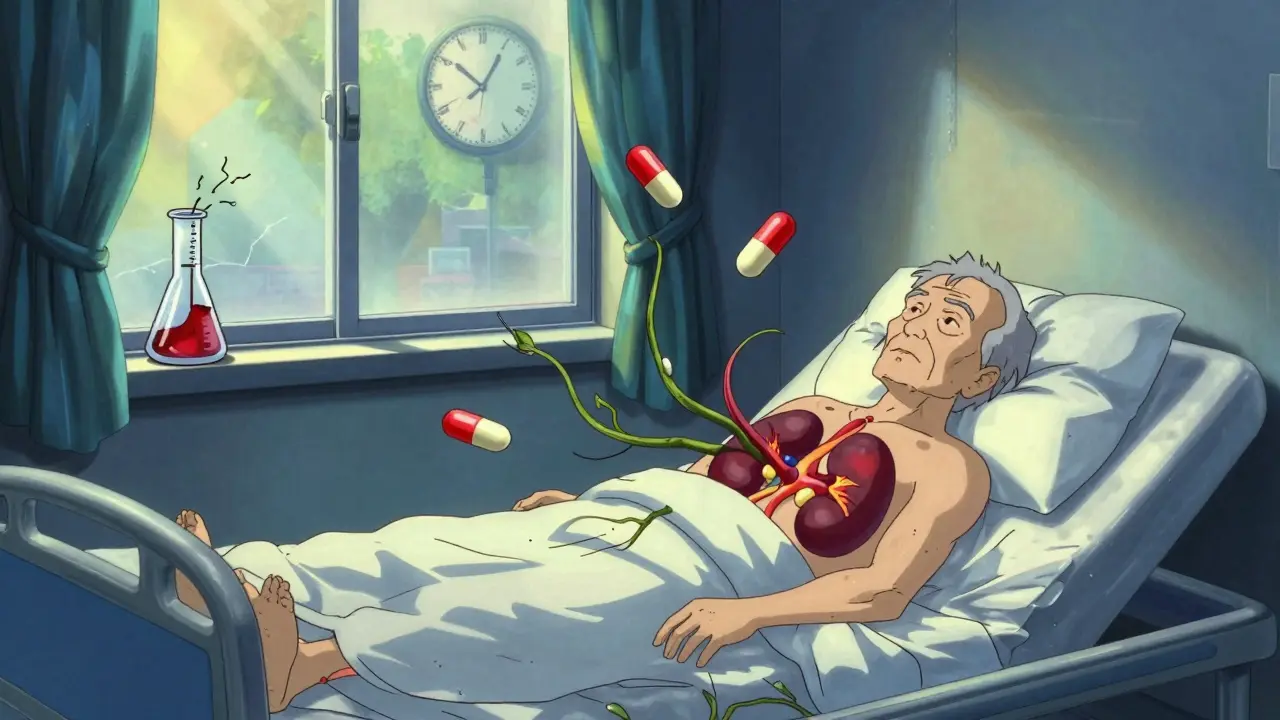
Every year, tens of thousands of people end up in the hospital with sudden kidney damage - and many of them didn’t even realize they were at risk. The culprit? Common painkillers like ibuprofen, naproxen, and aspirin. These drugs, sold over the counter in nearly every pharmacy and grocery store, are often seen as harmless. But for people with kidney disease or even just slightly reduced kidney function, they can trigger acute kidney injury in as little as 48 hours.
How NSAIDs Actually Damage the Kidneys
NSAIDs work by blocking enzymes called COX-1 and COX-2, which are involved in producing prostaglandins. These prostaglandins aren’t just about inflammation and pain - they’re also critical for keeping blood flowing through your kidneys. When you take an NSAID, you cut off that blood flow signal. In a healthy person, the kidneys can usually compensate. But if you already have reduced kidney function, dehydration, heart failure, or are on blood pressure meds like ACE inhibitors or diuretics, your kidneys lose their backup system.
This is called hemodynamically-mediated acute kidney injury. It’s not an allergic reaction or poison - it’s a slow shutdown of blood flow. Within hours, your glomerular filtration rate (GFR) can drop by 20 to 40%. That means your kidneys stop filtering waste as efficiently. Creatinine levels rise, fluid builds up, and you might feel tired, swollen, or notice you’re peeing less. Often, there are no obvious symptoms until the damage is already done.
There’s another, less common but still dangerous pathway: acute interstitial nephritis. This is an immune reaction where your body attacks the kidney tissue itself. It can cause fever, rash, blood in the urine, and high protein levels. It’s rarer - affecting only 5 to 15% of NSAID-related kidney injuries - but it’s just as serious.
The Triple Whammy: A Deadly Combination
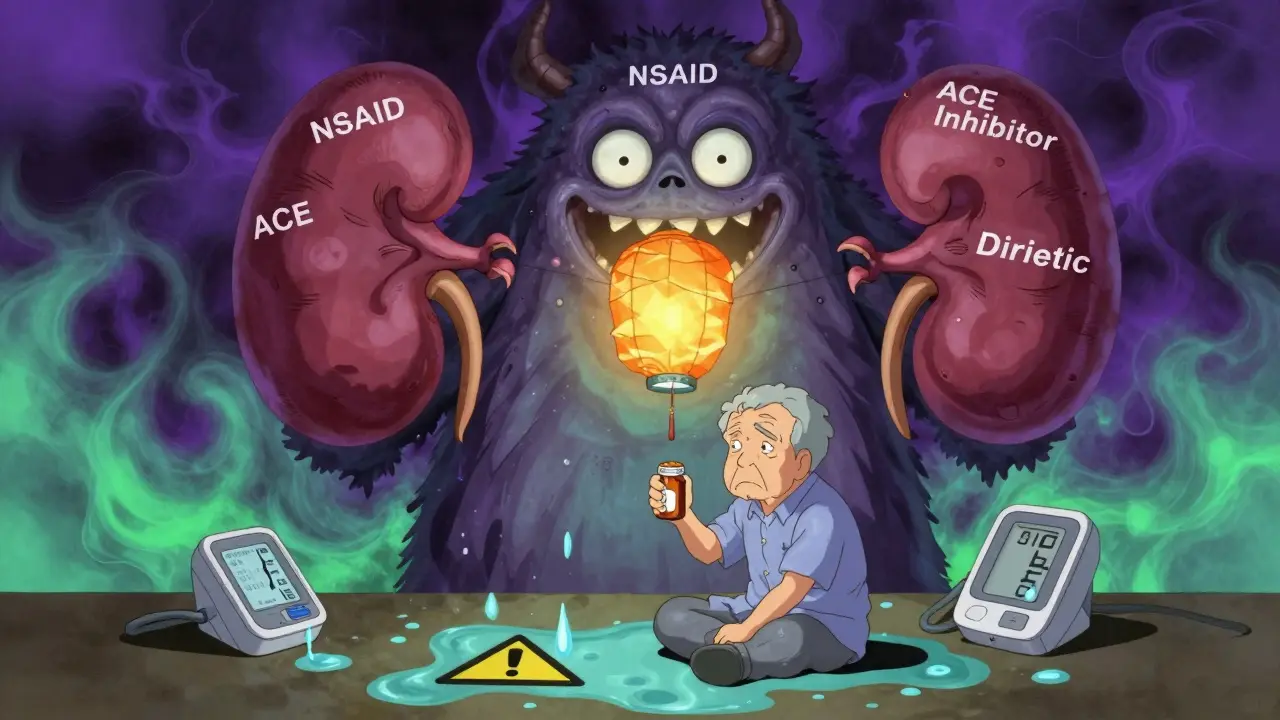
One of the most dangerous situations happens when three common medications are taken together: an NSAID, an ACE inhibitor or ARB (like lisinopril or losartan), and a diuretic (like furosemide or hydrochlorothiazide). This combo is known as the “triple whammy.”
Here’s why it’s so risky:
- ACE inhibitors and ARBs dilate the outgoing blood vessel in the kidney (efferent arteriole), which helps maintain filtration pressure.
- Diuretics reduce fluid volume, which lowers blood pressure and reduces kidney perfusion.
- NSAIDs block prostaglandins that normally help keep blood flowing into the kidney (afferent arteriole).
Together, they squeeze the kidney’s blood supply from both ends. Studies show this combination increases the risk of acute kidney injury by 31% overall - and by 82% in the first 30 days. It’s not rare. In fact, it’s one of the most common causes of preventable kidney failure in older adults.
Who’s Most at Risk?
Not everyone who takes an NSAID will have problems. But some groups are far more vulnerable:
- People with chronic kidney disease (CKD), especially with eGFR below 60 mL/min/1.73m²
- Those over 65 - kidney function naturally declines with age
- People with heart failure, liver cirrhosis, or diabetes
- Anyone taking diuretics, ACE inhibitors, or ARBs
- Those who are dehydrated - from illness, heat, or exercise
- People using high doses (like 800 mg ibuprofen three times a day) for long periods
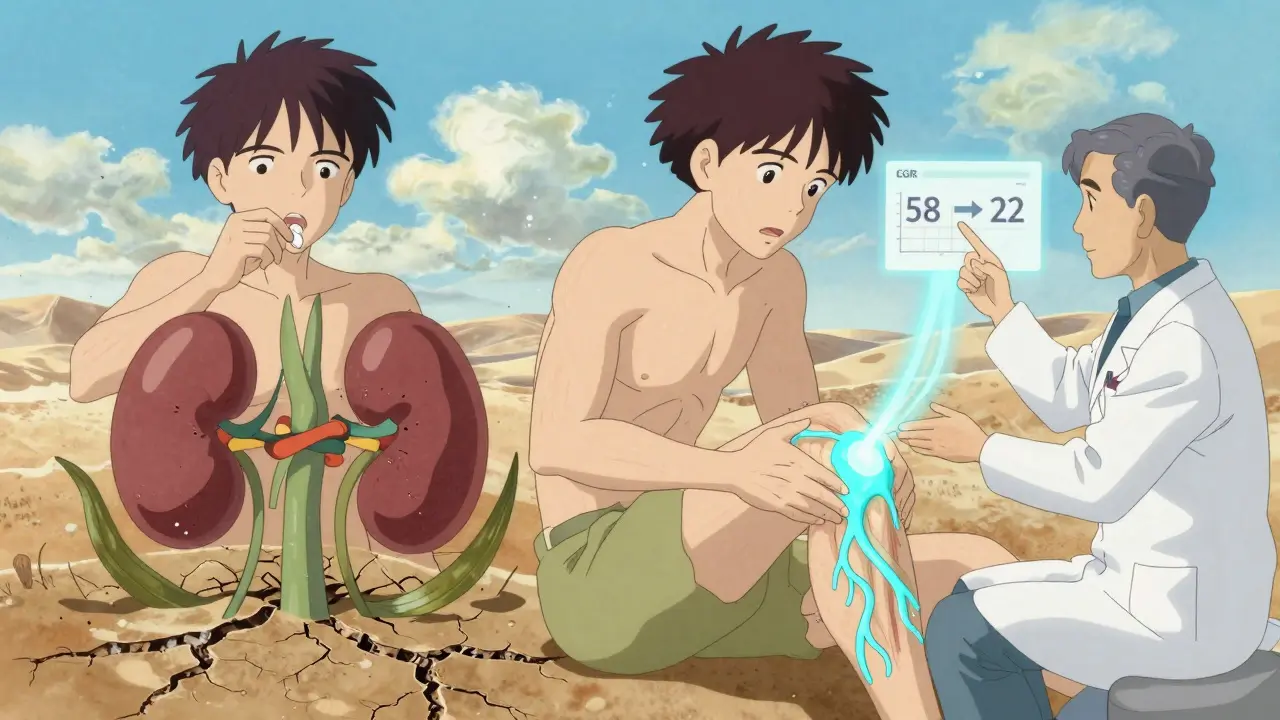
One study followed 72-year-old patients with baseline eGFR of 58 - just below the normal range. Within 72 hours of starting high-dose ibuprofen, their kidney function crashed to eGFR 22. They needed hospitalization. No prior history of kidney disease. No warning signs. Just a common painkiller.
NSAIDs vs. Alternatives: What’s Safer?
If you need pain relief and have kidney concerns, you have options - but none are perfect.
Acetaminophen (Tylenol) is the top alternative. It doesn’t affect kidney blood flow like NSAIDs do. Studies show it carries 40-50% lower risk of acute kidney injury. But it doesn’t reduce inflammation. So if you have arthritis or swelling, it won’t touch that.
Topical NSAIDs (gels, creams, patches) are a game-changer. They deliver the drug directly to the sore joint or muscle, with 70-80% less entering your bloodstream. A 2024 trial with over 3,200 patients found topical NSAIDs cut kidney injury risk by nearly half compared to pills. For osteoarthritis in the knee or hand, this is often the best choice.
Opioids don’t harm the kidneys directly - but they come with addiction risks (15-25% dependence rate), constipation, drowsiness, and tolerance. They’re not a long-term solution for chronic pain.
Corticosteroids or other anti-inflammatories may be options for autoimmune conditions, but they carry their own risks - bone loss, high blood sugar, weight gain.
What Doctors Should - and Shouldn’t - Do
The American Society of Nephrology and KDIGO guidelines are clear: Don’t just assume NSAIDs are safe.
Before prescribing or recommending long-term NSAID use, doctors should:
- Check baseline kidney function (eGFR and urine albumin-to-creatinine ratio)
- Avoid NSAIDs entirely if eGFR is below 30
- Use extreme caution if eGFR is between 30 and 60 - limit to lowest dose, shortest time
- Never combine NSAIDs with ACE inhibitors, ARBs, and diuretics
- Monitor kidney function weekly if use lasts more than a few days
Yet, a 2023 survey of nephrologists found that 58% regularly see patients who were never warned about these risks. Many assume “over-the-counter” means “safe.” It doesn’t.
What You Can Do: A Simple Prevention Plan
If you have kidney disease, or even just suspect your kidneys aren’t perfect, here’s your action plan:
- Know your eGFR. Ask your doctor for your latest kidney test result. If it’s below 60, NSAIDs are risky.
- Read your labels. Check if your painkiller is an NSAID. Ibuprofen, naproxen, diclofenac, celecoxib - all are NSAIDs. Aspirin counts too, even in low doses.
- Use the lowest dose for the shortest time. Never take more than 7-10 days without checking in with your doctor.
- Avoid the triple whammy. If you’re on blood pressure meds or water pills, talk to your doctor before taking any NSAID.
- Stay hydrated. Drink water regularly, especially if you’re sick, sweating, or exercising. For athletes, aim for 5-10 mL per kg of body weight 2-4 hours before activity.
- Choose topical options. For joint pain, try a gel like diclofenac cream. It works locally with far less risk.
- Watch for symptoms. Decreased urine output, swelling in ankles or feet, sudden fatigue, nausea - these could be early signs of kidney trouble.
The Bigger Picture: Why This Keeps Happening
NSAIDs generate over $10 billion in global sales every year. They’re cheap, accessible, and effective - which is why they’re so dangerous. In the U.S., about 80,000 emergency room visits each year are linked to NSAID complications. Around 90,000-150,000 new cases of chronic kidney disease are tied to long-term NSAID use.
Regulations haven’t kept up. The FDA’s warning labels haven’t changed since 2005. In Europe, stronger warnings are required on packaging - but in the U.S., most people still see “safe for occasional use” on the bottle.
And patients? They’re confused. On Reddit’s r/kidneybros, 72% of people who suffered NSAID-induced kidney injury said their doctor never warned them. Sixty-five percent said they thought “over-the-counter” meant “no risk.”
What’s Next: Better Tools and Safer Drugs
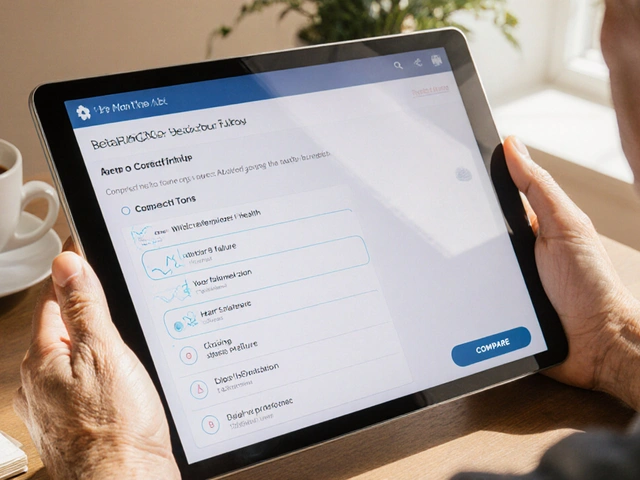
Science is catching up. The American Society of Nephrology just launched the NSAID-RF Risk Calculator - a free online tool that uses 12 factors (age, eGFR, blood pressure, meds) to predict your 30-day risk of kidney injury. It’s 87% accurate.
Researchers are also testing new drug combinations, like ibuprofen with acetylcysteine, to protect the kidneys while keeping pain relief. Early trials look promising.
And in 2025, genetic testing may soon identify people who are genetically more likely to suffer kidney damage from NSAIDs - thanks to variants in the PTGS2 gene.
For now, the best defense is awareness. If you have kidney disease, or even if you’re just over 60, on blood pressure meds, or have diabetes - don’t reach for the ibuprofen without thinking twice.
Acute kidney injury isn’t inevitable. But it’s preventable - if you know the risks.