Lopinavir/Ritonavir Interaction Checker
Check if new medications interact with lopinavir/ritonavir (Kaletra). The Liverpool HIV Interactions Database shows 1,247 potential interactions. Enter a drug name below to see risks.
Interaction Results
Enter a drug name to check interactions...
When doctors prescribe lopinavir/ritonavir - commonly known as Kaletra - they’re not just giving two drugs. They’re giving a pharmacological trick. Ritonavir, at a tiny 100mg dose, doesn’t treat HIV. It exists to block the body’s ability to break down lopinavir. That’s called boosting. And it works - brilliantly. But this trick comes with a side effect that affects nearly every other medication a patient might take: CYP3A4 interactions.
Why Ritonavir Is the Ultimate Drug Enforcer
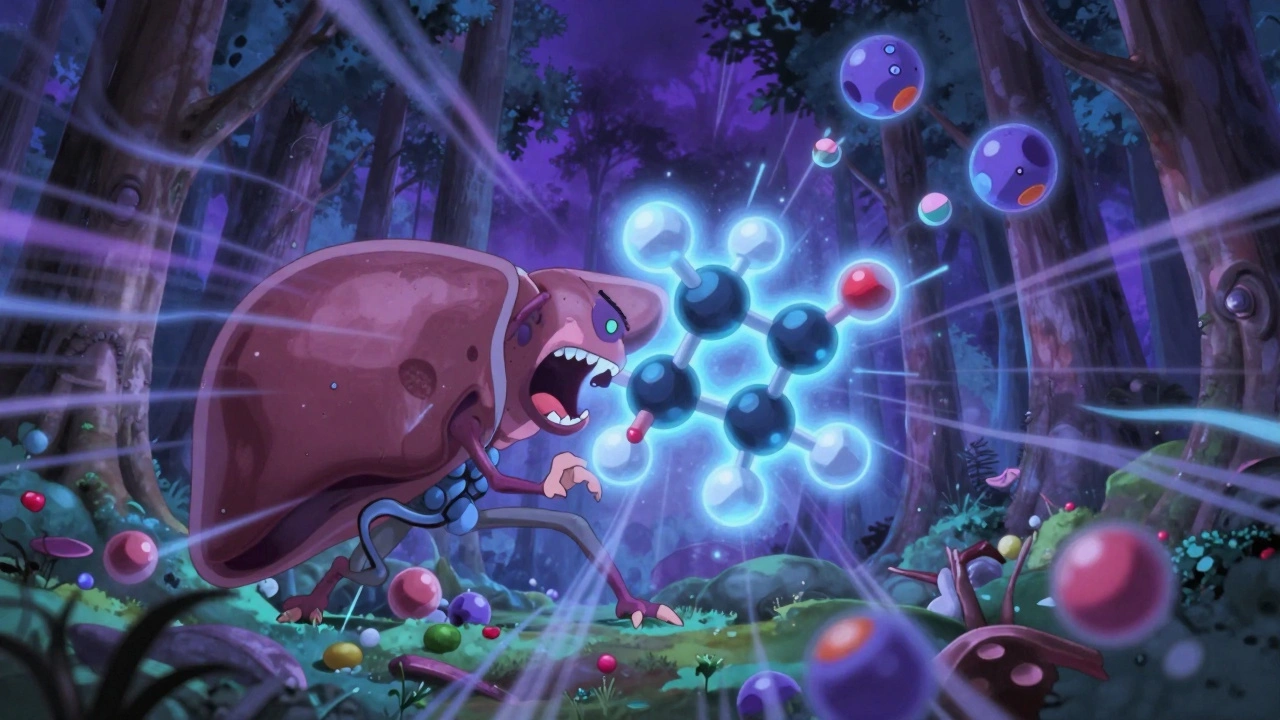
Ritonavir isn’t just an inhibitor. It’s a molecular wrecking ball for CYP3A4, the most common enzyme in your liver that breaks down drugs. Most drugs rely on CYP3A4 to get cleared from your system. Without it, they build up. With it, they vanish. Lopinavir? It’s almost entirely destroyed by CYP3A4. Left alone, its half-life is just under 7 hours. That means you’d need to take it three times a day to keep levels high enough to fight HIV. Enter ritonavir. At 1/16th the dose of lopinavir, it shuts down CYP3A4 so hard that lopinavir’s clearance drops below 15%. That’s not inhibition - it’s elimination of the enzyme’s function. Studies show lopinavir’s half-life jumps to over 12 hours with ritonavir. Now, twice-daily dosing works. Adherence improves. Viral suppression holds. But here’s the catch: ritonavir doesn’t just turn off CYP3A4. It also turns on other enzymes - CYP1A2, CYP2B6, CYP2C9, CYP2C19. It’s a double agent. One minute it’s blocking, the next it’s speeding things up. That’s why two patients on the same meds can have wildly different outcomes. One might get sick from a statin overdose. Another might have a blood clot because warfarin stopped working.The Interaction Nightmare: 1,247 Drugs to Worry About
The Liverpool HIV Interactions Database tracks every possible drug that touches lopinavir/ritonavir. As of 2023, it lists 1,247 interactions. That’s more than any other HIV combo on the market. Darunavir/cobicistat? Only 892. Why? Because cobicistat only blocks CYP3A4. Ritonavir? It’s messy. Take midazolam - a sedative used before surgery. Alone, it lasts a few hours. With ritonavir? Levels spike 500%. Patients have crashed into deep sedation. Anesthesiologists now cut the dose by 60-80%. Same with fentanyl. One study showed 300% higher exposure. That’s not a tweak - that’s a red flag. Then there’s warfarin. Ritonavir induces CYP2C9, which breaks down warfarin faster. INR drops. Clots form. Doctors have to monitor weekly, not monthly. And if the patient starts rifampicin - a TB drug - lopinavir levels crash by 76%. That’s not a minor dip. That’s treatment failure. Hepatotoxicity jumps from 11% to 33%. Even common meds become dangerous. Tacrolimus? Requires a 75% dose reduction or transplant rejection follows. Rivaroxaban? Contraindicated. Methadone? Needs a 20-33% increase to avoid withdrawal. Hormonal birth control? Effectiveness drops by half. Backup methods aren’t optional - they’re mandatory.Why This Still Matters in 2025
You might think: if it’s this complicated, why is it still used? Simple: cost and access. In the U.S., lopinavir/ritonavir is nearly gone. Integrase inhibitors like dolutegravir are safer, simpler, and better tolerated. But in sub-Saharan Africa, Southeast Asia, and parts of Eastern Europe, it’s still the backbone of HIV treatment. Why? Because it costs $68 per person per year. Dolutegravir? $287. For programs like PEPFAR, that difference means thousands of lives. It’s not about preference. It’s about survival. In places where newer drugs aren’t available, lopinavir/ritonavir is the only option. And when you’re choosing between no treatment and a treatment with 1,247 risks - you take the risk. Even in high-income countries, it’s not dead. Some patients with multi-drug resistant HIV still need it. Others can’t tolerate newer drugs. And then there’s Paxlovid - the COVID-19 antiviral. Its secret weapon? Ritonavir. Same mechanism. Same risks. Same need for extreme caution.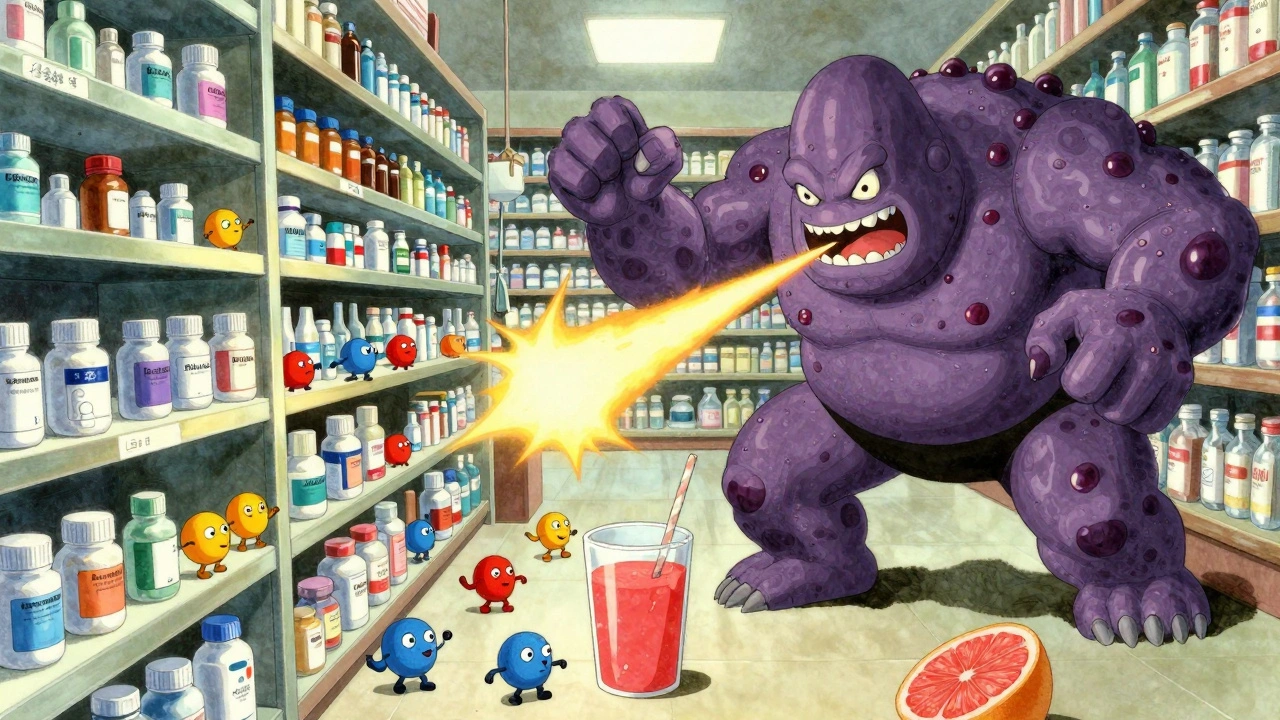
What Goes Wrong in Practice
Clinicians don’t always get it right. A 2022 study found that 41% of patients on lopinavir/ritonavir had at least one dangerous interaction missed at initiation. Why? Three reasons:- Doctors assume ritonavir only boosts - they forget it induces.
- Pharmacists don’t have time to cross-check every new script.
- Patients don’t know to mention over-the-counter herbs, supplements, or even grapefruit juice.
How to Manage This Safely
There’s no way around the complexity. But there are ways to survive it.- Always check the Liverpool HIV Interactions Database before prescribing anything new. It’s free. It’s updated monthly. Use it.
- For hepatic impairment: reduce dose. Child-Pugh Class B? Once daily. Class C? Don’t use it.
- For any surgery: coordinate with anesthesia. Flag ritonavir use. Adjust sedatives, opioids, and muscle relaxants.
- For women on birth control: insist on backup contraception. No exceptions.
- For patients on statins: avoid simvastatin and lovastatin. Use pravastatin or fluvastatin instead.
- Monitor INR weekly for warfarin users. Don’t wait for symptoms.

The Future: Is This Strategy Still Viable?
The writing’s on the wall. Newer boosters like cobicistat are cleaner. Newer antivirals like doravirine and islatravir don’t need boosting at all. In 2025, only 5% of new HIV prescriptions in the U.S. use lopinavir/ritonavir. Globally, it’s falling too - from 28% in 2022 to an expected 12% by 2027. But it won’t disappear. Not yet. Because in some clinics, it’s the only thing that works. And because Paxlovid still uses it. And because CYP3A4 isn’t going anywhere. Research is ongoing. The NIH is studying how genetic differences in CYP3A5 affect lopinavir levels. Early data shows people who express CYP3A5 clear lopinavir 28% faster. That means some patients need higher doses. Others are at risk of toxicity. Personalized dosing might be the next step - but it’s years away. For now, lopinavir/ritonavir remains a powerful, dangerous, and irreplaceable tool. Its strength is also its flaw. It saves lives - but only if you treat its interactions with the same seriousness as the virus itself.What You Need to Remember
- Ritonavir doesn’t treat HIV - it makes lopinavir work.
- CYP3A4 inhibition is powerful. Induction is unpredictable.
- 1,247 drugs interact with this combo. Assume any new med is risky.
- Never skip interaction checks. Use the Liverpool database.
- Cost keeps it alive. Risk keeps it complicated.