Medication Ingredient Checker
Check Medication Ingredients
Enter a medication name to check if it contains hidden animal ingredients. This tool uses verified data from Pill Clarity and medical sources.
- Gelatin
- Vitamin D3
- Magnesium Stearate
- Other Ingredients
Most people assume their medications are safe and simple - just pills made to help you feel better. But for vegans and vegetarians, that assumption can be dangerously wrong. Many common drugs contain hidden animal ingredients you won’t find listed as "pork" or "cow" on the label. These aren’t rare exceptions. They’re standard practice. And most consumers have no idea.
What’s Really in Your Pills?
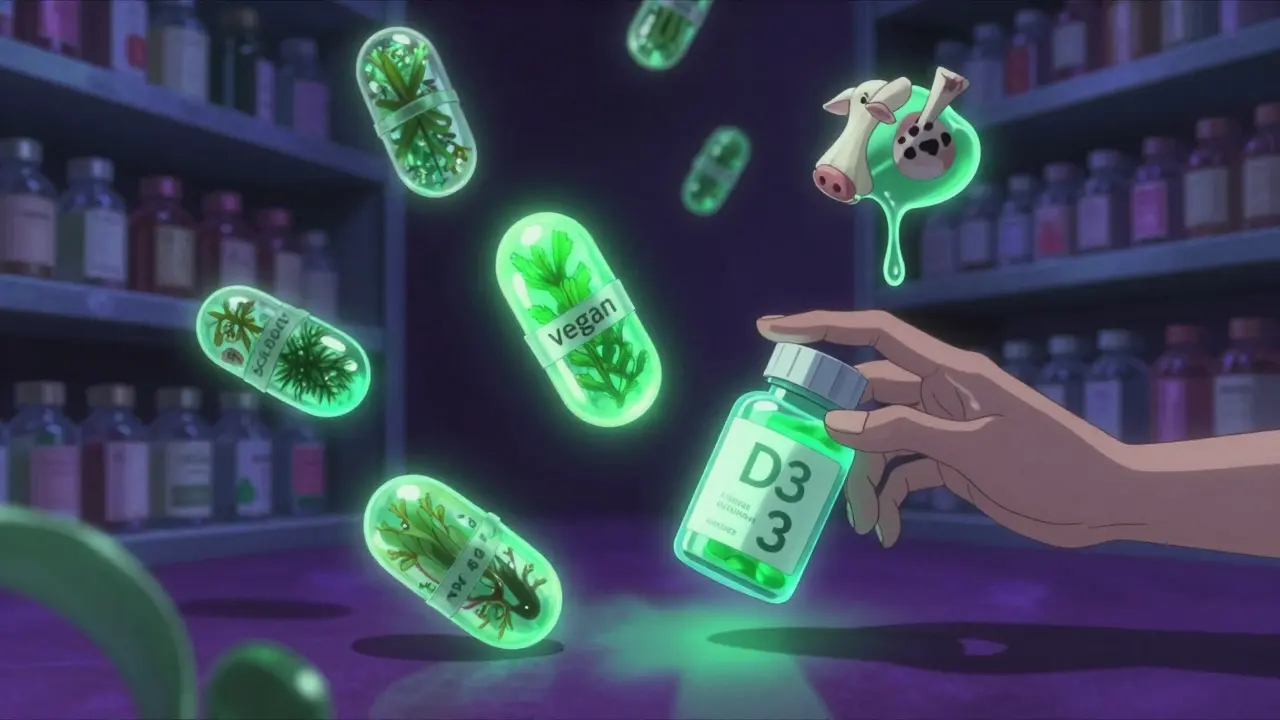
The biggest offender? Gelatin. It’s in about 90% of capsules. You think you’re swallowing a plant-based pill? Chances are, that shell is made from boiled pig skin, cow bones, or chicken tendons. It’s cheap, flexible, and easy to manufacture - which is why drugmakers use it everywhere. Soft gels? Same thing. Even some tablets use gelatin as a binder. Then there’s magnesium stearate. Sounds harmless, right? It’s used to stop pills from sticking to machines during production. But in 65% of cases, it’s made from animal fat - usually from cows or pigs. You won’t find "animal fat" on the label. You’ll see "magnesium stearate (E470b)" and move on. Vitamin D3 is another surprise. Most supplements use lanolin, a waxy substance from sheep’s wool. It’s processed into vitamin D3, then added to pills, gummies, and even fortified plant milks. If you’re vegan and taking a daily D3, you’re probably consuming animal byproducts. The good news? There’s a plant-based version made from green algae. It works just as well, and it’s clearly labeled as vegan. Other sneaky ingredients include:- Glycerin - can come from animal fat or plants
- Stearic acid (E570) - often from cow or pig fat
- Squalane - traditionally from shark liver oil
- Glucosamine and chondroitin - sourced from shellfish or cow cartilage
Medications That Definitely Contain Animal Parts
Some drugs don’t just have animal-based fillers - the active ingredient itself comes from animals. These aren’t optional. They’re medically necessary for some people.- Armour Thyroid - made from dried pig thyroid glands. It’s used for hypothyroidism. Synthetic levothyroxine (T4) is vegan, but many patients need the combination of T3 and T4 found in Armour.
- Premarin - estrogen derived from the urine of pregnant mares. It’s used for menopause symptoms. Synthetic estrogen exists, but it’s not always an exact match.
- Heparin - extracted from pig intestines. It’s a blood thinner used in hospitals. No vegan version exists.
- Creon and Viokace - pancreatic enzymes from pig pancreas. Used by people with cystic fibrosis or pancreas damage.
- Vascepa - made from purified fish oil. Used to lower triglycerides.
- Propofol - an anesthetic containing egg phospholipids. Used during surgery.
These aren’t supplements. These are life-saving or life-sustaining drugs. For some people, switching isn’t possible.
Why Don’t Labels Say This?
Food labels in the UK and US require disclosure of animal-derived ingredients. Medications? Not so much. The FDA and MHRA don’t require manufacturers to list whether ingredients come from animals. Why? Because they’re classified as "inactive" components - meaning they don’t affect how the drug works. But for you, they affect whether you can take it ethically. The Transparent Label Campaign found that 50% of supplements contain hidden animal byproducts. And that’s just supplements. Prescription drugs are even less transparent.
What Can You Do?
You can’t always avoid animal ingredients - but you can take control.- Ask your pharmacist - don’t assume. Say: "Is this medication free from gelatin, magnesium stearate, lanolin, and other animal-derived ingredients?"
- Check the capsule - if it’s hard and clear, it’s likely gelatin. If it’s soft and cloudy, it’s probably gelatin too. Plant-based capsules are often opaque and labeled "vegetarian" or "vegan".
- Look for certifications - Pill Clarity (formerly VeganMed) certifies medications as animal-free. Their database lists verified options for hundreds of common drugs.
- Switch Vitamin D3 - choose supplements labeled "D3 from algae". Brands like Vitashine and DEVA offer reliable vegan options.
- Request alternatives - for thyroid, ask about levothyroxine. For estrogen, ask about synthetic estradiol. For blood thinners, ask about fondaparinux (a synthetic heparin alternative).
Don’t be afraid to push back. Pharmacists are trained to help with this now. The American Pharmacists Association is rolling out new guidelines in 2024 to help staff handle these requests.
What If There’s No Vegan Alternative?
This is the hardest part. For some conditions - like severe hypothyroidism, blood clotting disorders, or enzyme deficiencies - there is no plant-based substitute. Heparin, propofol, and pancreatic enzymes have no vegan equivalent. In these cases, you’re forced to choose between your ethics and your health. There’s no shame in choosing health. Many vegans and vegetarians make this decision. It doesn’t make you less committed to your values. It just means you’re prioritizing survival. But you can still advocate. Contact manufacturers. Ask why they don’t use plant-based alternatives. Support companies that are developing vegan versions. Pressure regulators to require ingredient transparency.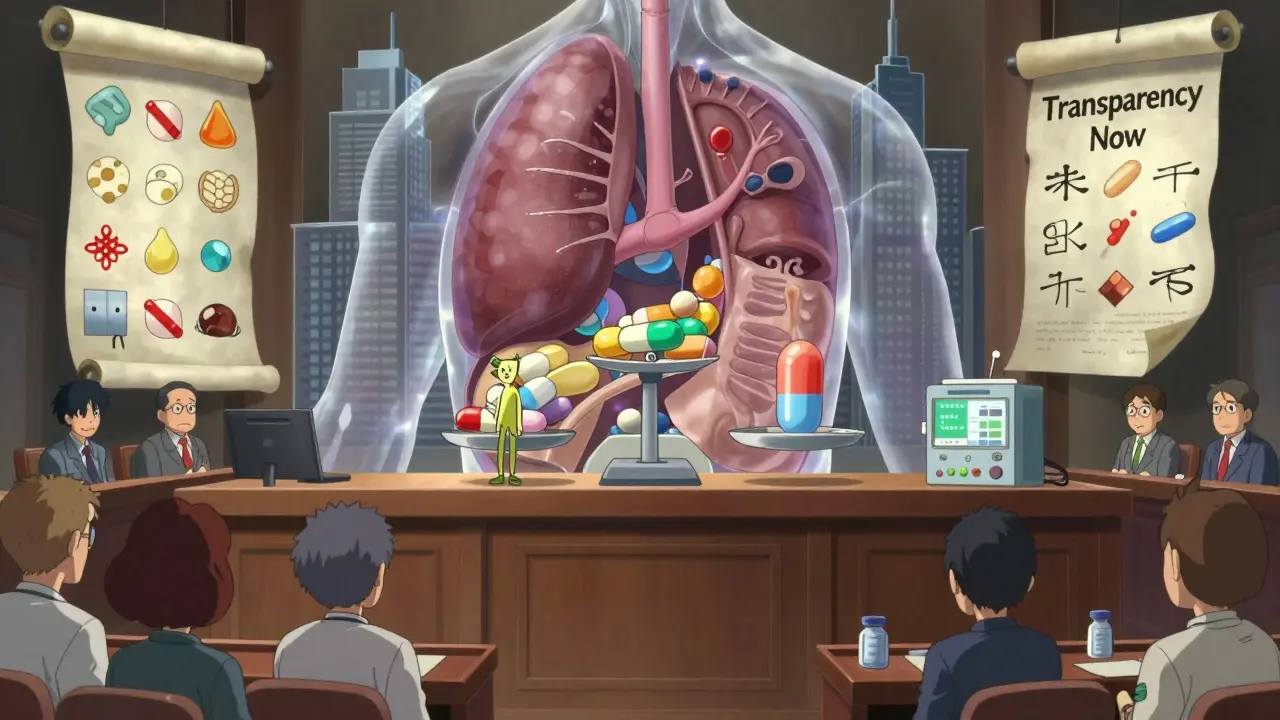
What’s Changing?
The movement for medication transparency is growing. Pill Clarity now handles thousands of inquiries a month. Dr. Vegan and other advocates have made algae-based D3 widely available. More pharmacies are stocking vegan capsules. The UK’s Medicines and Healthcare products Regulatory Agency (MHRA) is reviewing labeling rules. The real shift? Consumers are no longer silent. They’re asking questions. And that’s forcing change.Quick Checklist: What to Look For
- ✅ Capsules: Look for "vegetarian capsule" or "cellulose-based" - avoid "gelatin"
- ✅ Vitamin D3: Choose "algae-derived" - avoid "lanolin" or "cholecalciferol from sheep wool"
- ✅ Magnesium stearate: Ask if it’s plant-based - many vegan brands use sunflower-derived versions
- ✅ Glycerin: Confirm it’s vegetable-derived
- ✅ Stearic acid: Avoid if not labeled "vegetable stearic acid"
- ✅ Prescription drugs: Always ask your pharmacist - don’t rely on online info alone
If you’re vegan or vegetarian, your medication shouldn’t be a surprise. You deserve to know what’s inside - and you have the right to ask for better options.