Imagine your brain is slowly filling with fluid, but the pressure gauge reads normal. You start walking like you’re stuck in mud, forgetting where you put your keys, and losing control of your bladder. Most doctors might tell you this is just "getting old" or early Alzheimer’s. But what if it isn’t? What if there is a surgical fix that could reverse these symptoms?
This condition is called Normal Pressure Hydrocephalus, often abbreviated as NPH. It is a neurological disorder where excess cerebrospinal fluid builds up in the brain's ventricles, stretching them without causing high pressure. Unlike acute hydrocephalus, which hits hard and fast, NPH creeps up on you. It primarily affects adults over 60, yet it remains one of the most misdiagnosed conditions in geriatric neurology.
The good news? NPH is one of the few potentially reversible causes of dementia. With the right diagnosis and treatment-usually a ventriculoperitoneal shunt-many patients regain their independence. This guide breaks down exactly what NPH is, how to spot its unique warning signs, and what the treatment journey looks like.
The Classic Triad: Recognizing the Symptoms
NPH presents with a specific set of three symptoms, known clinically as Hakim’s triad. If you or a loved one are experiencing all three, it is time to see a specialist immediately.
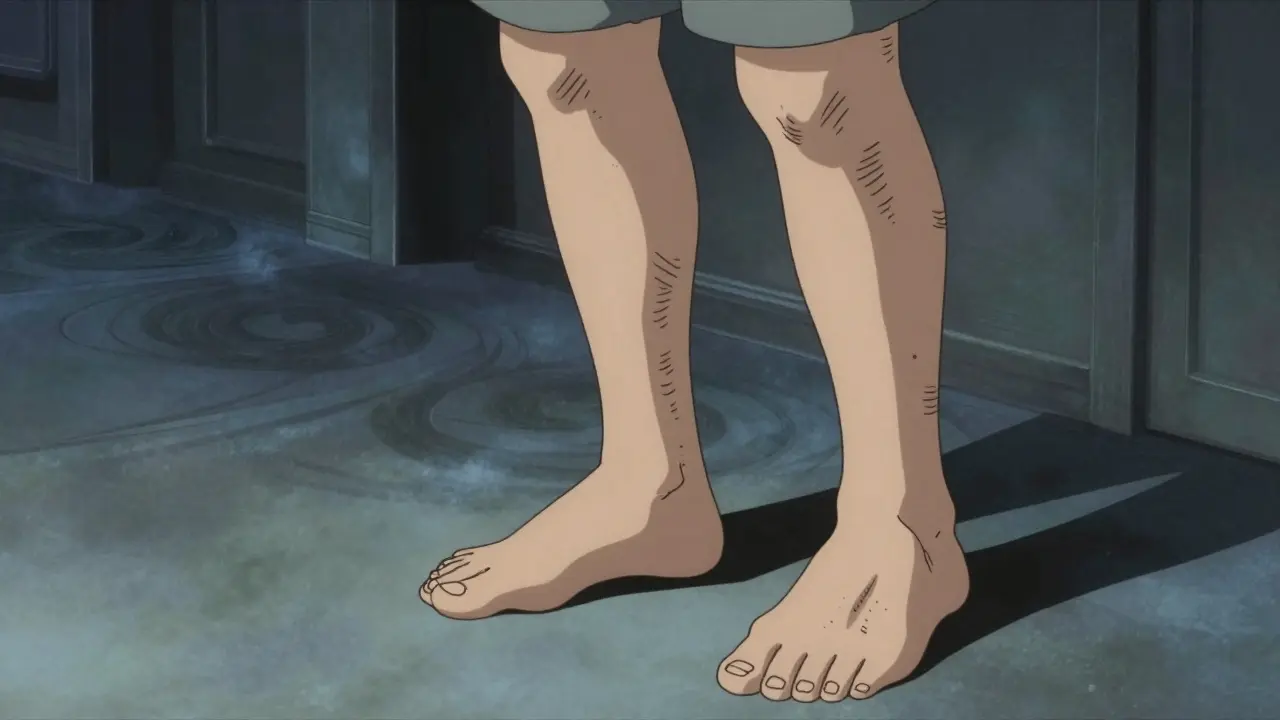
- Gait Disturbance: This is almost always the first symptom. Patients describe feeling like their feet are glued to the floor. The walk becomes shuffling, wide-based, and unsteady. It is not just clumsiness; it is a loss of automatic motor control. Studies from Mayo Clinic show this occurs in nearly 100% of diagnosed cases.
- Cognitive Impairment: Think of it as "slowed thinking." Patients struggle with memory, attention, and executive function (planning and organizing). It mimics dementia, but unlike Alzheimer’s, the cognitive decline in NPH is often more about processing speed than memory loss alone.
- Urinary Incontinence: This usually appears later than gait issues. It starts as urgency-a sudden, overwhelming need to go-and progresses to leakage. About one-third of patients experience this alongside the other two symptoms.
Here is the catch: only about 30% of patients exhibit all three symptoms at once. Many present with just the gait issue, leading doctors to blame arthritis or Parkinson’s disease. That is why knowing the difference matters.
NPH vs. Other Neurological Disorders
Misdiagnosis is the biggest hurdle in treating NPH. Up to 60% of patients are initially told they have Alzheimer’s or vascular dementia. Here is how to tell them apart.
| Feature | Normal Pressure Hydrocephalus (NPH) | Alzheimer’s Disease | Parkinson’s Disease |
|---|---|---|---|
| Primary Early Symptom | Gait disturbance (walking difficulty) | Memory loss | Tremor or stiffness |
| Walking Style | Magnetic, shuffling, wide-based | Normal until late stages | Shuffling, narrow-based, festinating |
| Brain Imaging | Enlarged ventricles (Evan’s index >0.3) | Brain shrinkage (atrophy), normal ventricles | Generally normal structure |
| Reversibility | Yes, with surgery | No, progressive decline | No, managed with medication |
| Urinary Issues | Common (urgency/incontinence) | Late stage only | Less common early on |
If memory loss is the main complaint but walking is fine, think Alzheimer’s. If the walk is off but memory is sharp, think NPH or Parkinson’s. The key differentiator for NPH is the combination of gait issues and enlarged ventricles on an MRI or CT scan.
How Doctors Diagnose NPH
You cannot diagnose NPH with a blood test. It requires a multi-step process involving imaging and functional tests. Here is the standard diagnostic pathway.
- Neuroimaging (CT or MRI): Doctors look for ventriculomegaly-enlarged fluid-filled spaces in the brain. A key metric is the Evan’s Index, which measures the ratio of the ventricle width to the skull width. An index of 0.3 or higher suggests NPH. They also look for "periventricular signal changes," which indicate fluid leaking into the brain tissue due to pressure.
- The CSF Tap Test: This is the gold standard for predicting if surgery will work. A doctor removes 30-50 mL of cerebrospinal fluid via a lumbar puncture. Then, they measure the patient’s walking speed and cognitive performance before and after. If the patient walks faster or thinks clearer within an hour, it is a strong sign that a shunt will help.
- External Lumbar Drainage: If the tap test is inconclusive, doctors may place a temporary drain for 2-3 days to remove more fluid continuously. This provides a longer window to assess improvement.
- Neuropsychological Testing: Standardized tests evaluate memory, attention, and executive function to establish a baseline and rule out other dementias.
According to international guidelines, a positive response to the tap test (improvement of at least 10% in gait) predicts shunt success with about 82% accuracy. This step is crucial because not every patient with enlarged ventricles has NPH, and not every NPH patient responds to surgery.
Treatment: The Ventriculoperitoneal Shunt
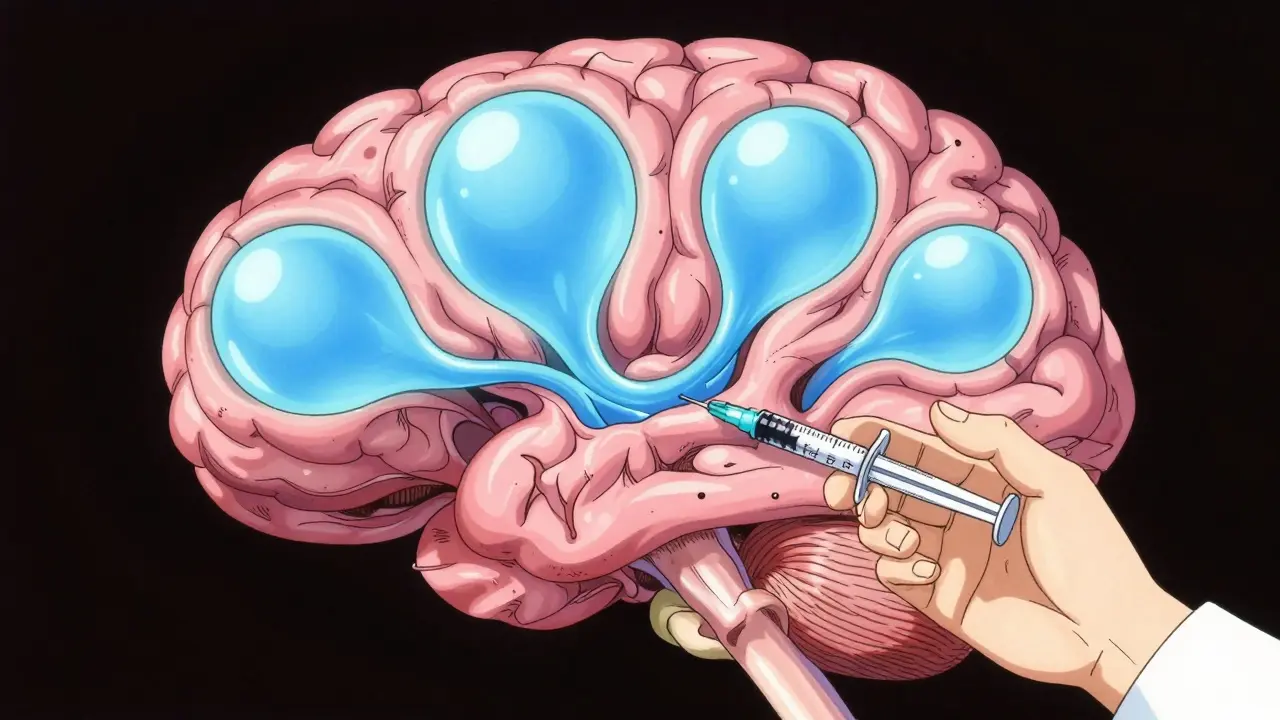
There is no medication that cures NPH. The only effective treatment is surgery. The procedure involves implanting a ventriculoperitoneal (VP) shunt.
A VP shunt is a flexible tube system. One end sits in the brain’s ventricle, and the other end drains into the abdominal cavity, where the body naturally absorbs the excess fluid. A valve in the middle regulates the flow, ensuring too much fluid isn’t removed too quickly, which could cause dangerous drops in pressure.
The surgery typically takes 60-90 minutes under general anesthesia. Most patients stay in the hospital for 3-4 days. Recovery varies, but many people notice improvements in their walking within 48 hours. Cognitive gains may take weeks or months to fully emerge.
Success rates are promising. Long-term studies show that 70-90% of appropriately selected patients experience meaningful improvement. However, "appropriately selected" is the key phrase. Patients who wait too long-beyond 12 months from symptom onset-see a 30% drop in surgical efficacy. Time is tissue in NPH.
Risks and Complications
While shunt surgery can be life-changing, it is not risk-free. Like any invasive procedure, complications can occur. It is important to weigh these risks against the benefits of improved mobility and cognition.
- Infection: Occurs in about 8.5% of cases. Symptoms include fever, redness at the incision site, and headache. It often requires removing the shunt temporarily and antibiotics.
- Shunt Malfunction: The valve can clog or the tube can break. This happens in roughly 15% of patients within two years. Signs include a return of NPH symptoms (worsening gait, confusion).
- Subdural Hematoma: Bleeding around the brain can occur if fluid is drained too fast, compressing the brain. This happens in about 5.7% of cases and may require additional surgery.
- Over-drainage: Too much fluid removal can cause headaches when standing up. Doctors adjust programmable valves to mitigate this.
Despite these risks, most patients report high satisfaction. A 2022 survey by the Hydrocephalus Association found that 89% of patients were satisfied with their treatment, even though 32% required at least one revision surgery.

Living with NPH: Prognosis and Quality of Life
Life after shunt surgery is not always a fairy tale, but it is significantly better than living with untreated NPH. For many, the "magnetic gait" disappears, allowing them to walk safely again. Bladder control often returns, reducing dependence on adult diapers. Cognitive improvements vary; some patients see full recovery, while others experience partial improvement.
It is vital to maintain regular follow-ups with a neurosurgeon. Shunts do not last forever. The average lifespan of a shunt before needing revision is about 6.3 years. As we age, our bodies change, and the valve settings may need adjustment.
Physical therapy plays a huge role in recovery. Even after the shunt works, muscles and nerves need retraining. Working with a physical therapist helps rebuild strength and confidence in walking. Occupational therapists can assist with strategies to manage residual cognitive challenges.
Support groups, both online and in-person, offer invaluable emotional support. Hearing stories from others who have navigated the diagnostic maze and recovered can provide hope and practical tips. The stigma of "dementia" lifts when patients realize their condition was treatable all along.
Frequently Asked Questions
Is Normal Pressure Hydrocephalus hereditary?
No, NPH is not considered a genetic or hereditary condition. It is classified as idiopathic (primary) in 80-90% of cases, meaning the cause is unknown. Secondary NPH results from identifiable events like head trauma, meningitis, or subarachnoid hemorrhage, none of which are inherited.
Can NPH be cured without surgery?
Currently, there is no medication or non-surgical treatment that cures NPH. While lifestyle changes and physical therapy can help manage symptoms, only the surgical placement of a ventriculoperitoneal shunt addresses the underlying fluid accumulation. Delaying surgery can lead to permanent brain damage.
How long does it take to recover from NPH shunt surgery?
Initial recovery from the surgery itself takes about 6-12 weeks. However, symptom improvement can happen much faster. Many patients notice significant improvements in their gait within 48 hours. Cognitive improvements may take several months to fully manifest. Full functional recovery depends on how long the patient had symptoms before treatment.
What is the life expectancy for someone with NPH?
With successful shunt surgery, life expectancy is generally similar to the general population of the same age. Untreated NPH can lead to severe disability, falls, and increased mortality due to complications like pneumonia or hip fractures. Timely treatment significantly improves longevity and quality of life.
Does insurance cover NPH diagnostic testing and surgery?
In the US, Medicare covers approximately 85% of NPH shunt surgeries. However, diagnostic testing like high-volume lumbar punctures often faces prior authorization hurdles. About 42% of these tests experience denial initially. It is crucial to work with a neurologist who can document medical necessity clearly to ensure coverage.
Can NPH come back after shunt surgery?
NPH itself does not "come back," but shunts can malfunction. If symptoms return, it is usually due to the shunt being blocked, disconnected, or set at the wrong pressure. This requires immediate medical attention and often a minor surgical revision to replace or adjust the device.